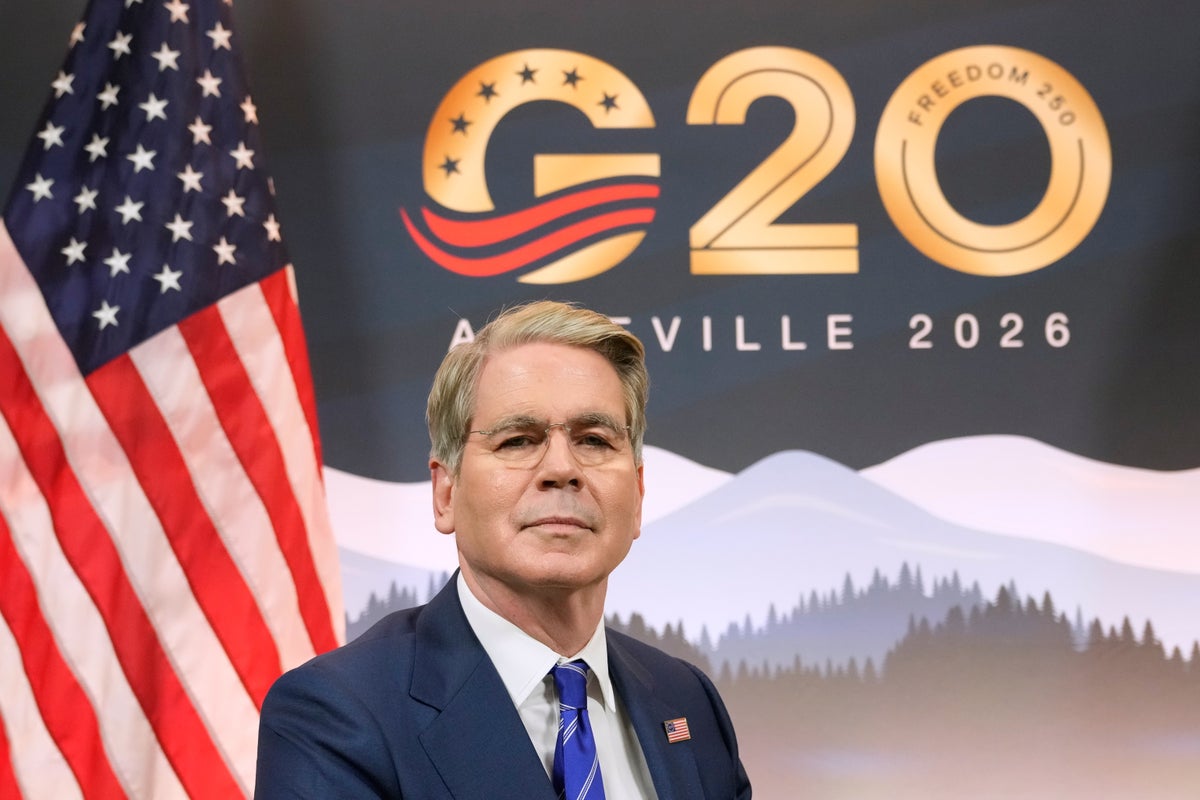
The conventional narrative currently being peddled across financial media treats international diplomacy like a corporate boardroom retreat where everyone holds hands once the quarterly numbers are reviewed. Scott Bessent boards the plane to the G20 with a singular script: convince foreign partners to lock arms against Iran while simultaneously breaking trade ceramics over their heads with aggressive tariffs. It is a masterclass in diplomatic delusion.
The lazy consensus in Washington argues that allies will compartmentalize economic pain. The theory goes that European capitals and Asian trade hubs care more about Middle Eastern security architecture than the price of steel, aluminum, and manufactured goods landing on their shores. This is a profound miscalculation. You do not punch a partner in the jaw and then ask them to watch your back in a dark alley.
I have spent two decades watching macroeconomic policy get written by technocrats who have never negotiated a high-stakes deal outside a university seminar room. They treat trade policy and geopolitical alignment as separate spreadsheets. They are not. Every tariff implemented by Washington is a vote of no confidence in the very multilateral coalitions we now expect to rally against Tehran.
The Frictionless Diplomacy Fallion
Listen to the talking heads on television. They act as though a Treasury Secretary can fly into a room of hardened finance ministers, flash a reassuring smile, and pivot seamlessly from trade penalties to unified security sanctions. This assumes that foreign leaders have infinite political capital to spend on America's strategic priorities while their own domestic constituencies are absorbing the shock of protectionist levies.
Let us look at the mechanics. When the United States slaps steep duties on foreign imports, targeted nations do not simply absorb the blow with a stiff upper lip. They retaliate where they retain leverage. They look for vulnerabilities in our foreign policy objectives. Iran is a prime candidate for quiet economic hedging. If European or Asian economies feel squeezed by unilateral American trade measures, their appetite for enforcing secondary sanctions against Iranian oil and financial networks evaporates.
The math is brutal. Compliance with American-led maximum pressure campaigns costs foreign firms billions in lost commercial opportunities. If those same firms are already bleeding from American tariff walls, compliance drops to zero. Economic nationalism at home destroys the multilateral enforcement mechanisms required abroad. You cannot decouple protectionism from isolation.
The Iran Miscalculation
The lazy consensus also misunderstands how modern sanctions regimes actually function. They are not magical switches that turn off state behavior. They are complex compliance games played by multinational banks, shipping conglomerates, and sovereign wealth funds.
When Bessent talks about rallying allies on Iran, he is operating under the assumption that Tehran's economic isolation is an unmitigated global priority. For Washington, it is an existential security focus. For Brussels, Berlin, and Tokyo, it is a managed risk weighed against energy security, inflation pressures, and alternative commercial partnerships.
By weaponizing tariffs against our primary trading partners, we hand Tehran an unintended diplomatic lifeline. Every time we alienate a G20 counterpart over trade terms, we widen the diplomatic space for Iran to negotiate alternative trade routes, digital currency settlements, and backchannel energy sales. The regime in Tehran does not need to break the alliance; Washington is doing the heavy lifting for them by fracturing the coalition first.
The Cost of Strategic Schizophrenia
Financial markets are pricing in a level of diplomatic coherence that simply does not exist. Investors believe that hardline trade protectionism and smooth geopolitical coalition-building can coexist indefinitely. They cannot.
Imagine a scenario where a major European manufacturer faces punitive tariffs on its industrial exports to the United States. That same company is then asked by its home government to comply with restrictive compliance tracking to block Iranian shell companies. The corporate board sits down, looks at the ledger, and makes the rational economic choice. They find the loophole. They reroute the transaction through a third-party jurisdiction that does not care about American secondary sanctions.
This is the reality of the ground game. Bureaucrats talk about solidarity; operators talk about margins.
If Washington genuinely wants an airtight coalition against Iranian expansionism, the administration has to answer a foundational question: What are we willing to give up to get it? Right now, the answer appears to be nothing. We want protectionist manufacturing subsidies, punishing tariffs on our closest allies, and total geopolitical compliance on secondary security threats all at once.
It is an unsustainable triple-down.
Stop pretending that economic warfare at the border does not torpedo strategic cooperation across the ocean. The next time you hear a commentator marvel at how a Treasury official is going to unite the G20, remember that you cannot rebuild a alliance while you are actively taking a sledgehammer to its foundation. The bill always comes due, and right now, the exchange rate for hypocrisy is exceptionally high.