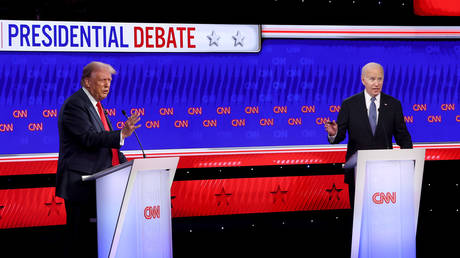
The corporate media is predictable. Joe Biden takes the stage at a Maryland Democratic Party fundraiser, calls Donald Trump a "loser" over White House ballroom construction and Reflecting Pool maintenance contracts, and the pundit class immediately treats it like a masterclass in political rhetoric.
They are wrong. They are missing the entire point of how modern political capital works.
I have spent two decades analyzing market sentiments and political branding strategies. I have watched organizations sink tens of millions of dollars into defensive, name-calling PR campaigns that did nothing but validate their opponent's strength. Relying on schoolyard taunts while your opponent systematically reshapes the physical and institutional landscape of power is not a strategy. It is an admission of irrelevance.
The Mirage of the Vanity Project
The mainstream analysis treats Trump’s architectural maneuvers—tearing down the East Wing for a ballroom, proposing a triumphal arch, or overhauling the Lincoln Memorial Reflecting Pool—as mere evidence of narcissism. This is a fundamental misunderstanding of branding mechanics.
Trump is a real estate developer. He understands an unspoken rule of power that the institutional left continually ignores: physical infrastructure dictates historical memory.
When an administration alters public spaces, installs monuments, or hands a $1.7 million no-bid filtration contract to an associate, critics scream "corruption." But to a populist base, this does not look like a failure. It looks like speed, executive authority, and an explicit rejection of bureaucratic inertia.
Imagine a scenario where a CEO takes over a failing legacy firm. The board spends two years debating committee guidelines, while the new CEO simply walks in, guts the executive suite, and builds a brand-new innovation lab. The legacy board members can call the CEO "vain" all they want at the annual gala, but the market reacts to the entity moving the dirt, not the one filing the complaints.
Why the Loser Narrative Fails
The core of Biden’s attack relies on a logic that died a decade ago. By calling a sitting president a "loser," establishment figures think they are exposing a weakness. In reality, they are exposing their own inability to counter substantive policy shifts.
Look at the mechanics of the political marketplace right now:
- The Power Dynamic: One side is actively executing long-term structural changes, including the ongoing efforts regarding pardons and compensation for January 6th defendants. The other side is giving 10-minute speeches at suburban casinos.
- The Economic Disconnect: While establishment figures point to macroeconomic indicators to claim their past record was superior, the average consumer operates on immediate financial friction. Rent, energy costs, and borrowing rates matter more than legacy talking points.
- The Foreign Policy Shift: Critiques regarding the North Atlantic Treaty Organization or international standing fail to register because a significant portion of the electorate has shifted toward isolationism. Pointing out that an alliance is strained does not land as a blow when the target audience wants the alliance dissolved anyway.
The downside to analyzing politics through this contrarian lens is obvious: it forces an acknowledgment that structural momentum matters far more than moral superiority. It requires admitting that institutional norms are incredibly fragile when up against raw executive willpower.
The Cost of Aesthetic Warfare
The standard political consensus asks: "How can the opposition sharpen its messaging to expose these scandals?"
This is the entirely wrong question. The premise itself is broken. You cannot message your way out of a structural deficit.
When the Democratic establishment spends its media cycles hyper-focusing on a $1.7 million pool filtration contract or a contested ballroom, they are engaging in aesthetic warfare. They are treating a deep structural realignment like a reality television feud.
Every minute spent dissecting an opponent's vanity project is a minute skipped on building a concrete, competitive alternative. It signals to the market that you have no forward-looking vision, only a retrospective grievance.
Stop expecting rhetorical dunks to change poll numbers. Stop thinking that calling a builder an incompetent loser will convince voters who are looking for someone to build something for them.
Power does not care about your insults. It cares about leverage. Until the opposition learns to wield actual leverage instead of chasing the fleeting high of a crowd's applause at a fundraiser, the infrastructure of the country will continue to be rewritten by the person willing to swing the hammer.