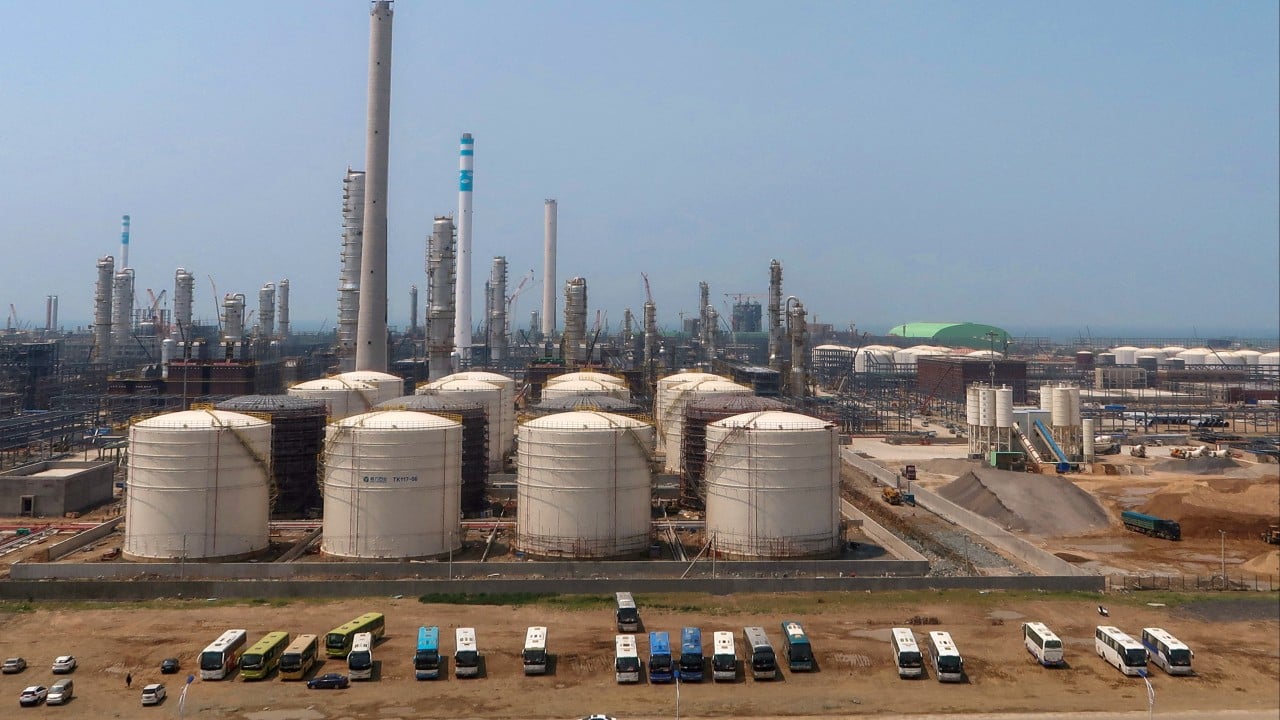
The headlines are screaming about a "crackdown." They want you to believe that Washington just tightened the noose on China’s energy independent "teapots"—those small, nimble, private refineries that process a massive chunk of the world's illicit crude.
They are wrong.
By sanctioning Chinese oil refineries, the U.S. isn't crippling a competitor. It is inadvertently subsidizing the most sophisticated energy-laundering machine in human history. We are watching a masterclass in unintended consequences where the "punishment" actually serves to solidify China’s grip on the global shadow fleet.
The Teapot Myth
The standard narrative suggests these refineries are fragile, isolated entities that will crumble under the weight of Treasury Department designations. This view treats global energy like a regulated local utility. It isn't.
In the real world, "teapots" in Shandong province aren't just businesses; they are the pressure valves of the global oil market. When you sanction a refinery for processing Iranian or Russian crude, you don't stop the flow. You merely drive the price down for the buyer.
Sanctions create a mandatory "risk discount." Because these refineries are now "outlaws," they demand—and get—crude at $5 to $10 below Brent or ESPO benchmarks. By slapping a label on them, the U.S. has effectively handed China a permanent coupon for cheap energy.
I’ve watched traders navigate these waters for two decades. They don't panic when a name hits the OFAC list. They change the name on the letterhead, shift the shell company from Hong Kong to Dubai, and keep the tankers moving. The oil doesn't disappear. It just gets cheaper for the people we are trying to penalize.
The Weaponization of the Yuan
The most dangerous blind spot in the current policy is the forced acceleration of de-dollarization.
For years, the U.S. dollar’s status as the global reserve currency was maintained by the fact that you had to use it to buy oil. By locking Chinese refineries out of the dollar-clearing system (SWIFT), the U.S. isn't stopping transactions. It is forcing them into the CIPS (Cross-Border Interbank Payment System) and the digital yuan.
We are handing Beijing the perfect laboratory to stress-test a financial system that is completely invisible to Western regulators. Every time we sanction a mid-sized refinery, we give a dozen more banks a reason to stop using the dollar. We aren't isolating China; we are building a parallel universe where the U.S. Treasury has zero visibility and zero influence.
Why the "Pushback" is a Performance
The media focuses on China's diplomatic "pushback"—the stern warnings from the Foreign Ministry and the threats of retaliatory export controls on minerals. This is theater.
The real pushback is silent. It’s the rapid expansion of the "shadow fleet." There are currently hundreds of vintage tankers operating with obscured ownership, disabled transponders, and dubious insurance. These ships exist solely because Western sanctions created a massive profit margin for anyone willing to move "hot" oil.
By targeting the refineries, we have ensured that the demand for this shadow fleet remains permanent. We’ve turned a temporary geopolitical skirmish into a structural feature of the global economy.
The Cost of Moral Posturing
If the goal is to stop the flow of funds to Iran or Russia, sanctioning the end-buyer (the refinery) is the least efficient way to do it. It’s like trying to stop a flood by yelling at the ocean.
- Energy Arbitrage: China’s state-owned giants (Sinopec and PetroChina) get to keep their hands clean while the private teapots do the dirty work. If a teapot gets sanctioned into oblivion, its assets are simply absorbed or "leased" to a new entity with a clean record.
- Inflation Export: When we disrupt these flows, we create volatility in the global supply. Even if the U.S. doesn't buy the oil, the global price reflects the friction. We are essentially taxing our own consumers to create a discount for Chinese manufacturers.
- Environmental Catastrophe: The shadow fleet, necessitated by these sanctions, is a ticking time bomb. These are old ships with no oversight. A major spill in the Strait of Malacca or the South China Sea won't care about your foreign policy goals.
The Fatal Flaw in "Maximum Pressure"
The "lazy consensus" argues that if we just make it hard enough, China will blink. This ignores the fundamental math of Chinese energy security.
China imports over 70% of its oil. To Beijing, energy security isn't a "business interest"—it is a matter of regime survival. You cannot "incentivize" a superpower to go hungry. They will find a way to eat, even if they have to build an entire underground economy to do it.
We are currently teaching China how to bypass every financial lever we have. We are showing them exactly where our sensors are located so they can build decoys.
The Intelligence Gap
In my time analyzing these trade flows, the biggest shift I’ve seen isn't in the volume of oil—it's in the quality of the data. Ten years ago, the U.S. had a fairly clear picture of who was buying what. Today, thanks to the aggressive use of secondary sanctions, that window is closing.
When you move transactions to non-transparent, non-dollar platforms, you lose the "intelligence" part of the Treasury's power. We are trading long-term visibility for short-term headlines.
Stop Thinking in Terms of "Winning"
The U.S. government views sanctions as a dial: turn it up to increase pain, turn it down to reward behavior. But China views energy as a circuit: if you break one path, they immediately solder a new one.
The current strategy assumes the U.S. is the only game in town. But with the BRICS+ expansion and the growing sophistication of non-Western clearinghouses, that is a fantasy. We are sanctioning refineries that have already priced in the cost of being sanctioned. It’s like "fining" a casino for having bright lights—it’s just the cost of doing business.
We need to stop pretending that these designations are a "move" on the chessboard. They are a reaction, and a predictable one at that. We are providing the friction that allows China to harden its internal systems against future shocks.
Every refinery we blackball is another brick in a wall that will eventually be tall enough to hide an entire alternative economy. We aren't stopping the oil. We’re just losing the ability to see where it’s going.
The real threat isn't that China will "push back" with words. The threat is that one day, they won't need to push back at all because they’ll be operating in a system where our sanctions simply don't register.
Stop looking at the sanctions. Look at the infrastructure being built to circumvent them. That is where the real war is being lost.