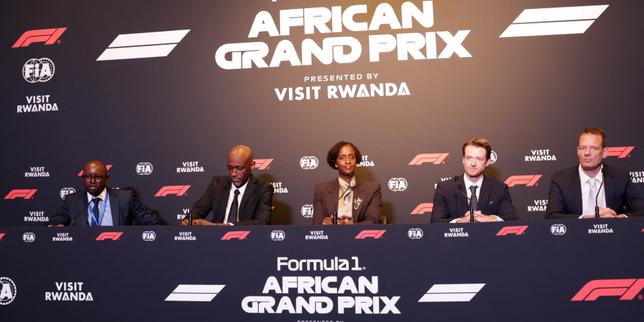
The lazy consensus across the sports media landscape is that Formula One’s ten-year deal to race in Rwanda starting in the early 2030s is merely a romantic homecoming. Pundits love to frame it as a long-overdue charity case for a continent starved of Grand Prix action since 1993, or worse, a simple exercise in modern PR branding. They talk about the beautiful hills of Bugesera, the design work by Alexander Wurz’s firm, and the sentimental pressure from drivers like Lewis Hamilton.
They are missing the entire plot.
This is not a feel-good reunion tour. This is a cold, calculated geopolitical checkmate wrapped in high-octane carbon fiber. While legacy motorsport traditionalists whine about abandoning historic European tracks for new markets, Kigali just out-maneuvered legacy heavyweights like South Africa to secure one of the most lucrative commercial properties in global sport.
I have watched nations and corporate entities burn millions on vanity sporting projects that left them with rusting white elephants and empty balance sheets. I saw the aftermath of circuits built on political whim that never turned a sustainable profit. Rwanda’s play with Formula One looks entirely different. It is an aggressive, multi-layered economic thesis executed by a state apparatus that treats national development like a high-stakes chess match.
To understand why this deal works, you have to stop looking at lap times and start looking at ledger sheets.
The Fallacy Of The Traditional Track Economy
For decades, the standard playbook for hosting a Grand Prix was simple: inherit a crumbling historic circuit, bleed municipal budgets dry to satisfy Bernie Ecclestone or Liberty Media’s exorbitant hosting fees, and pray that weekend tourism covers the deficit. Kyalami in South Africa was the sentimental favorite for years, backed by a rich motorsport heritage and nostalgic fans begging for a return to 1993.
South Africa fell into the classic trap of resting on its historical laurels. Its political bickering and lack of unified state-backed financial aggression left the door wide open. Rwanda’s administration didn't wait for tradition to hand them an invitation; they weaponized targeted infrastructure development.
The upcoming purpose-built circuit in Bugesera is not being built in a vacuum. It is strategically tethered to the expansion of Bugesera International Airport and regional trade integration. When you build a Grade 1 FIA-certified track directly adjacent to a primary logistics and transport hub, you aren't just paying for three days of revving engines in October. You are cementing a permanent corridor for high-end business tourism, hospitality capital, and aviation logistics that pays dividends 365 days a year.
Critics love to throw around accusations of sportswashing, pointing to governance indexes and human rights metrics with predictable monotony. Let's address this honestly without the naive romanticism. F1 has never possessed a clean moral compass. This is a championship that happily races in oil-rich autocracies and financial capitals with questionable domestic policies without blinking an eye. Singling out Rwanda while ignoring the moral compromises of half the current global calendar is pure hypocrisy. The executive suite in London cares about two metrics: cash flow security and global market expansion. Rwanda offered a bulletproof financial guarantee backed by strategic state vision, while traditional bidders offered excuses.
The Macroeconomic Engine Behind The Visor
To grasp why a ten-year commitment matters, look at how Rwanda has handled its previous sports diplomacy masterclasses. The Visit Rwanda campaigns plastered across European football club jerseys were mocked by short-sighted commentators as an expensive vanity play.
Those critics failed to understand return on investment metrics. The tourism revenue and foreign direct investment spikes following those partnerships proved that targeted national branding yields exponential returns. Formula One is simply the logical escalation of this strategy. It is the ultimate moving billboard, broadcasting directly to over a billion cumulative television viewers annually across more than 150 territories.
Imagine a scenario where a global tech firm or logistics titan decides where to place its regional African headquarters. Do they choose a stagnant market resting on memories of a 1990s race, or do they choose the hyper-efficient, digitally progressive hub that successfully orchestrates the most complex logistical circus in professional sports every single year for a decade? The Grand Prix is the marketing event; the real product is the total economic transformation of a nation positioning itself as East Africa's primary gateway.
The Brutal Reality Check
Even the most brilliant strategies carry structural risks. Let us be entirely clear about the downsides: building a world-class motorsport facility from scratch in a developing region requires staggering capital expenditure. If ticket pricing models alienate the local population, the event risks becoming a walled garden for wealthy foreign tourists and corporate elites, completely missing the domestic inspiration that President Paul Kagame and local advocates champion.
Furthermore, a ten-year lock-in demands flawless execution. One macro-economic shock or supply chain failure during construction can strain public funds. This is high-variance enterprise. There is no safety net if the projected tourism yields miss their targets in the early years of the contract.
Yet, safety never built empires. While conservative critics hide behind spreadsheets of what used to work in Europe during the last century, Rwanda is buying a front-row seat to the future of global growth.
Stop viewing the 2030 return to Africa as a charity project for a nostalgic sport. It is a calculated commercial invasion. And the rest of the world is just now scrambling to catch up.