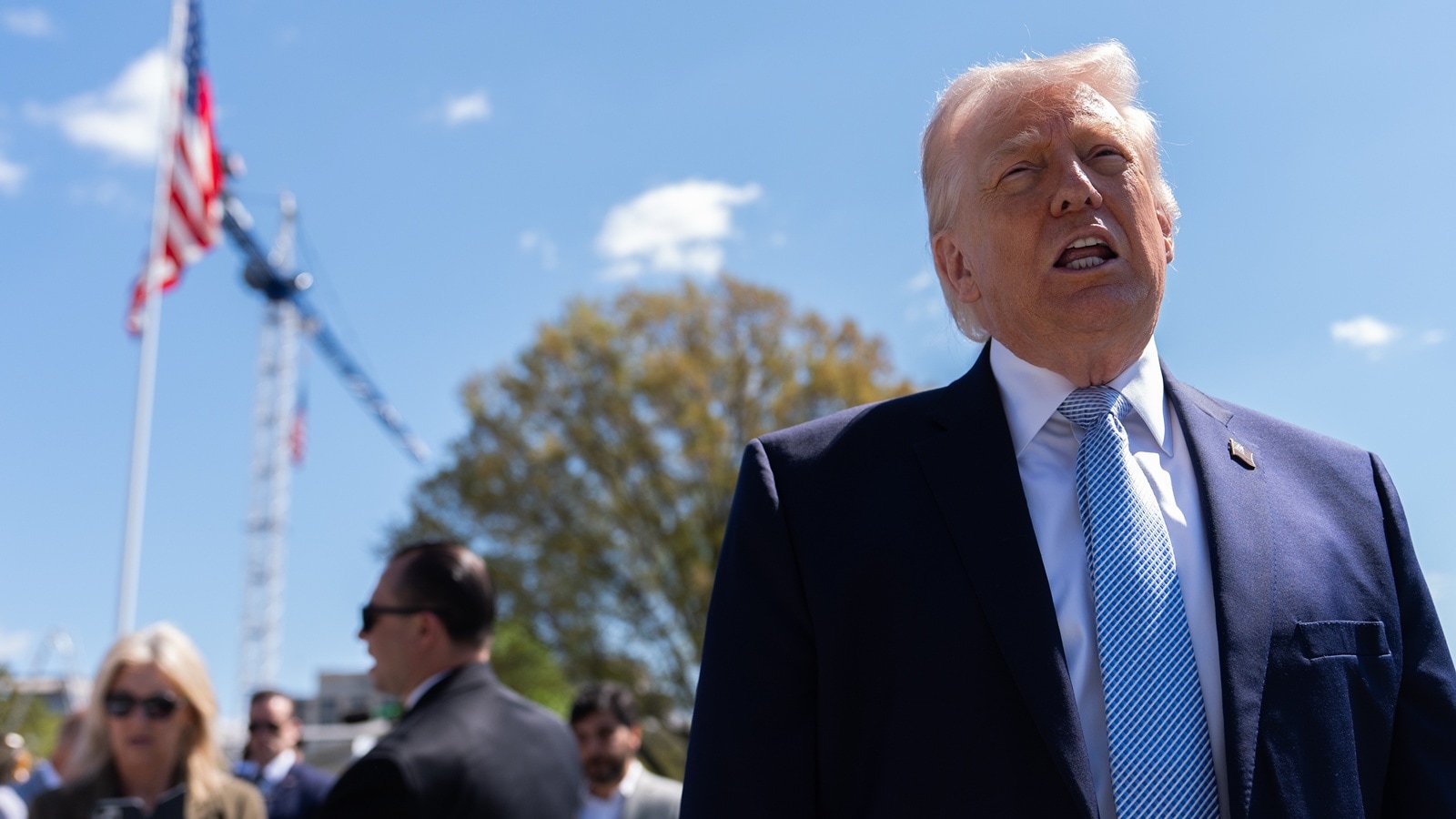
The headlines are fixated on a phantom consensus. Donald Trump claims King Charles III agrees that Iran must never possess a nuclear weapon. The media treats this as a diplomatic win, a moment of transatlantic unity, or at the very least, a significant bit of gossip. It is none of those things. It is a distraction from a fundamental failure in geopolitical strategy that has been rotting for decades.
Diplomacy via royal decree is a relic of an era that died in 1914. If you are looking at the British monarchy for a signal on nuclear non-proliferation, you aren't playing chess; you’re playing checkers with a missing board. The "lazy consensus" here is that verbal agreements between heads of state and ceremonial figures actually move the needle on Tehran’s enrichment centrifuges. They don't. If you liked this article, you should look at: this related article.
The Myth of the Strategic Red Line
For twenty years, the West has been drawing "red lines" in the sand with a leaf blower. We are told that "all options are on the table," a phrase so overused in D.C. and London it has lost all meaning. The reality is that the Iranian nuclear program is not a technical problem to be solved by sanctions or royal tea dates. It is a calculated response to the global incentive structure we created.
Look at the math. In a world where Libya gave up its nuclear program and saw its leadership dragged through the streets, and North Korea kept its nukes and got a seat at the table with a U.S. President, the "logical" choice for a pariah state is obvious. Iran isn't being "irrational." They are following the data. For another angle on this story, refer to the latest coverage from Al Jazeera.
The competitor articles love to focus on the "will he or won't he" drama of Trump’s rhetoric. They ignore the physics of the situation. $U-235$ doesn't care about a handshake at Buckingham Palace. Enrichment to 60% purity—which Iran has already achieved—is a stone’s throw from weapons-grade 90%. The gap between "peaceful energy" and "the bomb" is now a matter of political will, not industrial capability.
Sanctions Are a Broken Tool
The beltway insiders will tell you that "maximum pressure" works. I have spent years tracking capital flows in sanctioned environments. Here is what they won't tell you: sanctions are the greatest gift you can give to a regime's hardliners.
When you cut a country off from the global financial system, you don't kill their economy; you merely drive it underground. This creates a "shadow economy" where the only people with the keys to the kingdom are the Revolutionary Guard and their affiliates. You aren't weakening the regime; you are consolidating its power by making every citizen entirely dependent on the state's black-market networks for basic goods.
We see the same pattern every time:
- The U.S. imposes "crippling" sanctions.
- The Iranian Rial devalues.
- The middle class—the very people who might actually push for democratic change—is wiped out.
- The ruling elite gets richer by controlling the smuggling routes.
If the goal is to stop a nuclear weapon, sanctions have a 0% success rate in the modern era. Ask Pyongyang.
The King Charles Factor is Geopolitical Noise
Bringing King Charles into the conversation is a masterclass in domestic signaling disguised as foreign policy. The British monarch has no executive power. His "agreement" is a polite nod, the diplomatic equivalent of "have a nice day."
By centering the narrative on these high-level social interactions, the media avoids the harder, uglier questions:
- What happens if Iran reaches "threshold status" and stops?
- Are we prepared for a regional arms race where Saudi Arabia buys a "turn-key" solution from Pakistan?
- How does the rise of the BRICS+ alliance—which Iran just joined—nullify the efficacy of Western financial threats?
The status quo is obsessed with the optics of the nuclear deal (JCPOA) or the lack thereof. The "contrarian truth" is that the JCPOA was a temporary band-aid on a sucking chest wound, and its withdrawal was a tactical grenade thrown into a crowded room. Neither path addressed the core issue: Iran views the nuclear option as its only guarantee against regime change.
The Energy Blind Spot
The West talks about Iran as a security threat while ignoring the fact that the global energy transition is shifting the leverage. We are so focused on whether they have a warhead that we are missing the realignment of the Eurasian energy grid.
Iran sits on the world's second-largest gas reserves and fourth-largest oil reserves. As Europe tries to de-risk from Russian energy, the long-term play for Tehran isn't a bomb—it's a pipeline. But the current policy of isolation forces them into the arms of Beijing and Moscow. We are literally subsidizing the creation of a rival superpower bloc because we are stuck in a 1990s mindset of "rogue states."
Stop Asking if Iran Can Have a Nuke
The question "Can Iran have a nuclear weapon?" is the wrong question. It’s a binary trap for simple minds.
The real question is: "How do we live in a world where Iran is a nuclear-capable state?"
Because they already are. The knowledge is there. The centrifuges are spinning. The delivery systems are tested. You cannot "un-know" how to build a bomb. Any policy that doesn't start with the premise that Iran is a threshold state is a fantasy.
If you want to actually disrupt this cycle, you have to stop the performative diplomacy. You have to stop believing that a statement from a royal or a tweet from a former president changes the kinetic reality on the ground.
The Brutal Reality of Middle Eastern Balance
We are moving toward a multi-polar Middle East where the U.S. is no longer the sole arbiter of security. The recent China-brokered deal between Iran and Saudi Arabia was a loud, clear signal that the region is tired of Western-led volatility.
While Trump and Charles discuss "red lines," the rest of the world is building infrastructure that bypasses the West entirely. The North-South Transport Corridor (INSTC) connects India to Russia via Iran. This isn't just about trade; it’s about creating a geography that is immune to U.S. naval power and Western banking sanctions.
If you are an investor or a policy-maker, and you are still betting on "regime collapse" or "diplomatic breakthrough," you are going to lose. The regime has survived 40 years of pressure. It is more integrated into the Eastern bloc than ever before.
The New Rules of the Game
Stop looking at the headlines about King Charles. Start looking at the shipping manifests in the Strait of Hormuz. Start looking at the yuan-denominated oil contracts.
The West’s obsession with "preventing" what has already technically occurred—the arrival of a nuclear-capable Iran—is a strategic blind spot that prevents us from negotiating from a position of reality. We are chasing ghosts while our competitors are building ports.
The "consensus" is that we are one "tough" deal away from fixing this. The reality is that we are one "tough" deal away from becoming completely irrelevant in the region.
Quit the theater. The bomb is a symptom; the shift in global power is the disease. If you want to win, you stop fighting the last war and start acknowledging the one that’s already been lost.
Shut down the photo ops. Open the ledger. The world has moved on, and it didn't wait for a royal signature.