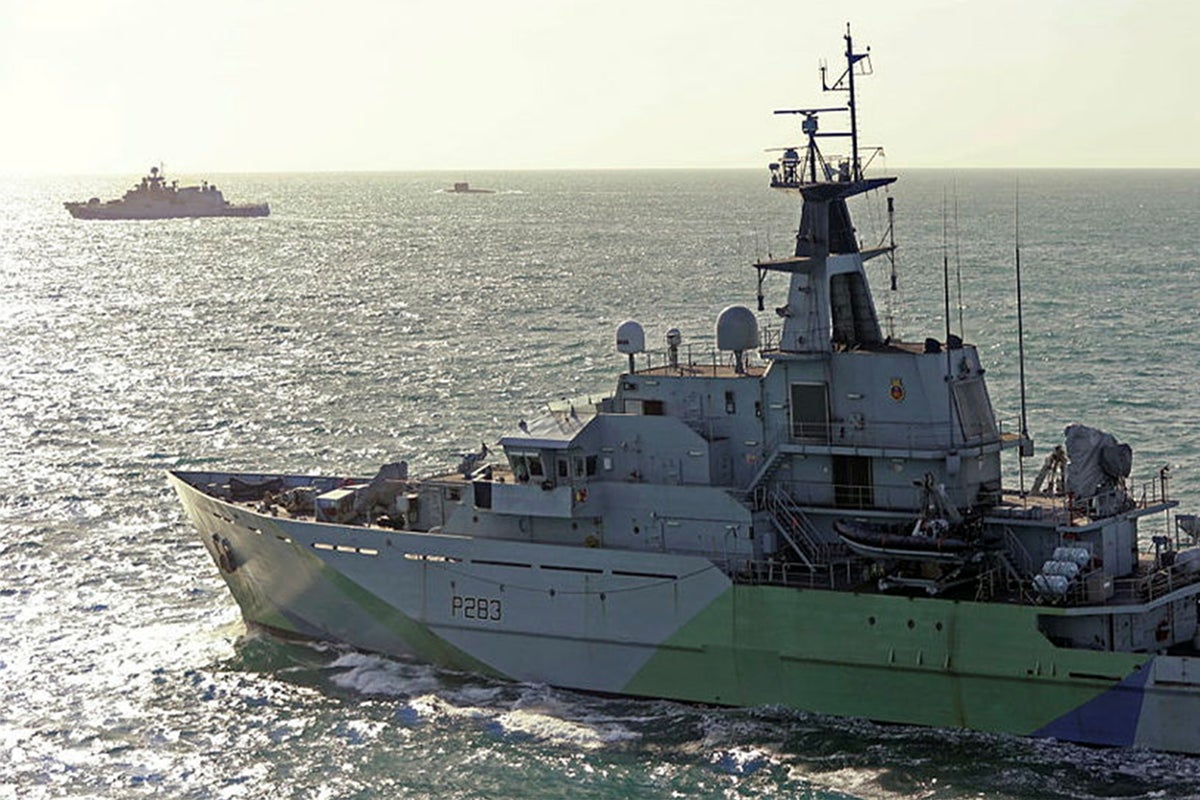
Every six months, the defense establishment pulls out the exact same script. A headline drops claiming a twenty-five percent spike in Russian naval movements near British waters. The panic spreads instantly. Pundits hyperventilate on morning broadcasts. Defense analysts clutch their pearls about the crumbling security of the North Atlantic.
It is entirely performative nonsense.
I spent years tracking maritime logistics and security postures, watching how defense budgets magically expand the moment an admiral waves a grainy photo of an aging Soviet-era trawler off the coast of Scotland. The twenty-five percent surge isn't a terrifying indicator of impending invasion. It is a predictable byproduct of an aging fleet trying to maintain posture while navigating structural decay on both sides.
Let us dismantle the lazy consensus.
The Metrics of Manufactured Panic
When defense ministries report a surge in activity, look closely at how they measure it. A twenty-five percent increase in "encounters" or "transits" sounds dramatic until you break down what actually constitutes a transit.
If a Russian intelligence ship drifts along the edge of international waters outside the Exclusive Economic Zone, it counts. If a tugboat limps through the Dover Strait on its way to a maintenance yard in the Mediterranean, it counts. If a submarine surfaces to charge batteries because its propulsion plant is past its service life, it counts as an aggressive maneuver.
I have sat in briefings where routine administrative repositioning was refactored into a high-level security crisis simply because parliament was debating the upcoming defense spending review. This isn't strategy. It is lobbying with grey hulls.
"When every movement is labeled a threat, you stop managing risk and start managing budgets."
The reality of modern naval mechanics makes the panic even more absurd.
The Myth of the Omnipresent Bear
The common narrative portrays the Russian Navy as a resurgent powerhouse flexing its muscles across the North Atlantic and the English Channel. This view ignores the baseline operational reality of the Russian Northern Fleet.
Russia's surface fleet is largely anchored by Soviet-legacy platforms that are remarkably maintenance-heavy. Modernizing these hulls has proven nearly impossible under sustained economic sanctions and domestic supply chain fractures. When a Russian cruiser or frigate moves out of its home port in Severomorsk, it requires an ocean-going tug to follow it just in case the propulsion system decides to disintegrate halfway down the coast of Norway.
That is not a projection of hard power. That is a distress-prone convoy limping past your front door.
To call this a surge in strategic capability is like looking at a fleet of vintage tractors sputtering down a motorway and declaring it an armored cavalry charge.
What the Royal Navy is Actually Hiding
The real story isn't about what the Russians are doing. It is about what the Royal Navy cannot afford to do anymore.
When the Ministry of Defence highlights foreign vessel movements, they are quietly shifting attention away from their own force structure constraints. Consider the Type 45 destroyer fleet. For years, these multi-billion-pound air defense ships suffered catastrophic propulsion failures in warm waters due to a design flaw in their intercooler systems. While refits are underway, the actual number of hull days available for deployment has shrunk dramatically.
When you have fewer active hulls available to maintain a continuous maritime presence, any baseline movement by a rival looks like an overwhelming surge. If you have only two ships operational instead of four, a single passing Russian vessel doubles your operational workload.
The twenty-five percent increase says more about British fleet availability than it does about Moscow's tactical brilliance.
The Economics of Maritime Espionage
Why do Russian ships keep steaming past the UK coastline anyway? The answer is boring, bureaucratic, and entirely predictable.
Subsea infrastructure.
Fiber-optic cables, energy pipelines, and data transfer nodes crisscross the seabed around the British Isles. Both sides know these maps intimately. Russia's Main Directorate of Deep-Sea Research operates specialized research vessels and submarines designed to map, monitor, and potentially tap or disrupt these lines.
This is not a sudden escalation of kinetic warfare. It is steady-state, gray-zone competition that has been happening since the Cold War. It is the maritime equivalent of two rival companies checking each other's patent filings. Turning routine intelligence gathering into an existential crisis does a disservice to the public and misallocates scarce defense resources.
The Cost of Overreaction
Reacting to every routine patrol with a multi-million-pound scramble of Type 23 frigates and Poseidon maritime patrol aircraft is a fiscal trap.
Think about the burn rate. Operating a modern warship and its aviation assets for a week-long shadowing operation costs an astronomical sum in fuel, maintenance, and crew fatigue. Russia’s aging hulls are cheap to run into the ground. British assets are expensive, scarce, and finite.
By taking the bait every single time a Russian ship leaves port, the Royal Navy is exhausting its own platform lifespans on low-threat escort duties. It is an asymmetric exhaustion strategy executed entirely by our own panic reflex.
How to Fix Our Strategic Response
If we want actual security rather than theatrical deterrence, we need to change how we measure and respond to maritime friction.
First, stop publishing every tactical encounter as breaking news. Routine monitoring should be treated as background noise, handled by coast guard vessels and offshore patrol ships rather than frontline warships that should be focused on high-end carrier strike integration.
Second, tie defense funding to actual operational readiness and industrial shipbuilding capacity rather than short-term threat inflation.
Third, recognize that gray-zone posturing requires gray-zone endurance, not panic.
The sea hasn't changed. The physics of operating aging ships haven't changed. The only thing changing is the desperation of the narrative machine trying to keep your attention fixed on the horizon while the foundations rust away at the pier.