Dawa sits on a weathered wooden stool outside his stone-walled home in the shadow of the Himalayas, listening to a sound that shouldn't exist in late autumn: the steady, impatient drip of melting ice.
To anyone visiting his high-altitude village, the view is a postcard of timeless majesty. Towering peaks claw at a cobalt sky. Glaciers carve ancient pathways down the valleys. But Dawa, whose grandfather hauled salt across these passes and whose father watched the winter snows linger into June, knows a quiet terror. The ice is speaking to him, and it is telling him that the great reservoir of Asia is running dry.
We call this region the Hindu Kush Himalaya, though scientists prefer a more functional moniker: the Third Pole. It holds the largest reserve of ice outside the poles of the earth. But scientists and meteorologists have taken to calling it something else entirely in recent years.
The Asian water tower.
It is a poetic title for a terrifying piece of planetary plumbing. Ten of Asia's largest river systems—the Indus, the Ganges, the Brahmaputra, the Mekong, the Yangtze, and others—are fed by this frozen crown. Nearly two billion people depend on these arteries for the rice in their bowls, the electricity in their homes, and the water in their cups.
For generations, the system operated with mathematical predictability. Winter laid down a thick blanket of white; summer doled it out drop by drop, sustaining life across vast plains and crowded deltas thousands of miles away.
Then the computer simulations started flashing red.
Advanced climate models and hydrological simulations now reveal that the Asian water tower is beginning to wobble. The delicate equilibrium between snowfall accumulation and glacial melt is fracturing.
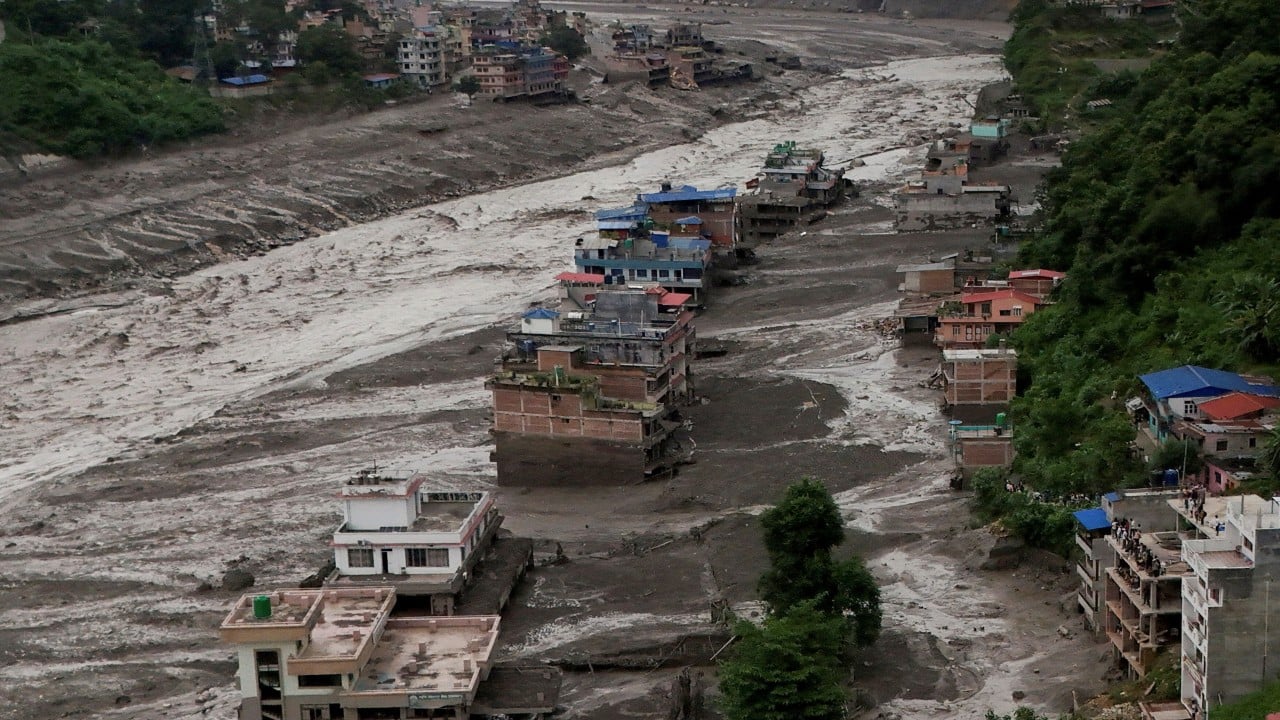
Consider what happens next: the ice does not simply disappear all at once. First, it accelerates. Glaciers bleed out faster than they can be replenished, swelling rivers to dangerous, destructive heights. Towns wash away in sudden flash floods. Fields turn to mud. Dawa remembers the year the flash flood came down the valley, erasing a bridge that had stood for a century in less than ten minutes. The water arrived roaring, carrying boulders the size of trucks, born from a glacier that had suddenly decided to let go.
That is the first phase of the wobble.
The second phase is far worse. Once the glaciers retreat past a critical tipping point—a threshold many hydrologists fear we are rapidly approaching—the spigot simply closes. The summer melt diminishes. The rivers shrink to shallow, sluggish trickles just as the dry season bakes the agricultural heartlands of South and Southeast Asia.
Imagine looking out over a dry riverbed that once fed a million people. Imagine the crackle of parched topsoil where paddy fields once gleamed in the sun.
This is not a dystopian fiction from a distant century. It is the trajectory mapped out by current climatic data, projected across the coming decades. Computer simulations run by international research teams indicate that basins like the Indus are particularly vulnerable. As winter snowfall decreases and temperatures climb, the reliance on stored glacial ice increases, borrowing against a future that cannot pay the debt. When the ice is gone, the water is gone.
Yet, numbers on a server and lines on a graph rarely move us to action. They remain abstractions until we attach them to a human heartbeat.
Downstream from Dawa’s village, thousands of miles away, a woman named Mei tends to a small aquaculture and vegetable plot along the banks of the Mekong. She does not know the phrase "hydrological tipping point." She only knows her yields have grown erratic. One year, salt water creeps further up the delta, poisoning her crops. The next, the river is too low to navigate easily, cutting off her village from the market town. She feels the wobble in her calloused hands and in the rising price of rice at the local stall.
We are tethered to the Third Pole, every single one of us.
The security of nations depends on this ice. When water becomes scarce in transboundary basins, old geopolitical tensions flare into new crises. Treaties signed decades ago assume a stable, permanent flow that no longer exists.
To look at the Asian water tower today is to look at a stress test for human civilization. Can we adapt to a world where our ancient lifelines are shifting beneath our feet? Can we redesign our agricultural systems, our dams, our cities, before the emergency forces our hand?
Dawa stands up, brushing wood shavings from his knees. He looks back up at the white-capped giants looming over his small world. The sun dips behind a ridge, casting long, cold shadows across the valley floor. The dripping sound has slowed for the evening, but it will start again tomorrow with the morning thaw, ticking away the time we have left to listen.
.png?width=2560&name=Google Logo Evolution LM (3).png)

