Call a retail space "no man’s land" and half the industry applauds the audacity. The other half misses the joke.
When AR eyewear maker Rokid opens a flagship store in Hong Kong and frames it around a "no man’s land" retail concept, the standard trade coverage writes itself. Expect breathless lines about immersive storytelling, spatial computing meeting high-density urban foot traffic, and Hong Kong acting as a gateway between mainland China and global consumers.
It sounds poetic. It is also a strategic trap.
I have watched hardware teams spend seven figures building showstopping physical environments that looked incredible in pitch decks and sizzle reels, then quietly bled cash when daily unit economics collided with reality. Physical retail is unforgiving. Rent does not care about your spatial UI. Foot traffic does not convert into prescription or optical-grade smart glasses just because a room feels mysterious or rebellious.
To understand why "no man’s land" is a risky metaphor—and an even riskier operating model—for Rokid in Hong Kong, we have to strip away the marketing romance and look at how augmented reality hardware actually sells, fails, and survives.
The Lazy Consensus Around Flagship AR Stores
The lazy consensus in consumer tech goes like this: hardware is hard to explain online, so open a flagship store. Let people put the glasses on. Let them feel the magic. Let the store do the heavy lifting that performance ads cannot.
That logic worked fine for smartphones fifteen years ago when the screen was already familiar and the value proposition took thirty seconds to grasp. It breaks down with AR eyewear.
Augmented reality is not a single sensation. It is a stack of compromises: waveguide field of view, brightness under harsh daylight, battery weight sitting on the bridge of your nose, audio leakage in noisy streets, prescription alignment, phone tethering or standalone compute limits, and software utility that still feels experimental after the first ten minutes.
A retail store creates a controlled bubble. Lighting is tuned. Demos are curated. Staff members hover nearby to adjust temple arms and wipe smudges off lenses.
Inside that bubble, almost any pair of smart glasses can look impressive. Outside that bubble—walking down Nathan Road or squeezing onto the MTR during rush hour—the real test begins. If your flagship environment is engineered like a "no man’s land," an unmapped frontier or an edgy desert-like zone, you risk confusing shoppers about what the product actually is: an everyday tool or a sci-fi novelty.
Defining the Terms Before We Argue
Precision matters here because the industry conflates three different categories constantly:
- Smart audio/camera glasses prioritize lightness, mics, speakers, and quick capture over visual overlays.
- Optical see-through AR glasses project digital information into the user’s line of sight via waveguides or birdbath optics while keeping the real world visible.
- VR/MR headsets occlude or pass through video to dominate the visual field.
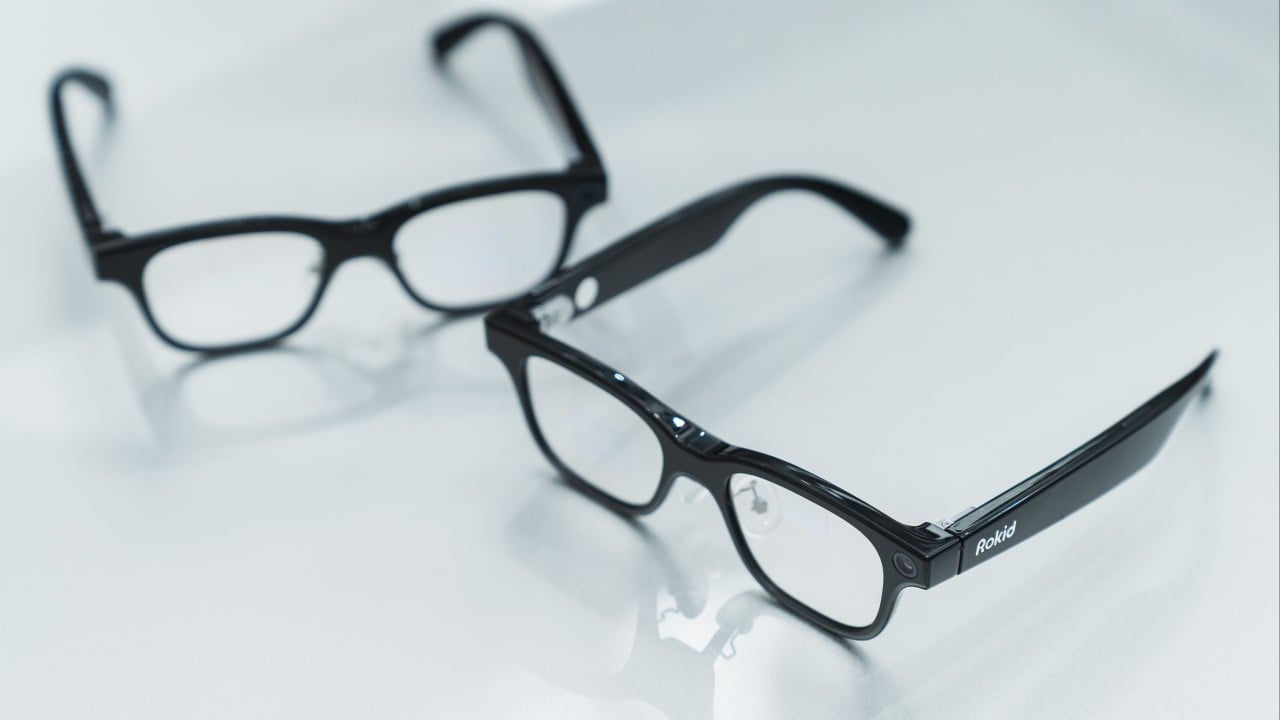
Rokid operates squarely in the optical see-through and spatial display arena, pushing lightweight form factors alongside spatial computing accessories. Selling optical see-through hardware in brick-and-mortar retail carries a brutal catch: visual acuity and fit are deeply personal. Two people with different pupillary distances or mild astigmatism can look through the exact same optics and have completely opposite experiences. One sees crisp text; the other sees double edges or eye strain within four minutes.
A flashy flagship concept cannot solve optical physics. It can only stage it.
Why Hong Kong Is Both a Launchpad and a Meat Grinder
Hong Kong looks obvious on paper for a consumer tech flagship. High population density. Cosmopolitan shoppers. Cross-border curiosity. Strong electronics literacy.
Look closer and the math gets harsher.
Commercial retail rents in prime Hong Kong districts rank among the steepest in the world. Even when brands secure favorable terms or short-term pop-up structures, fixed overhead in Hong Kong punishes low-turnover SKUs. Smart glasses are not high-frequency consumables. Even if a shopper loves a demo, deciding to drop several hundred dollars—or more—on first- or second-generation AR hardware involves hesitation, comparison shopping, and skepticism about long-term software support.
Then there is the buyer mix. Hong Kong draws locals, mainland visitors, and international travelers. That sounds like a broad funnel until you look at after-sales support, warranty logistics, app ecosystem compatibility, and language expectations. A tourist who buys spatial eyewear on vacation and flies home three days later has very different support needs than a local commuter wearing the device every morning.
Imagine a Scenario Where a Flagship Hits Capacity
Imagine a scenario where Rokid’s Hong Kong space becomes an instant social media hit on Saturday afternoon. Sixty people line up outside. Twenty get inside per hour. Each person needs five to eight minutes to adjust the fit, test a translation or teleprompter or media mode, and ask questions.
Do the arithmetic. Even with ten demo stations running at full tilt, throughput is tight. Half the crowd gets bored waiting; a quarter leaves without trying the product; a tiny fraction buys on the spot. Meanwhile, your most expensive real estate is occupied by spectators taking short videos rather than customers building a habit.
High engagement in a flagship store is not the same thing as commercial velocity. Crowds are vanity metrics unless they convert into repeat advocacy, low return rates, and clear word-of-mouth outside the store walls.
Asking the Wrong Questions About Retail AR
Most coverage around a flagship opening asks the wrong questions. Here is what people usually search and debate—and why the framing is off.
Does a flagship store prove AR is ready for mainstream consumers?
No. It proves a brand has capital, ambition, and a story to tell. Mainstream readiness is measured by what happens six months after the novelty fades: whether people still wear the glasses on boring Tuesdays, whether battery life survives a full workday, and whether developers or first-party apps give users a reason beyond novelty demos.
History is full of memorable flagship spaces attached to niche products. A physical showroom can accelerate discovery among early adopters, but it cannot override form-factor friction for the mass market.
Why choose a "no man’s land" theme for consumer hardware?
Branding loves tension. "No man’s land" suggests untamed territory, breaking rules, or stepping outside conventional retail clichés like sterile white walls and glass counters.
The danger is positioning ambiguity. When shoppers walk into an unfamiliar product category, clarity beats cleverness. If the theme screams experimental expedition while your product wants to be worn at a coffee shop or during a flight, the aesthetic and the use case pull in opposite directions. A memorable theme only works if it sharpens what the glasses do for the user rather than distracting from daily utility.
Can physical retail fix AR’s biggest adoption bottleneck?
Not by itself. The biggest bottleneck in AR eyewear has never been lack of curiosity. People love trying cool tech once. The bottleneck is habit formation—getting someone to put the frames on without feeling self-conscious, dealing with glare, or managing another charged device.
A store can let someone experience a five-minute spark. Habit requires a fifty-hour month.
What Heavy Hitters in Optics and Consumer Tech Actually Prove
Look at the companies that have survived decades selling things people wear on their faces or carry everywhere.
EssilorLuxottica understands eyewear distribution, prescription workflows, frame sizing, and optical retail discipline better than almost any tech startup alive. When Meta partnered with EssilorLuxottica on Ray-Ban smart glasses, the smart move was not inventing a bizarre new retail ritual from scratch—it was riding a familiar eyewear identity and pairing light camera/audio utility with everyday frames.
Meanwhile, Apple and industry pioneers like Magic Leap and Microsoft with HoloLens have repeatedly demonstrated how hard optical engineering and spatial computing remain when pushed toward slim, comfortable, all-day form factors. Even well-funded giants have had to recalibrate timelines, pricing, and positioning as physical constraints collided with ambitious software promises.
The lesson from those heavy hitters is consistent: distribution and ergonomics win over spectacle. Spectacle gets you press coverage on opening week. Ergonomics and clear value keep customers from returning the box two weeks later.
Where My Contrarian Take Could Be Wrong
Being contrarian is easy when you sit on the sidelines. Being honest means admitting where this critique could miss the mark.
First, a flagship store in a high-visibility city like Hong Kong can act as a brand signal and regional hub rather than a standalone profit center. If Rokid uses the space to anchor regional PR, host developer or partner briefings, gather real-world user feedback in a dense market, and funnel demand into broader channels, judging the store solely on four-wall retail profit misses its broader role.
Second, urban Asian markets often adopt compact hardware, travel aids, and multifunction gadgets faster than Western markets—especially when features like real-time translation, heads-up prompts, or media viewing solve immediate friction for travelers and dense-city residents.
Third, if the physical space is designed as a modular, adaptable experience rather than a rigid monument with bloated fixed costs, the downside risk shrinks dramatically.
Unconventional Moves That Actually Work for Spatial Hardware
If you are running retail or go-to-market strategy for AR eyewear in a market like Hong Kong, skip the usual playbook and focus on what moves the needle:
- Optimize for "Two-Minute Clarity," Not Twenty-Minute Spectacle. Give visitors one unmistakable reason to care within 120 seconds—live translation, hands-free notes, or private big-screen viewing—before showing secondary features. Confusion kills conversion.
- Build a Reality-Check Zone, Not Just a Fantasy Zone. Let people test visibility in brighter light or noisy conditions, not just dimmed demo corners. Honest expectations slash post-purchase returns.
- Treat Every Demo as an Optical Fit Check. Train staff to adjust nose pads, temples, and fit like skilled opticians rather than script-reading promoters. Comfort is the gatekeeper to every feature you built.
- Measure 14-Day Retention and Return Reasons, Not Opening-Week Foot Traffic. Track who keeps the glasses, who returns them, and why. Those numbers tell you whether your product is becoming a habit or a novelty.
- Turn the Store into a Feedback Loop for Firmware and UX. Watch where people hesitate, squint, or tap the wrong control during live trials, and ship software fixes based on real friction points.
A flagship opening in Hong Kong will get plenty of applause this week. Real validation comes months later, when the cameras leave and the glasses still have to earn a spot on someone's face.