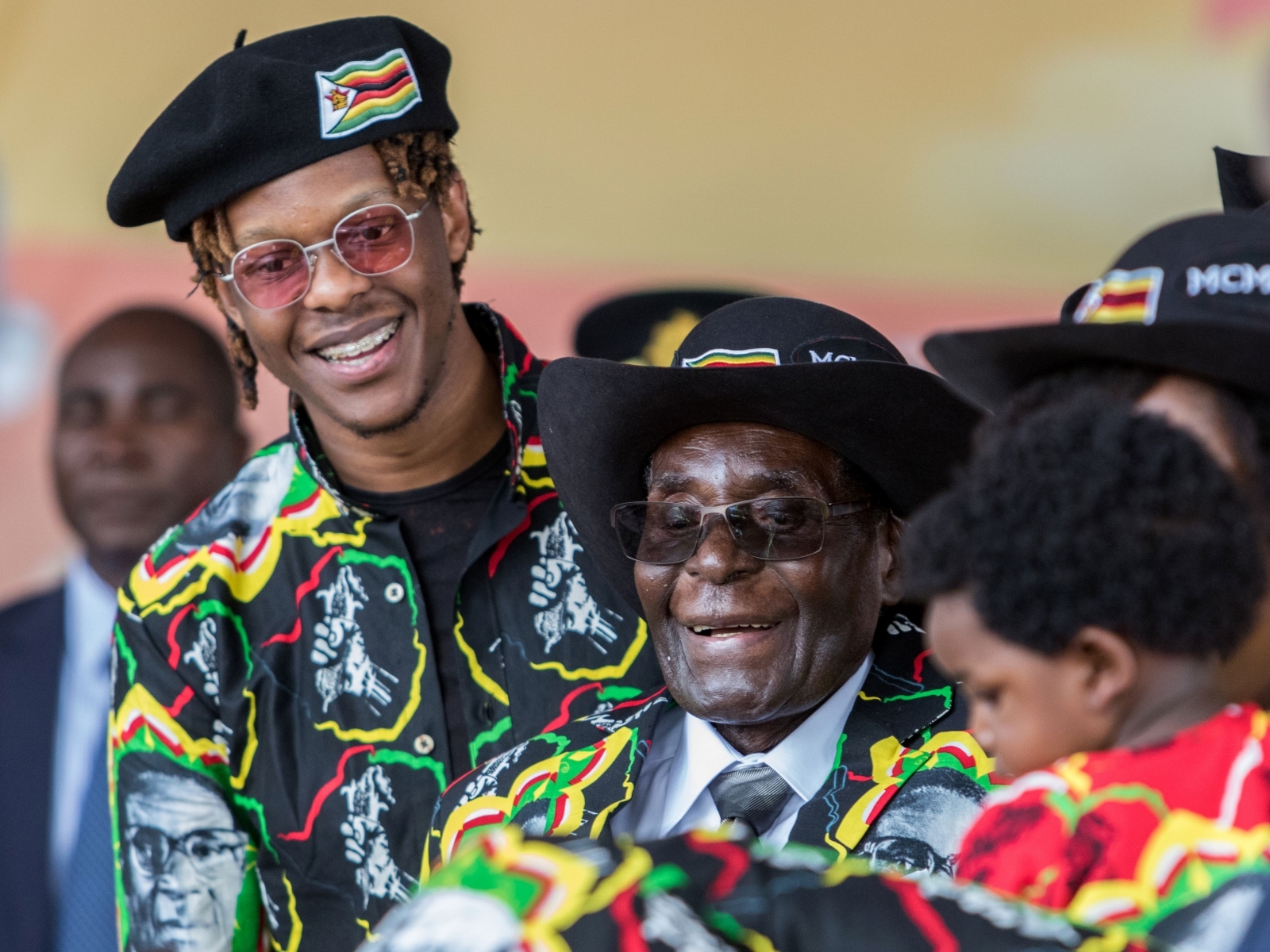
The headlines are predictable. They focus on the absurdity of the weapon—a plastic imitation. They focus on the punchline of a fallen dynasty’s scion behaving like a petulant teenager in a Sandton nightclub. But if you think the South African government deported Robert Mugabe Jr. because they were genuinely terrified of a toy gun, you’re falling for the most basic trick in the geopolitical playbook.
South Africa didn't just punish a brat; they executed a low-stakes PR stunt to distract from a crumbling internal security narrative.
By fixating on the "toy gun" aspect, the media missed the real story: the weaponization of administrative law to perform a "tough on crime" charade when the state is actually failing to manage real ballistic threats. Let’s stop pretending this was a legal necessity and start seeing it for what it was—a convenient eviction of a high-profile liability.
The Fine Print of Selective Enforcement
In any other context, a drunk socialite waving a toy in a club gets a slap on the wrist and a lifetime ban from the VIP section. When your last name is Mugabe, you become a sacrificial lamb for a Department of Home Affairs that needs a win.
The South African Firearms Control Act is clear about imitation firearms. Yes, it’s illegal to use them to threaten people. But let’s be brutally honest about the "threat" here. We are talking about a country where illegal high-caliber weapons circulate with near-impunity in townships every single night. The state’s sudden obsession with a piece of molded plastic in a luxury lounge isn't about public safety. It’s about the optics of control.
When the state can't catch the kingpins, it deports the princes. It’s easier to process a deportation for a celebrity’s son than it is to dismantle the syndicates fueling South Africa's actual murder rate.
The Myth of the "Equal Application" of Law
The lazy consensus suggests that this proves "nobody is above the law."
I’ve spent years watching how diplomatic immunity and high-level connections grease the wheels of Southern African justice. This wasn't a triumph of the rule of law. It was a calculated abandonment. In the past, the Mugabe name carried enough regional weight to make these kinds of "indiscretions" vanish before the first police report was even typed.
The fact that the South African authorities moved so decisively tells us one thing: the Mugabe brand is officially bankrupt. The current Zimbabwean administration didn't pick up the phone to save him. Without the shield of his father’s lingering influence, Robert Jr. became a "cost-free" target.
Deporting him provides the South African government with three specific benefits:
- It appeases the anti-immigrant sentiment currently boiling in the electorate.
- It signals a (false) zero-tolerance policy on crime.
- It allows them to appear "independent" from Zimbabwean political ties without actually offending the current regime in Harare.
The Psychological Profile of the Disposable Elite
Why do people like Robert Jr. do this? It’s not just "spoiled brat" syndrome. It’s the result of a profound identity crisis shared by the children of deposed autocrats.
When your entire world is built on the premise of absolute power, but the source of that power is gone, you resort to theater. The toy gun is the perfect metaphor for the modern Mugabe legacy: all the visual cues of a threat with zero actual lethality. He wasn't trying to rob the place; he was trying to remind the room that he could be dangerous. He was LARPing as his father.
The club-goers weren't in danger of being shot, but the South African state was in danger of looking weak if they ignored the stunt. By reacting with the full weight of the deportation machine, they gave Robert Jr. exactly what he wanted: the illusion that he is still a person of consequence.
Why the Deportation is a Policy Failure in Disguise
If you want to understand why South Africa's security apparatus is actually in trouble, look at what happens after the cameras stop clicking.
Deportation is the ultimate "out of sight, out of mind" solution. It doesn't address the underlying issue of why high-profile figures feel comfortable violating laws in the first place. It doesn't address the ease with which imitation weapons are used to facilitate real crimes in the country. It simply moves the problem across the Limpopo River.
A fine and a plane ticket. That’s the price of a security theater performance.
If the goal was truly deterrence, the punishment would have focused on the systemic issues of private security in these "elite" spaces. Why was he allowed in with any sort of weapon—fake or not? Why did the club’s security fail to de-escalate? Because in the ecosystem of high-end nightlife, the rules are usually suggestions for the rich. Robert Jr. just happened to be the one who wasn't rich enough anymore to buy his way out of the consequences.
The Reality of the "Toy Gun" Defense
People often ask: "If it was just a toy, why the big deal?"
The premise of the question is flawed. In the eyes of the law, the intent and the perception are what matter. But in the eyes of politics, the symbolism is what matters.
Imagine a scenario where a non-famous Zimbabwean migrant did the exact same thing in a local tavern. They wouldn't be in the news. They might be arrested, they might be beaten, or they might just be ignored. The Mugabe case is only a "case" because it allows the South African state to perform its duties on a stage where everyone is watching.
It is the equivalent of a traffic cop ticketing a Ferrari for doing 5km/h over the limit while ignoring the hijacked truck barreling through the red light ten feet away. The Ferrari is easier to catch, more satisfying to punish, and makes for a better headline.
Actionable Takeaway for the Cynical Observer
Stop reading these stories as "crime and punishment." Read them as "brand management."
When you see a high-profile deportation like this, ask yourself:
- What major scandal is currently hitting the Department of Home Affairs?
- Which political party needs to look "tough on foreigners" this week?
- Who benefits from the Mugabe name being dragged through the mud?
The South African public is being sold a narrative of accountability. In reality, they are being given a distraction. Robert Mugabe Jr. isn't a threat to national security; he’s a PR asset that the state just cashed in.
The real danger isn't the man with the toy gun. It’s the government that wants you to think catching him is a victory.
Pack your bags, Robert. The show is over, and the audience is already looking for the next act.