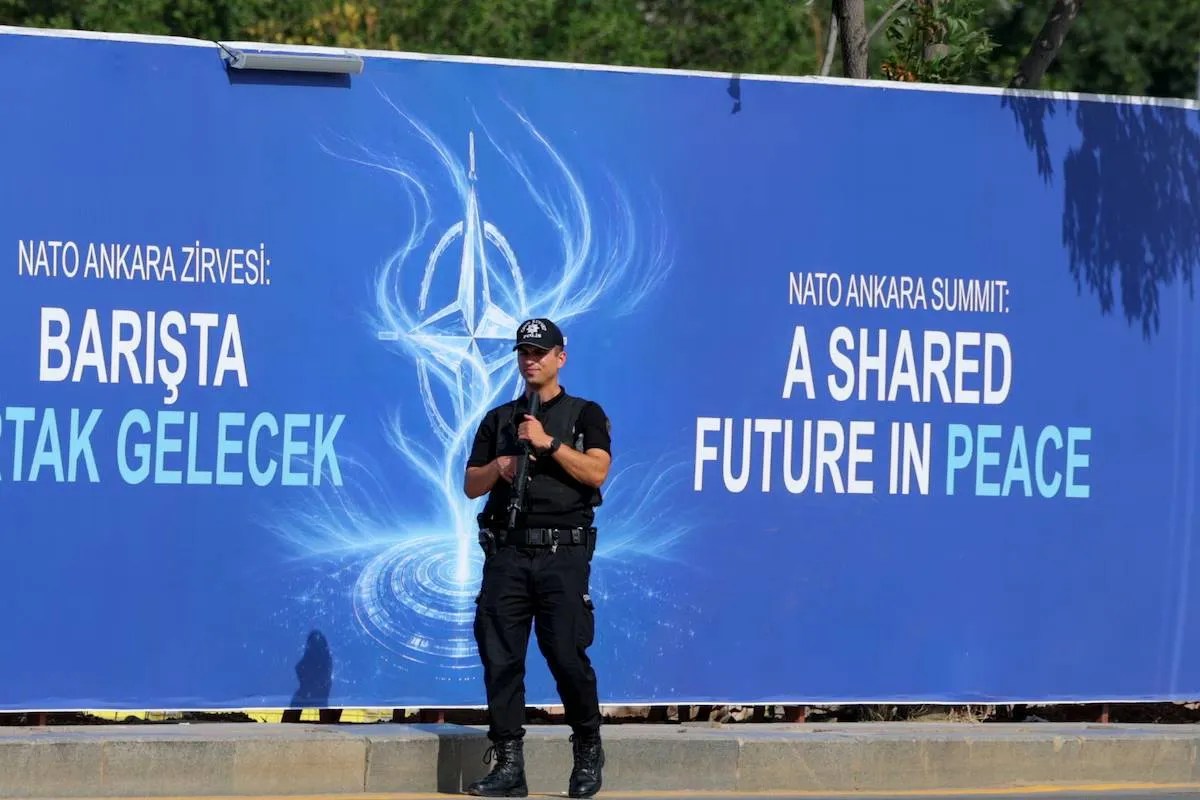
The coffee in the diplomatic briefing room always tastes like cardboard and anxiety. It is a universal truth, whether you are sitting in Brussels, Washington, or New Delhi. People who hold the fate of nations in their briefcases tend to drink it anyway, gulping down the bitter warmth while staring at maps that look increasingly fragile.
For seven decades, those maps had a comforting predictability. A thick, imaginary shield covered Western Europe and North America. If you touched one piece of that shield, thirty-two nations promised to strike back. It was called Article 5. It was the ultimate security blanket, woven from the cold realities of World War II. If you enjoyed this post, you should read: this related article.
Then came the reckoning.
When Donald Trump looked across the table at European leaders, he did not see a sacred fraternity of democratic values. He saw a ledger. He saw unpaid bills. His message was brutally simple: pay up, or you are on your own. Suddenly, the shield felt less like steel and more like glass. The recent gatherings of the North Atlantic Treaty Organization have not been victory laps. They have been tense, high-stakes negotiations where the very definition of loyalty is being rewritten in real-time. For another perspective on this development, check out the latest coverage from Associated Press.
But while the cameras track every twitch of Trump’s jawline and every nervous glance from European prime ministers, a much larger question is quietly echoing through the corridors of power thousands of miles away.
Should India step inside the circle?
The Ghost of Bandung
To understand why this question causes sleepless nights in New Delhi, you have to understand the DNA of Indian diplomacy. It is a legacy built on the concept of keeping everyone at arm's length.
Picture a young nation, fresh out of the shadow of colonial rule, refusing to take sides in a bitter Cold War. While Washington and Moscow divided the planet into binary choices, India chose a third path. Non-alignment was not about being passive. It was about survival. It was the refusal to let Indian soldiers become pawns in someone else's global chess game.
Step into the shoes of a senior strategist at the Ministry of External Affairs in New Delhi. Your entire career has been anchored in this strategic autonomy. You have been taught that alliances are handcuffs.
Now, look out the window.
The northern border is a jagged line of high-altitude anxiety. Chinese troops are fortifying positions in the Himalayas. In the Indian Ocean, foreign submarines are charting the waters with increasing frequency. The old rules of neutrality feel dangerously exposed when a superpower neighbor is flexing its muscles at your doorstep.
The temptation to call for backup is real. The West is practically begging India to join the club, offering advanced technology, intelligence sharing, and the prestige of a global alliance.
But clubs have rules. And they have enemies.
The Price of the Ticket
Consider a hypothetical scenario, one that keeps military planners awake until dawn.
India signs a formal treaty with NATO. The celebratory handshakes dominate the evening news. Six months later, a conflict erupts in Eastern Europe or the Taiwan Strait. Under the terms of a mutual defense pact, India is suddenly expected to position assets, offer logistics, or perhaps even send troops into a conflict that has nothing to do with its own immediate survival.
Worse, the ultimate nightmare of Indian foreign policy becomes a reality: Russia is driven completely into the arms of China.
For decades, Moscow has been India’s dependable defense partner, supplying the fighter jets and submarines that guard the subcontinent. Forcing Russia to choose between a new Western-aligned India and Beijing is a gamble with terrifying odds.
The Western powers view NATO as a beacon of collective security. But from a seat in New Delhi, it looks like a magnet for complications. The alliance was built to counter Moscow. India’s primary challenge is Beijing. The overlap between those two priorities is messy, imperfect, and fraught with miscalculations.
The Art of the Side Hustle
The real problem lies elsewhere. It is the mistaken belief that the only choices are total isolation or total commitment.
The world has evolved beyond the rigid blocs of the twentieth century. Today, diplomacy looks less like a marriage and more like a series of strategic dates. India has mastered this art.
Instead of joining NATO, New Delhi has helped build the Quad—a loose, flexible partnership with the United States, Japan, and Australia. There are no binding military clauses. There is no Article 5. It is a handshake, not a handcuff. It allows India to secure the Indo-Pacific without inheriting Europe's ancient grudges.
When Trump demands that allies pull their weight, he inadvertently validates the Indian perspective. If the American commitment to Europe can fluctuate based on an election cycle, why should India tie its destiny to a distant Atlantic treaty? Trust is a rare commodity in modern geopolitics. Self-reliance is the only currency that never devalues.
The diplomats in New Delhi know this. They watch the drama in Brussels with detached intensity. They see a fractured West trying to find its footing, balancing internal political storms against external threats.
The Unwritten Contract
Ultimately, the debate over whether India should join NATO misses the point of what India has become.
It is no longer a nation seeking shelter under someone else's umbrella. It is a subcontinent building its own roof. The pressure from Washington will continue, and the threat from Beijing will not vanish with the spring thaw.
But true security is not found in signing onto an old order that was designed for a different century and a different continent. It is found in the quiet, messy work of building domestic capability, forging flexible partnerships, and maintaining the freedom to say no.
The cardboard-tasting coffee will get cold. The summits will end with carefully worded communiqués that mean everything and nothing all at once. The maps will continue to shift.
But as the ink dries on the latest round of alliance declarations, the view from New Delhi remains stubbornly clear. The best way to survive a storm is not to anchor yourself to a ship that is arguing over who pays for the fuel. You build a stronger hull of your own.