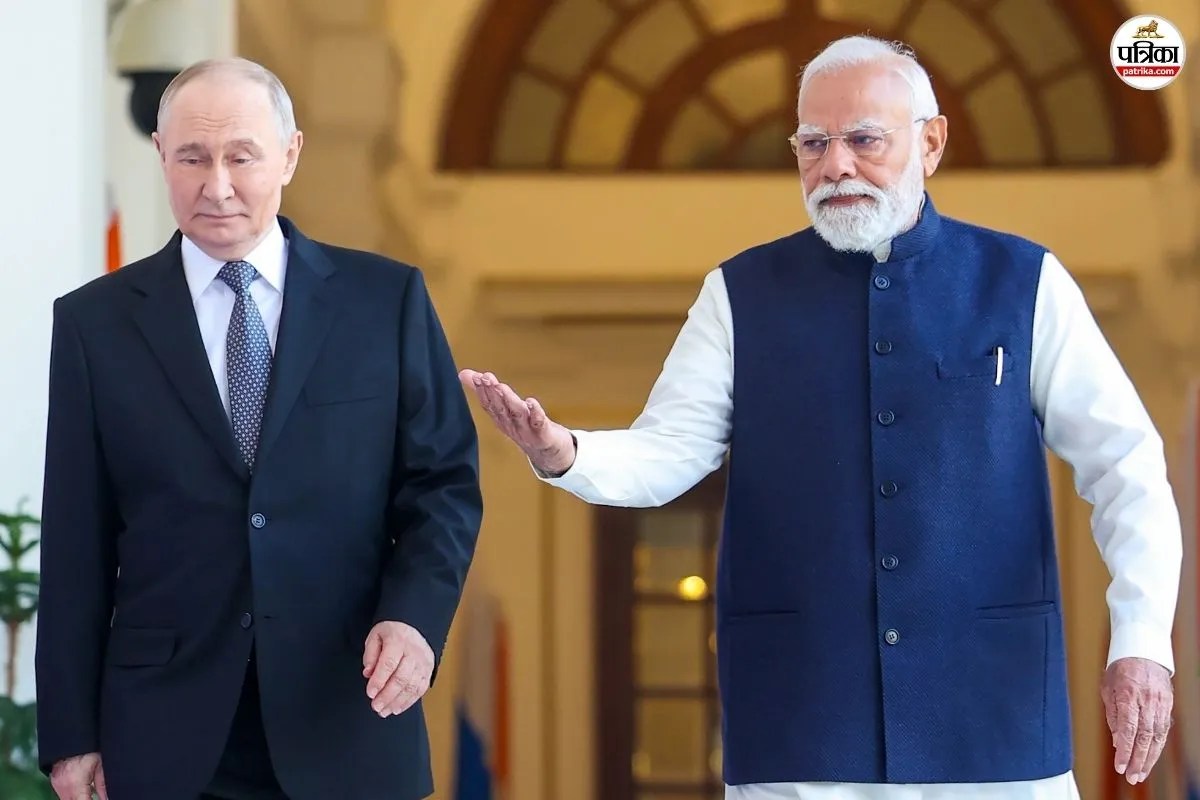
The headlines are screaming about a "massive" breakthrough. The Reciprocal Exchange of Logistics Support (RELOS) agreement between India and Russia is being framed as a tectonic shift in global security. Common wisdom suggests that 3,000 troops, 10 aircraft, and 5 warships swapping bases represents a new era of strategic depth.
They are wrong. If you liked this piece, you should read: this related article.
This isn’t a strategic marriage; it’s a high-stakes maintenance contract for a legacy fleet. While mainstream analysts obsess over the optics of Russian sailors in Visakhapatnam or Indian pilots in Vladivostok, they ignore the reality of hardware attrition, geopolitical friction, and the sheer logistical nightmare of modern warfare. RELOS is a desperate attempt to keep aging Soviet-era gears turning, not a blueprint for a future superpower alliance.
The Logistics Trap: Why "Support" Isn't "Strength"
The term "Logistics Support" sounds clean. It sounds efficient. In reality, it is a band-aid on a gaping wound. India’s dependency on Russian spare parts is a well-documented liability. I’ve spoken with defense procurement officers who have spent years chasing down single-source components for Sukhoi fighters that are currently stuck in bureaucratic limbo because of the war in Ukraine. For another look on this event, refer to the latest update from The Washington Post.
RELOS isn’t about projecting power; it’s about survival. By allowing reciprocal base access, India is trying to ensure that its 60% Russian-origin inventory doesn’t become a collection of very expensive paperweights.
If you think 5 warships and 10 aircraft moving between bases changes the balance of power in the Indian Ocean, you aren't looking at the math. The US-India LEMOA (Logistics Exchange Memorandum of Agreement) already provides a much wider, more sophisticated network. RELOS is merely the Kremlin’s attempt to stay relevant in a theater where they are rapidly losing market share to French Rafales and American MQ-9B drones.
The Interoperability Lie
The "Lazy Consensus" argues that RELOS will lead to deeper tactical integration. This is a fundamental misunderstanding of how modern military data links work.
Russia and India do not share the same "digital DNA."
- Encryption Standards: Russian communication suites are notoriously closed-loop.
- Sensor Fusion: Integrating a Russian S-400 system with an Indian-developed Netra AEW&C or a US-sourced P-8I Neptune is a coding nightmare.
- IFF (Identification Friend or Foe): Sharing bases means sharing frequencies. In a high-intensity conflict, the risk of electronic fratricide between non-standardized systems is astronomical.
Imagine a scenario where an Indian Su-30MKI attempts to refuel at a Russian base during a regional flare-up. The physical nozzle might fit, but the mission computers are speaking different languages. Without a unified battle management system—which India will never give Russia access to for fear of CAATSA sanctions and intellectual property theft—this "integration" is purely surface-level.
The China Elephant in the Room
Every mainstream outlet ignores the most uncomfortable truth: Russia is now the junior partner in a "no-limits" partnership with China.
India’s primary existential threat is the PLA (People's Liberation Army) along the Line of Actual Control. Russia, meanwhile, is economically and militarily tethered to Beijing. Does anyone honestly believe that in a hot conflict between New Delhi and Beijing, Moscow would provide actionable intelligence or high-end logistics to India through the RELOS framework?
Russia is playing a double game. They want Indian currency to bypass SWIFT, and they want to keep their defense factories running. But they will not risk their relationship with Xi Jinping to protect Indian interests in the Himalayas. RELOS is a commercial insurance policy for Moscow, masked as a defense pact.
The Cost of "Strategic Autonomy"
India prides itself on "Strategic Autonomy"—the ability to talk to everyone and be beholden to no one. But RELOS might be the point of diminishing returns.
For every step India takes toward Moscow, it increases the friction coefficient with Washington, London, and Canberra. Is the ability to dock a destroyer in Murmansk worth the potential throttling of jet engine technology transfers from GE? Is 3,000 troops exercising in the Russian Far East worth a delay in the Predator drone deal?
The trade-off is lopsided. India is trading high-tech future growth for low-tech legacy maintenance.
Dismantling the "People Also Ask" Myths
1. Does RELOS mean Russia will defend India against China?
No. RELOS is a logistics agreement, not a mutual defense treaty like Article 5 of NATO. It covers fuel, food, and spare parts. It does not cover blood and iron.
2. Is this the end of India's tilt toward the West?
Hardly. It’s a hedge. India knows its Russian kit will be around for another 30 years. They need this deal to keep that kit functional while they migrate to indigenous and Western platforms. It’s not a tilt; it’s an exit strategy that takes decades to execute.
3. Will this deal help India in the Indian Ocean Region (IOR)?
Minimally. Russia’s naval presence in the IOR is a shadow of the Soviet era. India already has the home-field advantage. Access to Russian bases in the Arctic or the Pacific provides almost zero tactical benefit for protecting the Malacca Strait or the Gulf of Aden.
The Hard Truth About Defense Procurement
Defense deals of this magnitude are often signed to satisfy the "Old Guard" in the military establishment—men who grew up on Russian doctrine and feel a nostalgic pull toward Moscow. But nostalgia is not a strategy.
The modern battlefield is defined by:
- Software-defined warfare
- Attrition-based drone saturation
- Real-time satellite link-ups
Russia has struggled with all three in its own backyard. Doubling down on a logistical partnership with a nation that is currently cannibalizing washing machines for semiconductors is a questionable long-term move.
The Real Winner Isn't New Delhi
Russia wins because it secures a captive market for its aging defense industry. It gets to point to RELOS as proof that it isn't "isolated" by Western sanctions.
India, meanwhile, gets to keep its T-90 tanks running for another five years. It’s a transaction of necessity, not a leap of progress. If India wants to be a true global power, it needs to stop looking for "support" from the 20th century and start building the infrastructure of the 21st.
RELOS is a rearview mirror. Stop looking at it as if it’s the windshield.
Buy the parts. Fix the planes. But don't mistake a supply chain agreement for a seat at the high table of global dominance. The real power isn't in whose base you can park your ship; it's in whose technology makes your ship invisible. Russia can't give India that, and RELOS won't change it.
Stop celebrating the paperwork and start questioning the dependency. Relos is a anchor, not a sail.