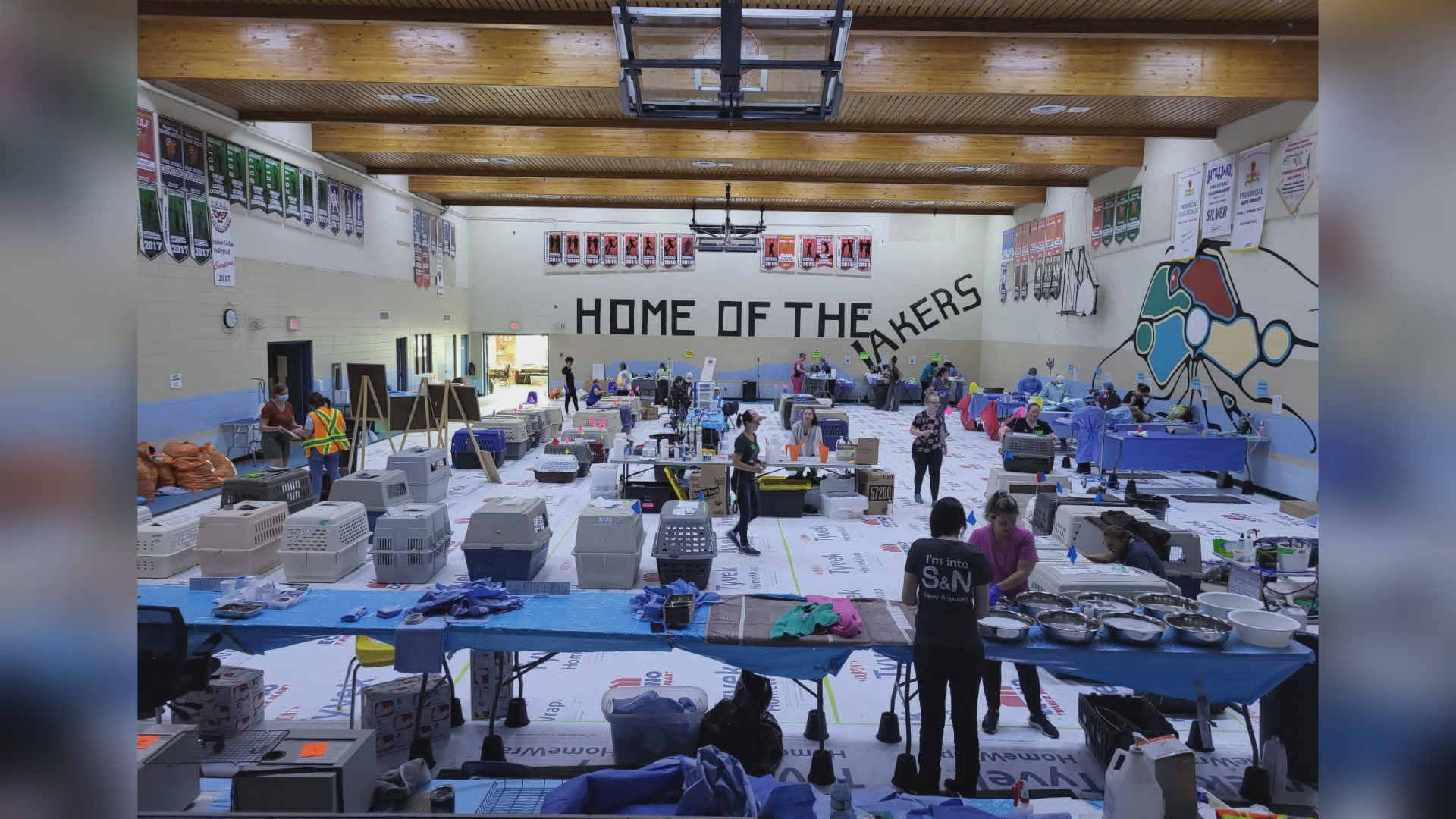
The cancellation of a temporary veterinary intervention at Sturgeon Lake First Nation exposes a profound structural failure in how regional regulatory bodies evaluate public safety and service distribution. When the Saskatchewan Veterinary Medical Association denied a temporary clinic permit citing proximity rules, the decision triggered cascading consequences for population control, municipal risk management, and the economic reality of remote households.
Standard geographic metrics fail when applied to rural and Indigenous populations. The regulatory framework assumes that proximity equals access, an assumption that collapses under basic socioeconomic examination.
The Economic Barrier Function
Geographic distance metrics measure physical space, not transit friction. For households within a designated radius of regional hubs like Prince Albert, distance is a minor variable. For isolated reserve populations, that same distance introduces high transaction costs.
- Capital Deficit: Ownership of reliable transport is not universal. The capital cost of maintaining a vehicle capable of winter and spring rural transit creates a strict exclusion boundary.
- Variable Expenditure Allocation: Fuel and maintenance overhead represent a severe opportunity cost for low-income households. Discretionary spending for animal care cannot compete with primary survival expenses.
- Capacity Saturation: Permanent regional practices operate under extreme utilization constraints. Even if a household possesses transit means, local clinics frequently lack the open scheduling slots required to absorb surge volumes.
When an on-site mobile intervention is blocked, these three variables combine to eliminate preventative care entirely. The system replaces a low-cost, high-density preventative model with zero intervention.
The Public Safety Cost Function
Unmanaged animal populations generate predictable municipal risks. Without active intervention programs, feral and unsterilized dog populations expand exponentially. This creates distinct hazard categories for the municipality.
Public safety relies on population density management. When animal numbers exceed community carrying capacity, encounters between humans and packs increase. Children and the elderly face acute physical risks. Municipal infrastructure lacks the resources to manage animal control enforcement independently, depending entirely on transient charitable projects to maintain baseline safety.
The regulatory denial introduces an artificial constraint on risk mitigation. By preventing the Canine Action Project from servicing up to 150 animals over a single operating weekend, the regulatory body forces the community to absorb unmitigated biological growth.
Regulatory Disconnect and Operational Friction
The conflict between the Saskatchewan Veterinary Medical Association and local leadership highlights a systemic failure in risk governance. Regulatory bodies are engineered to protect established commercial veterinary monopolies and maintain uniform clinical standards. However, applying rigid urban-adjacent licensing criteria to temporary public health initiatives ignores operational context.
- Precedent Erasure: Operating historical norms matter. A program executing interventions successfully across multiple jurisdictions over a multi-year timeline establishes an operational track record. Disrupting this baseline without prior framework communication signals regulatory instability.
- The Substitution Fallacy: The regulator assumes that denying a mobile clinic redirects animal owners toward permanent storefront facilities. Economic and structural data disproves this substitution. The demand does not migrate; it vanishes, leaving the animal population untreated.
- Downstream Rescue Strain: Animal welfare networks operate on thin margins of foster homes and volunteer capital. Suppressing preventative spay-and-neuter capacity accelerates abandonment rates, shifting the financial burden onto volunteer rescue networks that possess zero institutional funding.
Systemic Realities of Northern Veterinary Deserts
The broader landscape of northern animal management suffers from chronic undersupply. Veterinary medicine suffers from severe professional concentration in urban centers. Northern regions function as service deserts.
Charitable operators bridge this structural gap by deploying short-term operational surges. These projects achieve high throughput efficiency, treating dozens or hundreds of animals in days. Restricting these projects based on arbitrary radius rules protects local commercial turf at the direct expense of public safety and zoonotic disease control.
Sturgeon Lake First Nation data indicates that thousands of community requests and hundreds of interventions form the backbone of local population management. Severing this pipeline forces communities back into a reactive cycle where animal control relies on crisis response rather than preventative engineering.
Strategic Operational Pivot
To resolve this structural deadlock, the governance model governing temporary veterinary licensure must be decoupled from commercial proximity protection.
Regional regulators must establish an exemption tier for non-profit public health interventions operating in recognized underserved jurisdictions. Licensing evaluations must weigh transit friction and localized clinic saturation indexes rather than raw kilometer measurements. Until regulatory frameworks incorporate socioeconomic variables into their permit calculus, public safety and animal welfare in northern communities will remain hostages to rigid administrative bureaucracy.