Silence.
That is the first thing you notice when the state decides you are a target, not the sirens, not the knock on the door, just the sudden, suffocating quiet of a phone that stops ringing because friends are suddenly afraid their names might show up on a subpoena next to yours.
I have sat in sterile conference rooms where the air conditioning hums too loudly, watching ordinary people try to comprehend how a digital footprint—a few angry words typed into the glowing void at two in the morning—can suddenly summon the full, terrifying weight of an Attorney General’s office. You look across the table at a lawyer charging six hundred dollars an hour, and you realize a brutal truth about modern justice: the process itself is often the punishment.
Now, step into the shoes of a man at the center of a legal storm swirling around Cornell University.
According to court filings and news reports surrounding the civil rights lawsuit tied to Cornell, a defendant accused of making violent online threats against Jewish students is fighting back—not by arguing the merits of the case just yet, but by demanding that New York Attorney General Letitia James be disqualified from the investigation altogether. His argument rests on a simple, combustible premise: James, he claims, poisoned the well before the trial ever began through her own public statements and social media posts.
Stop and think about that for a second.
We live in an era where politicians are expected to be performers. They tweet, they post, they hold press conferences on courthouse steps within hours of a crisis, projecting strength and moral outrage to aconstituency hungry for immediate action. When campus tensions erupted across the country, and terrifying threats appeared on online message boards aimed at Cornell students, the public demanded swift, unequivocal condemnation. Officials stepped up to the microphones. They posted on X. They promised accountability.
From a political standpoint, that is the job. You reassure a frightened community. You draw a line in the sand.
From a legal standpoint, however, it creates a profound, unresolved tension that goes straight to the heart of American jurisprudence.
The Anatomy of a Modern Legal Clash
To understand why a defense attorney would target the state’s top prosecutor over social media posts, you have to understand the dual identity of an elected Attorney General. Unlike a career civil servant tucked away in a windowless office, an Attorney General is both a chief law enforcement officer and a politician who must win elections.
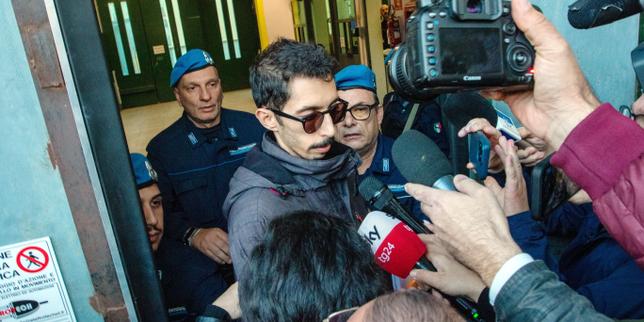
In the Cornell case, federal prosecutors initially brought criminal charges against a student, Patrick Dai, in late 2023 over anonymous online posts threatening Jewish students at the university—a case that resulted in a federal guilty plea and prison sentence. Parallel to federal criminal enforcement, New York’s civil rights apparatus, led by Letitia James, launched civil enforcement actions and investigations targeting online harassment, bias, and hate-fueled threats connected to campus unrest.
According to legal motions filed in the state civil proceedings, the accused party’s defense team argues that James’s public rhetoric and social media commentary crossed the line from official public safety messaging into prejudicial bias. In essence, the defense contends that by publicly characterizing the alleged conduct and signaling predetermined outcomes on social media, the Attorney General compromised the neutrality required of a prosecuting authority.
Consider a hypothetical scenario to make this concrete. Imagine you are accused of a serious offense in your hometown. Before a single piece of evidence is authenticated in court, before your lawyer has cross-examined a single witness, the chief prosecutor holds a press conference and posts a thread on social media declaring your actions reprehensible and promising to make an example of you. Even if the evidence against you is overwhelming, a fundamental question emerges: can the machinery of the state still operate with the dispassionate fairness the Constitution promises?
The law has a specific, clinical term for this: prosecutorial disqualification. In practice, it is one of the highest hurdles a defense lawyer can attempt to clear.
Courts across New York and the broader United States have long held that disqualifying an elected prosecutor or an entire Attorney General’s office is an extraordinary remedy. Judges are deeply reluctant to remove an official chosen by the voters unless a defendant can prove an actual conflict of interest or demonstrable, severe prejudice that makes a fair proceeding impossible. Strong words from a prosecutor, even sharp public criticism of alleged conduct, rarely meet that threshold on their own. Prosecutors are, after all, adversaries in an adversarial system; they are not required to be neutral judges.
Yet, the friction remains real.
The Megaphone and the Gavel
There is an old adage among trial lawyers: a prosecutor’s job is not merely to win a case, but to see that justice is done.
Think of a boxing match. The defense attorney is in one corner, fighting with every legal tool available to protect their client. The prosecutor is in the other corner, pressing the state’s case. The judge sits outside the ropes, keeping the fight clean. When a prosecutor steps up to a digital podium—whether on X, Instagram, or a televised briefing—and broadcasts moral certainty to millions of followers, the boundaries of the ring begin to blur.
This is where the human element becomes impossible to ignore, on both sides of the aisle.
On one side, you have students at Cornell who woke up to grotesque threats of violence posted on a Greek-life forum—messages threatening shootings, stabbings, and sexual violence against Jewish peers. For those students, the fear was not theoretical. They locked their dorm doors. They skipped meals at the kosher dining hall. For them, seeing the Attorney General speak out forcefully on social media was not political grandstanding; it was a lifeline, proof that the highest levels of state government saw their terror and refused to look away.
On the other side, you have the architecture of due process, which exists specifically to protect the most unpopular, reviled defendants imaginable. Due process does not care whether an accusation is heinous. In fact, due process is tested only when the accusation is heinous. When a defendant’s counsel argues that social media posts have tainted the probe, they are tapping into an ancient anxiety: that public outrage, amplified by modern algorithms, can overwhelm the slow, deliberate machinery of the courts.
I remember watching a local corruption trial years ago where the prosecutor gave a fiery interview on the evening news the night before jury selection. Inside the courtroom the next morning, you could feel the shift in oxygen. Every potential juror who walked into the box had seen the clip. The defense spent three days trying to unring a bell that had already echoed across the entire county. You cannot un-hear a headline. You cannot un-read a viral post.
Why Social Media Changes the Rules of Engagement
For centuries, the legal system relied on friction to protect fairness. Information moved slowly. Legal filings were buried in paper dockets at county courthouses. A prosecutor’s statements were filtered through editors, print deadlines, and broadcast standards.
Social media vaporized that friction.
Today, a post drafted by a communications aide in Albany or Manhattan can reach millions of screens in thirty seconds, stripped of legal nuance, compressed into a punchy headline or a bolded graphic. Legal scholars and ethics boards have spent the last decade scrambling to catch up with this reality. Bar associations across the country, including in New York, maintain strict rules of professional conduct governing extrajudicial statements—Rule 3.6, specifically, which bars lawyers participating in an investigation or litigation from making public statements that have a substantial likelihood of materially prejudicing an adjudicative proceeding.
There are exceptions, of course. Prosecutors are permitted to inform the public about the nature of an investigation, warn of public safety dangers, and state what is already in the public record. The gray area—the battleground where motions like the one in the Cornell lawsuit are fought—lies in the tone, the framing, and the intent behind those posts.
Did the Attorney General merely inform the public that her office was investigating bias-motivated threats, as is her statutory duty? Or did the social media posts cross into the territory of prejudging guilt and whipping up public sentiment against a specific individual?
To be completely candid, the line between those two things is razor-thin, and where you see it depends heavily on where you are standing. If you are a civil rights advocate watching hate crimes spike across college campuses, decisive public leadership looks like courage. If you are a defense attorney watching your client’s name become synonymous with monster before discovery has even concluded, that same leadership looks like a thumb on the scale.
The Invisible Stakes of the Motion
Even if a judge ultimately denies the request to remove Letitia James from the probe—which legal precedent suggests is an uphill battle for the defense—the filing itself serves a calculated strategic purpose.
First, it shifts the spotlight. Instead of the courtroom narrative focusing exclusively on the toxic content of the alleged online threats, the conversation pivots to government overreach and prosecutorial conduct. In high-profile litigation, controlling the framing is half the battle.
Second, it builds a record for appeal. Every motion denied today becomes a footnote in an appellate brief two years from now. By placing the Attorney General’s social media posts directly into the court record, the defense preserves the argument that the entire investigative process was infected by political bias from its inception.
Third, it forces a reckoning with how public officials communicate during moments of acute social crisis. We have seen similar challenges play out across the political spectrum in recent years—from high-profile political prosecutions in New York and Georgia to civil enforcement actions against corporations and activists. Whenever a prosecutor becomes a household name with a massive social media following, defense teams inevitably scrutinize every tweet, every campaign speech, and every television appearance for signs of improper motive.
It is a distinctly twenty-first-century legal dilemma. We ask our elected leaders to be transparent, accessible, and vocal in defending vulnerable communities. Yet the moment they use the loudest megaphone available to do so, those very words become ammunition in the courtroom.
Beneath the Legal Briefs
Strip away the citations, the case law, and the procedural posturing, and what remains is a deeply human collision between two competing needs: the need for a community under threat to feel protected, and the need for an individual facing the state to be judged by evidence rather than outrage.
In the quiet of a courtroom, away from the blue light of phone screens and the endless scroll of commentary, a judge will eventually have to weigh those posts against centuries of legal doctrine. They will read the exact words typed onto the internet, measure them against the strict standards of New York law, and decide whether the state’s top lawyer can remain at the helm of the case.
Until that gavel comes down, the docket sits open, a stack of cold white paper holding the weight of a terrified campus, an embattled prosecutor, and a defendant betting his future on the argument that even the loudest voice in the room must still obey the rules of the ring.