The air in the Sit Room doesn't just feel cold; it feels heavy. It is a specific kind of atmospheric pressure that only exists when the distance between a dial tone and a mushroom cloud is measured in seconds. Somewhere on a secure desk, a phone sits. It isn't literally red anymore—most of the hardware is sleek, modern, and deceptively ordinary—but the weight of it remains.
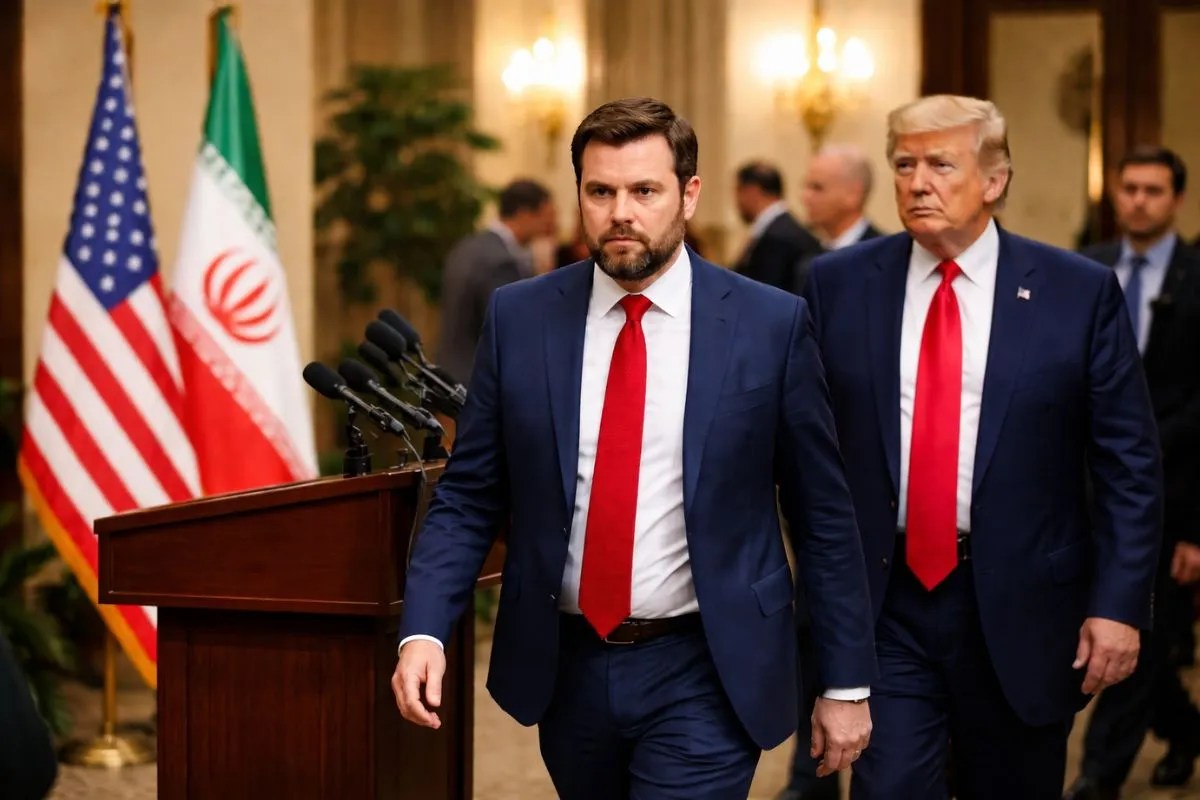
This is the hotline. It is the most expensive and most terrifying insurance policy ever conceived. For months, Donald Trump and JD Vance have been tethered to this digital umbilical cord, waiting for a signal from Tehran that never quite arrives. They have spoken dozens of times, strategizing over the crackle of secure lines, trying to solve a puzzle where the pieces keep changing shape.
Iran is not a math problem. It is a ghost story.
The Ghost in the Machine
To understand why a dozen conversations between a President-elect and his Vice President-elect haven't moved the needle, you have to understand the silence on the other end. Imagine standing in a pitch-black room with someone you know is holding a knife. You can hear them breathing. You can smell the copper of the blade. But every time you reach out to flip the light switch, the wiring fails.
The American side of the ledger is clear. Trump wants a deal. He wants the kind of grand, sweeping handshake that resets the clock and puts his name on a piece of parchment that actually lasts. Vance, the millennial strategist with a cynical eye for old-world entanglements, is the architect of the "What If." What if the carrots don't work? What if the stick is too heavy to swing?
They talk about the sanctions. They talk about the centrifuges spinning in the dark deep beneath the Iranian salt flats. They talk about the proxies—the men in the shadows of Lebanon and Yemen who move like chess pieces controlled by a hand five hundred miles away. But the tragedy of the hotline is that it only works if both people want to speak the same language.
The Language of the Bazaar
In the West, we view negotiations like a contract. You give me X, I give you Y, we sign at the bottom. In the halls of power in Tehran, negotiation is an art form, a dance of dignity and delay. For the Iranian leadership, the hotline isn't a tool for peace; it’s a tool for survival.
Consider the hypothetical perspective of a mid-level diplomat in Tehran. Let’s call him Abbas. Abbas knows that if he picks up the phone and offers too much, he disappears. If he offers too little, his country’s economy continues its slow-motion car crash. He is caught between the wrath of the Supreme Leader and the hunger of the streets. When Trump and Vance discuss "opening the line," they are trying to reach a man like Abbas who is literally too afraid to answer.
This isn't just about policy. It’s about the sheer, exhausting friction of human ego. Trump approaches the world as a series of grand bargains. He believes in the power of the personality—the idea that if he can just get the right person in the room, the logic of the deal will overwhelm the history of the hate.
Vance brings a different energy. He is the voice of the new realism. He looks at the maps and sees the logistics of failure. He knows that every time the phone rings and there is no answer, the probability of a mistake goes up.
The Cost of a Missed Call
Miscalculation is the true villain of this story. It’s not the bomb; it’s the belief that the other side is about to drop the bomb.
When the hotline stays silent, the vacuum is filled by ghosts. Intelligence reports become Rorschach tests. A movement of trucks in the desert is interpreted as a shipment of missiles rather than a delivery of grain. Without the human voice to provide context, the hardware takes over.
We have seen this play out before, but the stakes have never been more volatile. The technology that connects Trump and Vance is instantaneous. They can share satellite imagery in high definition, watch the heat signatures of Iranian facilities in real-time, and discuss the geopolitical fallout before the dust has even settled on a test site. But all that data is useless if they can't bridge the gap of intent.
The invisible stakes are the lives of people who will never see the inside of the Sit Room. It is the shopkeeper in Isfahan who can't buy medicine because the rial has plummeted. It is the sailor in the Strait of Hormuz who is one nervous finger-twitch away from starting a global oil crisis.
The Wall of Cold Glass
The hotline was designed to prevent the end of the world. During the Cold War, it was a literal teletype machine. It was slow. It forced people to think before they typed. Today, communication is too fast for thought but too shallow for trust.
Trump and Vance are operating in a world where the noise is deafening. Between the tweets, the official statements, the leaked memos, and the back-channel whispers, the actual signal is lost. They have talked dozens of times because they are trying to find a way to make the other side blink.
But Iran has learned to stare without blinking. They have lived under the weight of the world's disapproval for forty years. They have turned isolation into a suit of armor.
The real problem isn't that the talks failed. The problem is the assumption that talks are a linear path to a solution. Sometimes, a conversation is just a way to map the thickness of the wall between you.
The Midnight Watch
There is a specific kind of exhaustion that comes with high-stakes diplomacy. It’s the kind that makes your eyes burn and your coffee taste like battery acid. Trump and Vance are living in that exhaustion. They are chasing a ghost that refuses to be caught, using a hotline that feels more like a direct line to a void.
The tragedy of the modern era is that we have the most advanced communication tools in human history, yet we are less understood than ever. We can bounce a laser off the moon, but we can't get two men in different hemispheres to agree on the definition of "peace."
The phone sits there. It is a miracle of engineering, a web of fiber optics and encryption that spans the globe. It is silent.
Somewhere in the basement of a nondescript building, a light flickers on a console. A technician checks the connection. The line is open. The signal is strong. The path is clear.
But no one is picking up.
The silence isn't an absence of sound; it’s a presence of fear. It is the sound of two worlds standing on opposite sides of a canyon, shouting into the wind and wondering why the echo sounds like a threat. The red phone doesn't need a better signal. It needs a reason to ring. Until then, the most powerful men in the world are just two more people waiting for a call that may never come, watching the clock tick toward a midnight that no one invited.
The dial tone is the loneliest sound in the world.