A man in a faded white dhoti sits at a tea stall in Kannur, blowing the steam off a glass of chai. He doesn’t look like a strategist. He looks like someone who has spent forty years watching the rain fall on coconut fronds. But in Kerala, every person at a tea stall is a political analyst, and right now, the air is thick with a specific kind of desperation.
For decades, the political rhythm of this coastal strip was as predictable as the monsoon. Power was a pendulum. It swung from the Left Democratic Front (LDF) to the United Democratic Front (UDF), back and forth, five years at a time. It was a comfortable arrangement. Both sides knew the rules. Both sides knew that if they lost today, they would simply wait their turn and win tomorrow.
That pendulum has snapped.
The 2024 general elections and the looming assembly shifts have turned Kerala into something far more dangerous than a routine battlefield. It has become a survival shelter. For the Indian National Congress and the Communist Party of India (Marxist), the stakes are no longer about policy or prestige. They are about existence. If the walls close in here, there is no other room to run to.
The Last Fortress of the Hammer and Sickle
To understand why the CPI(M) is fighting with the ferocity of a cornered animal, you have to look at a map of India. Thirty years ago, red flags flew high across West Bengal and Tripura. Today, those flags are tattered remnants. Bengal is a memory. Tripura is a lost cause.
Kerala is the only place left on the planet where a democratically elected Communist government still holds significant power. It is the ideological lungs of the party. If the oxygen cuts off here, the party doesn’t just lose an election; it loses its relevance on the national stage.
Pinarayi Vijayan, the Chief Minister, achieved the "impossible" in 2021 by breaking the thirty-year jinx and winning a second consecutive term. It was a feat of organizational strength and a shrewd handling of crises, from floods to pandemics. But that victory created a paradox. By winning so decisively, the LDF raised the floor of expectations to a height that is now becoming difficult to maintain.
The pressure is visible in the local cadres. They aren't just fighting for seats; they are fighting for the survival of a way of life. In the northern belts, politics is tribal. It is deeply personal. When a worker loses a booth, they aren't just losing a data point; they are losing their standing in the village square. For the CPI(M), Kerala is the last hill. There is no retreating further.
The Grand Old Party’s Life Support
On the other side of the aisle, the Congress party finds itself in a different, perhaps more tragic, predicament. While the Communists are fighting for their ideological home, Congress is fighting for its pulse.
In the rest of India, the Congress has been hollowed out, state by state, by the relentless machinery of the BJP. In many regions, the party has become a ghost. But in Kerala, it remains a vibrant, muscular force. It is one of the few places where the Congress machinery still functions with its old-school efficiency.
Rahul Gandhi’s decision to contest from Wayanad in 2019 wasn't just a tactical move; it was a psychological one. It sent a message that Kerala was the heartbeat of the party’s resistance. But that heartbeat is irregular.
If the Congress fails to dominate the Lok Sabha seats in Kerala, or if it falters in the next state cycle, the narrative of its decline becomes an inescapable reality. The party needs Kerala to prove it can still win. It needs the state's diverse electorate—the delicate balance of Hindu, Muslim, and Christian votes—to serve as a blueprint for what a secular opposition could look like.
Imagine a Congress worker in Ernakulam. He has watched his counterparts in Uttar Pradesh and Gujarat vanish into the shadows. He knows that his effort is the only thing keeping the national party’s head above water. The burden is immense.
The Specter in the Room
There is a third force, once ignored as a fringe element, that has begun to change the chemistry of the entire state. The BJP has historically struggled to find a foothold in Kerala’s soil, but they are no longer just knocking at the door. They are leaning against it.
The "bipolar" nature of Kerala politics is dissolving. While the LDF and UDF tear at each other, the BJP is playing a long game of attrition. They don't need to win the state tomorrow. They only need to peel away enough of the percentage to make the old math stop working.
This is the "invisible" stake. Every vote the BJP gains is a vote that used to belong to one of the two titans. In a state where victory margins are often razor-thin, a three percent shift is an earthquake.
The traditional players are terrified of this shift, even if they won't admit it on camera. It forces them into uncomfortable positions. They have to attack each other to win, but if they attack too hard, they create a vacuum that the third force is all too happy to fill. It’s a dance on a tightrope over a pit of fire.
The Religious Fault Lines
Kerala’s greatest pride has always been its social fabric. But during an election of this magnitude, that fabric is stretched to its breaking point.
The Christian community, long a bedrock of the Congress-led UDF, is being courted with a new intensity. Concerns over demographic shifts and "Social Engineering" are being whispered in parish halls. The CPI(M), meanwhile, is trying to position itself as the sole protector of the Muslim minority against the rising tide of right-wing nationalism.
These aren't just campaign talking points. They are conversations happening over dinner tables in Kottayam and Malappuram. People are being forced to choose between their historical loyalties and their immediate anxieties.
When a community leader makes a statement, it ripples through the backwaters. A shift in the stance of the influential bishops or the various factions of the Samastha can flip ten seats overnight. This is the human element that data scientists often miss: the deep-seated fear of being left behind in a changing India.
A Battle of Optics and Identity
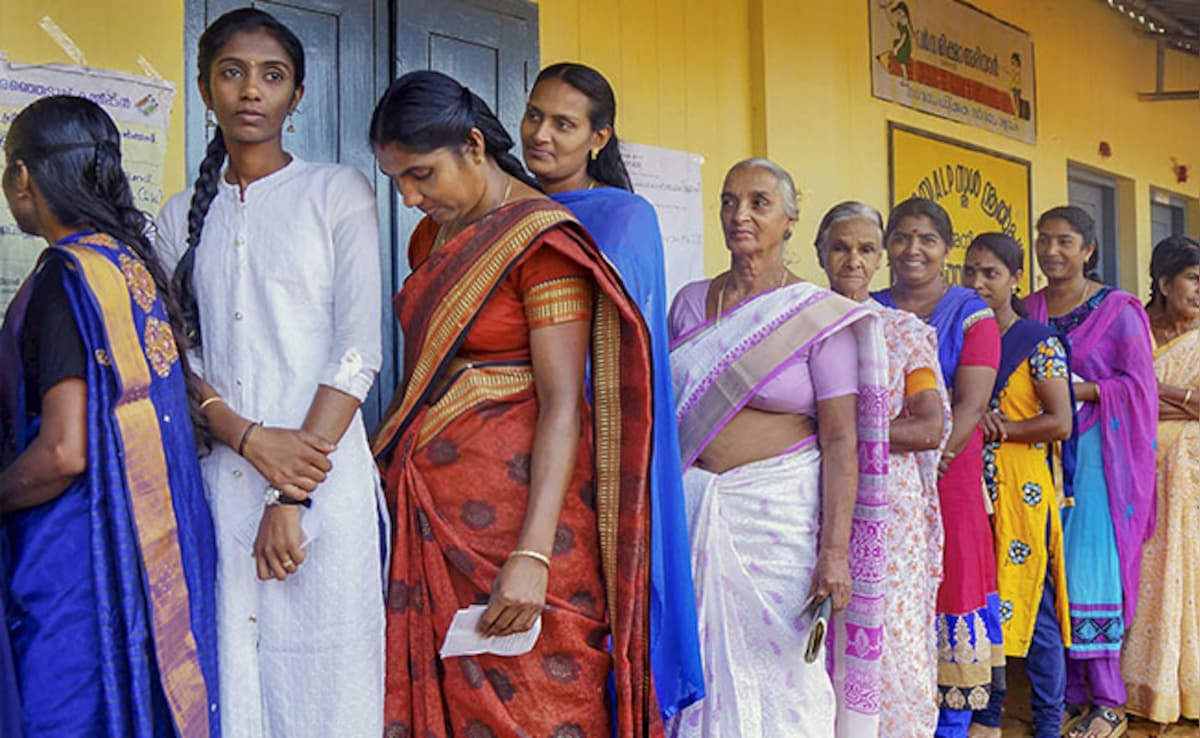
The campaign trails are a sensory overload. The smell of fried snacks, the deafening roar of loudspeakers, and the endless sea of colored flags. But look closer at the faces.
You will see the young graduate in Thiruvananthapuram, frustrated by the lack of private-sector jobs, weighing the "Kerala Model" against the promises of a "New India." You will see the rubber farmer in Idukki, struggling with falling prices, wondering if any of these flags actually represent his bank account.
For the leaders, the battle is about "National Narrative" and "Secular Credentials." For the voters, it is about the cost of living, the quality of the local school, and the terrifying possibility that the social peace they have enjoyed for decades might be fraying.
The CPI(M) frames it as a defense of the "Kerala Way"—a social welfare state that cares for its own. The Congress frames it as a fight to "Save the Idea of India." Both are true, and both are insufficient to describe the raw, visceral need to win.
No Exit
The man at the tea stall finishes his chai and stands up. He adjusts his dhoti and walks toward a small crowd gathered around a mobile stage. A local candidate is shouting into a microphone, his voice cracking with the strain of a sixteen-hour day.
There is no "next time" for these parties. Not really.
If the Congress loses its grip here, it becomes a regional party with a national name. If the CPI(M) loses its fortress, it becomes a historical footnote.
They are two exhausted boxers in the twelfth round, leaning on each other just to stay upright, knowing that the first one to let go will likely hit the canvas and never get back up. The crowd cheers, but the air remains heavy. In the lush, green beauty of the Kerala landscape, a very cold and very final winter is being fought back, one vote at a time.
The pendulum isn't swinging anymore. It is vibrating with the tension of a string about to snap. When the results are finally tallied, it won't just be a change of government. It will be the sound of a door locking, either from the inside or the out.
The rain begins to fall, blurring the red flags and the blue flags until they all look like shadows against the darkening palms. The battle for Kerala is not about who leads. It is about who is left.