The standard narrative of human trauma is a neatly packaged lie. You’ve read it a thousand times: the "inspiring" story of an amputee—often a war photographer or a soldier—who loses a limb and claims they are "still the same person inside." We eat it up because it’s comfortable. It suggests that the human soul is an immutable diamond, untouched by the mangling of the flesh.
It’s a fairy tale. And it’s a dangerous one for anyone actually facing the brutal reality of a life-altering injury. Meanwhile, you can read other events here: The Golden Fever Threatening to Bring Back the Blood.
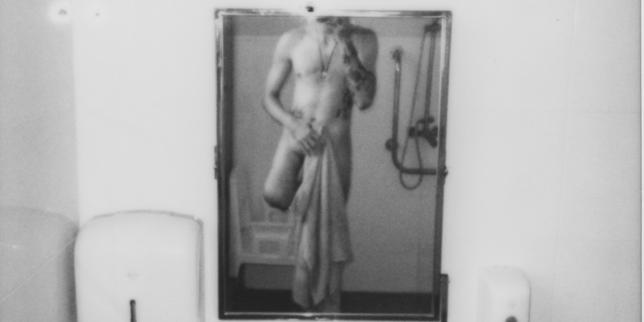
George Ivanchenko’s story, and others like it coming out of the meat grinder in Ukraine, are being flattened into tropes of "reconstruction." But the hard truth is that you are not the same person. You shouldn't want to be. The insistence on internal stasis isn't strength; it’s a refusal to acknowledge the biological and psychological integration of the body and the mind. When the body breaks, the "inside" doesn't just sit there watching through a window. It breaks too.
The Neuroplasticity Trap
We love to talk about the "indomitable human spirit," but we ignore the actual wetware. The brain is not a separate entity from the nervous system that extends to your fingertips. When a limb is severed, the somatosensory cortex—the part of your brain mapped to that body part—doesn't stay quiet. It begins a violent process of hostile takeover. To explore the bigger picture, check out the excellent article by Everyday Health.
In a phenomenon known as cortical remapping, neurons that once handled signals from a lost hand start responding to inputs from the face or the upper arm. This isn't just a technical glitch; it’s a fundamental rewiring of your physical identity.
I’ve seen dozens of people try to "mental-muscle" their way through this, clinging to who they were before the blast or the accident. They fail. They fail because they are fighting their own biology. You cannot have a "reconstructed" life if you are living in the ghost of a previous nervous system. The "same person inside" narrative prevents the necessary mourning of the self that died on that battlefield.
The Fetishization of the "High-Tech" Fix
The media loves a bionic arm. They show the sleek carbon fiber and the glowing LEDs of a Hero Arm or a high-end Össur prosthetic and tell us technology has "fixed" the problem.
This is the second lie: the idea that technology restores function. In reality, most high-end prosthetics are frustrating, heavy, and often abandoned by users within the first two years. A 2022 study on upper-limb prosthesis abandonment found that rejection rates remain as high as 44%. Why? Because a mechanical claw is not a hand. It lacks proprioception—the "sixth sense" that tells you where your limb is in space without looking at it.
When we tell victims of war that they can be "reconstructed" via technology, we are setting them up for a secondary trauma: the realization that the tool we promised would make them whole again is actually a constant, clunky reminder of what’s missing.
The False Meritocracy of "Inspiring" Recovery
Why do we insist on the "I’m the same" narrative? Because it protects the able-bodied viewer. If the victim is "the same," then the tragedy is contained. It’s an external problem with a mechanical solution.
But if we admit that the person is fundamentally, irrevocably changed—that their temper, their cognitive load, their sense of humor, and their very outlook on mortality have been chemically and structurally altered—then we have to face the horror of war. We have to admit that some things cannot be fixed.
The industry surrounding "resilience" has become a billion-dollar distraction. We focus on the individual's "will to recover" because it absolves society of the long-term, messy reality of permanent disability. If you aren't "reconstructed" like the guy in the magazine, it’s because you didn't work hard enough. You didn't have enough "grit."
This is a toxic byproduct of the "inspirational" news cycle. Real recovery isn't a return to a former self; it’s the agonizing birth of a new, different, and often diminished one.
The Ghost in the Machine
Most people asking "How do I get back to normal?" are asking the wrong question. "Normal" is a location that no longer exists on your map.
If you want to actually survive a catastrophic injury, you have to start by killing the person you used to be. Every ounce of energy spent trying to prove you are "still the same" is energy stolen from the person you are becoming.
- Stop looking for "solutions." A prosthetic is a tool, not a replacement. Treat it like a hammer, not a hand.
- Acknowledge the cognitive tax. Living with a disability is a constant drain on your prefrontal cortex. You aren't "lazy" or "depressed"; your brain is simply working 40% harder just to navigate a doorway.
- Reject the "Inspiration" label. It’s a cage. People call you inspiring so they don't have to feel sorry for you, or worse, help you with the mundane, uninspired parts of your existence.
The photographers, soldiers, and civilians coming out of Ukraine don't need our applause for "staying the same." They need us to acknowledge that they are different. They are casualties of a shift in reality that most of us are too cowardly to imagine.
Stop telling people they are the same on the inside. It’s the ultimate gaslighting of the traumatized. The reconstruction is a myth. The only way out is through the wreckage of the old self.
Accept the death of your former life, or be haunted by it forever.