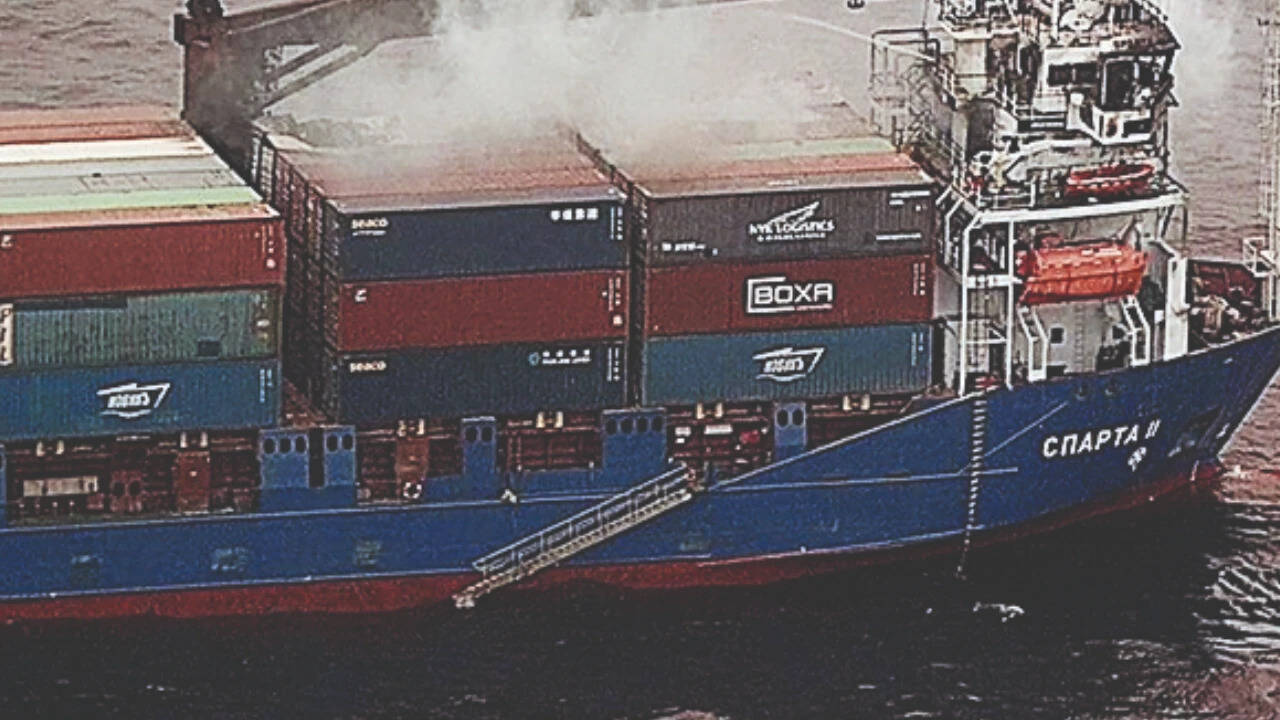
Most people assume the Baltic Sea is just a quiet shipping lane sandwiched between NATO countries and Russia's western ports. That illusion shattered the moment reports emerged that drones struck a Russian cargo ship in the Baltic, prompting Finland to immediately tighten its maritime security.
If you've spent any time tracking European maritime defense or commercial shipping lanes in Northern Europe, you know the Gulf of Finland is one of the tightest choke points on the planet. When unmanned aerial or surface vehicles start hitting vessels right off the Finnish coast, Helsinki doesn't wait around for a diplomatic memo. They lock down patrol corridors, scramble border guard assets, and put critical underwater infrastructure on high alert. You might also find this connected article insightful: Urban Wildlife Triage at Scale The Operational Mechanics Behind Manhattan's 680-Turtle Intake Surge.
The headline sounds simple. Drones hit a Russian vessel, and Finland bumps up its security posture. The reality underneath that headline is way messier, far more dangerous for commercial shipping, and a textbook example of how modern gray-zone warfare plays out in crowded international waters.
Why the Baltic Sea Became a Drone Flashpoint
Look at a map of the Baltic Sea. Since Finland and Sweden joined NATO, the Baltic has effectively become a NATO-surrounded lake, with two massive exceptions—the Russian exclave of Kaliningrad and the ports around St. Petersburg, including Ust-Luga and Primorsk. As discussed in latest reports by The Guardian, the implications are widespread.
Every single barrel of oil, container of components, or shipment of heavy machinery leaving St. Petersburg has to squeeze through the narrow Gulf of Finland. On one side sits Estonia. On the other side sits Finland. At its narrowest points, the international shipping channel is only a few miles wide.
Here's what most casual observers miss. When drones hit a Russian cargo ship in this corridor, it isn't happening in some remote stretch of open ocean where nobody is watching. It's happening inside one of the busiest, most heavily monitored maritime traffic zones in the world.
Commercial ferries carrying thousands of passengers between Helsinki and Tallinn cross these exact waters every single day. Container ships, LNG tankers, and fishing trawlers share the same narrow lanes. Introducing explosive drones—whether aerial quadcopters, long-range fixed-wing UAVs, or unmanned surface vessels—into that environment creates an immediate nightmare for coastal authorities.
The Shadow Fleet Complication
You can't talk about Russian cargo vessels in the Baltic without talking about the shadow fleet. After Western sanctions targeted Russian maritime logistics, Moscow assembled hundreds of aging tankers and cargo ships operating under obscure flags, shell companies, and questionable insurance policies.
Many of these vessels routinely disable their Automatic Identification System (AIS) transponders. In maritime terms, turning off your AIS in a congested shipping lane is like driving down a foggy highway at midnight with your headlights off.
When an unflagged or poorly insured cargo vessel takes a drone strike in the Baltic, three huge problems hit coastal nations like Finland at the exact same time:
- Environmental disaster risk. Many of these ships are old, single-hulled, or poorly maintained. A hull breach near the Finnish archipelago could dump heavy fuel oil into a shallow, fragile ecosystem where cleanup takes decades.
- Attribution fog. Did a Ukrainian long-range unit launch the strike? Was it a covert special operations team operating from a nearby vessel? Or was it a false-flag incident designed to justify Russian naval escorts? Nobody admits anything right away.
- Navigation hazards. A disabled cargo ship drifting without power in the Gulf of Finland blocks international traffic and forces Finnish Coast Guard vessels into risky salvage operations under unclear security conditions.
How Finland Tightens Security When Drones Strike
Finland doesn't bluff when it comes to border security. Unlike countries that treat coast guard duties as purely administrative, the Finnish Border Guard (Rajavartiolaitos) is a military-structured organization integrated directly into Finland's national defense system.
When drones hit a Russian cargo ship in the Baltic, Helsinki's response follows a very specific, well-rehearsed playbook. I've followed Finnish defense readiness for years, and their entire doctrine revolves around rapid, quiet escalation before a crisis spills over their maritime border.
Expanding Maritime Patrols and Aerial Surveillance
First, the Finnish Border Guard and the Finnish Navy immediately push offshore patrol vessels, like the Turva and Merikarhu classes, closer to the main shipping lanes. These aren't lightly armed police boats. They carry advanced radar suites, underwater sonar arrays, and oil-spill response equipment specifically built for Baltic ice and rough seas.
At the same time, Finland increases air surveillance over the Gulf of Finland. Dornier 228 maritime patrol aircraft and military helicopters sweep the coastline to track both surface vessels and low-flying aerial signatures. Electronic warfare units along the southern coast also step up radio-frequency monitoring to detect drone control links, GPS jamming, and spoofing attempts.
Protecting Underwater Cables and Pipelines
Anyone paying attention to Baltic security remembers what happened to the Nord Stream pipelines and the Balticconnector gas pipeline between Finland and Estonia. Whenever kinetic incidents erupt on the surface of the Baltic, Finnish authorities immediately assume underwater infrastructure could be next.
Tightening security means deploying remotely operated underwater vehicles (ROVs) and naval minehunters to inspect critical seabed assets. That includes:
- High-voltage direct current power cables connecting Finland to Sweden and Estonia.
- Subsea fiber-optic telecommunications cables carrying Northern European internet traffic.
- Offshore gas pipelines and coastal LNG terminal approaches at Inkoo and Hamina.
A cargo ship lingering near a cable route after claiming "engine trouble" or "drone damage" triggers an immediate armed escort from Finnish authorities. Nobody gets the benefit of the doubt anymore.
What Most People Get Wrong About Drone Strikes on Commercial Ships
If you read social media threads after a maritime drone incident, you'll see two wildly inaccurate takes dominate the conversation.
The first mistake is assuming a drone hit automatically sinks a cargo ship. Commercial cargo vessels are massive, compartmentalized steel structures. Unless a drone carries a heavy warhead specifically aimed below the waterline or strikes volatile cargo, the ship usually stays afloat. It might suffer superstructure fires, damaged radar masts, or a breached ballast tank, which still creates a major security incident without sending the ship to the bottom.
The second mistake is thinking maritime drone warfare is strictly a Black Sea phenomenon. For years, analysts assumed the 1,500-kilometer distance between Ukraine and the Baltic Sea made Ukrainian drone operations there impossible. That assumption aged poorly. Long-range aerial drones have repeatedly struck oil terminals in Ust-Luga and Leningrad Oblast, proving that range is no longer a barrier.
Even more concerning for European intelligence agencies is the possibility of launch platforms operating closer to the target. A commercial van parked near a remote coastline or a small chartered boat in international waters can launch FPV or medium-range drones within minutes, disappearing before radar operators even triangulate the origin.
The Spillover Risk for Global Shipping and Insurance
When drones hit a Russian cargo ship in the Baltic, the shockwaves don't stop at Helsinki or St. Petersburg. They hit Lloyd's of London and global freight markets within hours.
Maritime war-risk insurers constantly recalculate premiums based on active threat zones. The Black Sea and the Red Sea already carry massive war-risk surcharges. If the Gulf of Finland gets classified as an active drone-strike zone, insurance costs for every vessel calling at Finnish, Estonian, Latvian, and Lithuanian ports jump overnight.
For Finnish exporters—who rely on sea transport for roughly 90 percent of their foreign trade—higher Baltic freight rates directly hit their bottom line. Forestry products, machinery, and chemical exports suddenly cost more to move out of Kotka, Rauma, and Helsinki.
GPS Jamming and Spoofing Make Everything Worse
You can't separate physical drone attacks in the Baltic from the electronic warfare already saturating the region. Pilots flying into Helsinki, Tartu, and Kaliningrad have dealt with severe GPS jamming and spoofing for months.
Ship captains in the Gulf of Finland face the exact same problem. Electronic countermeasures deployed by Russian forces around St. Petersburg and Kaliningrad routinely scramble civilian navigation systems. When you combine spoofed GPS signals, dark shadow-fleet tankers without AIS transponders, and active drone strikes, the odds of a catastrophic collision between a commercial ferry and a cargo vessel skyrocket.
How Shipping Operators and Analysts Track Baltic Escalations
If you work in logistics, maritime security, or geopolitical risk analysis, waiting for mainstream news summaries puts you days behind actual events on the water. You can monitor Baltic maritime security shifts in real time using the exact tools port authorities and defense analysts rely on.
- Watch AIS anomaly trackers. Platforms like MarineTraffic and VesselFinder show sudden clusters of coast guard vessels, abrupt course changes by commercial ships, and areas where AIS signals suddenly drop out or jump wildly across land—a classic sign of active GPS spoofing.
- Monitor NAVTEX and coastal warnings. The Finnish Transport and Communications Agency (Traficom) and the Finnish Border Guard issue official navigational warnings whenever live-fire exercises, salvage operations, or restricted security zones go into effect in the Gulf of Finland.
- Track war-risk insurance advisories. Joint War Committee (JWC) updates out of London tell you immediately whether underwriters view a Baltic incident as an isolated event or a sustained threat to commercial shipping lanes.
- Follow official Finnish Border Guard briefings. Unlike agencies that bury operational updates, Finland's Gulf of Finland Coast Guard District regularly posts factual updates on patrol deployments, oil-spill readiness, and airspace violations.
The Baltic Sea isn't going back to the quiet, predictable shipping corridor it was a decade ago. Every drone strike on a Russian vessel forces Finland and its NATO neighbors to treat routine commercial traffic as a potential frontline security threat. Keep your eyes on the Gulf of Finland's patrol patterns and navigational warnings—because in waters this narrow, the next incident is never far away.