Benjamin Netanyahu recently declared that he instructed the Israeli military to secure control over 70% of the Gaza Strip. It is a staggering figure. The statement, broadcast across international networks, signals a massive logistical and tactical shift in the ongoing conflict. But what does controlling seventy percent of Gaza actually mean on the ground? It is not just about lines on a map. It changes everything for humanitarian aid, military deployment, and the geopolitical future of the region.
People watching this crisis unfold want to know how this strategy affects the population and whether it is even sustainable. The reality is complex. Military occupation differs wildly from governing, and holding territory requires vast resources.
Why the Seventy Percent Metric Matters Right Now
Securing a specific percentage of land looks good on political briefings. It sounds decisive. Netanyahu's announcement aims to show concrete progress to an increasingly critical domestic audience and international observers. By targeting 70% of the territory, the Israel Defense Forces (IDF) focus heavily on northern and central sectors, alongside strategic corridors that slice the strip into isolated zones.
This isn't random. Controlling these specific areas allows the military to dictate movement. They manage who goes in, who goes out, and what supplies cross the border. By holding the majority of the land, the military effectively clamps down on the operational capabilities of Hamas, squeezing their logistics into the remaining pockets.
But the math of warfare is messy. You can hold the roads and the perimeter, but urban warfare inside densely packed neighborhoods is a different beast entirely. It takes thousands of soldiers just to secure a few city blocks permanently.
The Strategic Corridors Dividing the Strip
To understand how the IDF reaches this seventy percent benchmark, look at the Netzarim Corridor and the Philadelphi Route. These are not just dirt tracks. They are heavily fortified military zones that split Gaza in half and seal the southern border with Egypt.
- The Netzarim Corridor: This strip of land cuts directly through the center of Gaza, separating Gaza City from the south. By maintaining a permanent presence here, the military stops displaced civilians from returning north without intense screening. It creates a physical barrier that disrupts communication and supply lines.
- The Philadelphi Route: Running along the 14-kilometer border between Gaza and Egypt, this zone is critical. Controlling it means shutting down smuggling tunnels. It gives Israel total veto power over the southern frontier.
When you add these wide corridors to the buffer zones established along the northern and eastern borders, the percentage of controlled land climbs fast. It leaves the civilian population crammed into an ever-shrinking space, primarily in the southern dunes of Al-Mawasi and parts of Deir al-Balah.
The Humanitarian Cost of a Shrinking Footprint
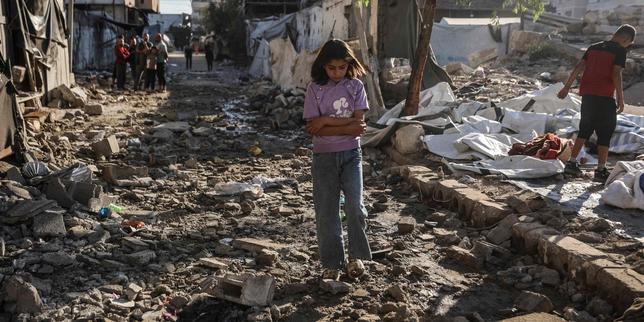
When a military takes over 70% of a territory, the civilian population does not just vanish. They get pushed into the remaining 30%. Think about that density. Millions of people living in makeshift tents, dealing with broken sanitation systems, and facing scarce water supplies.
International aid organizations like UNRWA and Human Rights Watch have repeatedly warned that compressing a population this severely creates an immediate health crisis. Polio has re-emerged. Clean water is a luxury.
Gaza Strip Spatial Allocation (Approximate Military Strategy)
------------------------------------------------------------
Targeted Military Control Zone:     ███████████████ 70%
Remaining Civilian/Conflict Zone:   ██████ 30%
Humanitarian aid distribution becomes a logistical nightmare under this model. Every truck must clear multiple military checkpoints. Drivers face bureaucratic delays, active combat risks, and desperate crowds. The civilian infrastructure is essentially gone. Power grids are dark, hospitals operate on failing generators, and schools serve as overcrowded refugee centers.
Can the IDF Sustain This Level of Control
Holding territory is vastly more expensive and dangerous than capturing it. Ask any military historian. Insurgencies thrive when conventional armies settle into fixed positions.
The IDF faces a constant threat of guerrilla tactics. Ambushes, improvised explosive devices (IEDs), and sniper fire don't stop just because a leader declares control. Soldiers stationed at checkpoints or patrolling the corridors remain prime targets. To maintain this grip, Israel must keep a high number of reservists mobilized. That severely strains the domestic economy. Factories lose workers, tech startups stall, and the national deficit grows.
International pressure complicates things further. The United Nations Security Council and various European allies continue to push for immediate ceasefires. Washington frequently questions the long-term governance plan. If Israel controls 70% of Gaza, who runs the daily civil administration? Who fixes the sewage? Who manages the hospitals? The military does not want to become a permanent municipal government for over two million hostile residents.
Navigating the Geopolitical Fallout
The regional repercussions of this strategy extend far beyond the borders of Gaza. Egypt is furious about the permanent military presence on its doorstep along the Philadelphi Route. Cairo views this as a violation of longstanding security agreements, straining a cold peace that has held for decades.
Meanwhile, the wider Middle East remains on a knife-edge. Hezbollah in Lebanon monitors the troop allocations closely. If Israel ties down significant forces keeping order in Gaza, it potentially creates vulnerabilities along the northern border. It is a delicate balancing act.
Key Regional Friction Points:
1. Egypt Border: Tension over the Philadelphi Route control.
2. Northern Front: Hezbollah monitors IDF troop deployment density.
3. Domestic Economy: High reservist call-ups strain Israel's tech and labor sectors.
The talk of percentages masks a deeper, unresolved question about the political endgame. Total military victory is a clean slogan, but real-world security requires stability. Without a viable plan for who governs the areas under control, holding the land simply means policing an active crater.
To track these developments effectively, readers should monitor official military briefings alongside independent updates from international humanitarian groups on the ground. Watch the troop rotation numbers. If the IDF starts rotating high numbers of regular forces out and replacing them with specialized border units, it indicates a shift from active combat to long-term occupation. Pay close attention to diplomatic cables regarding the management of the southern border crossings, as those negotiations will dictate the true extent of control over the strip's future.