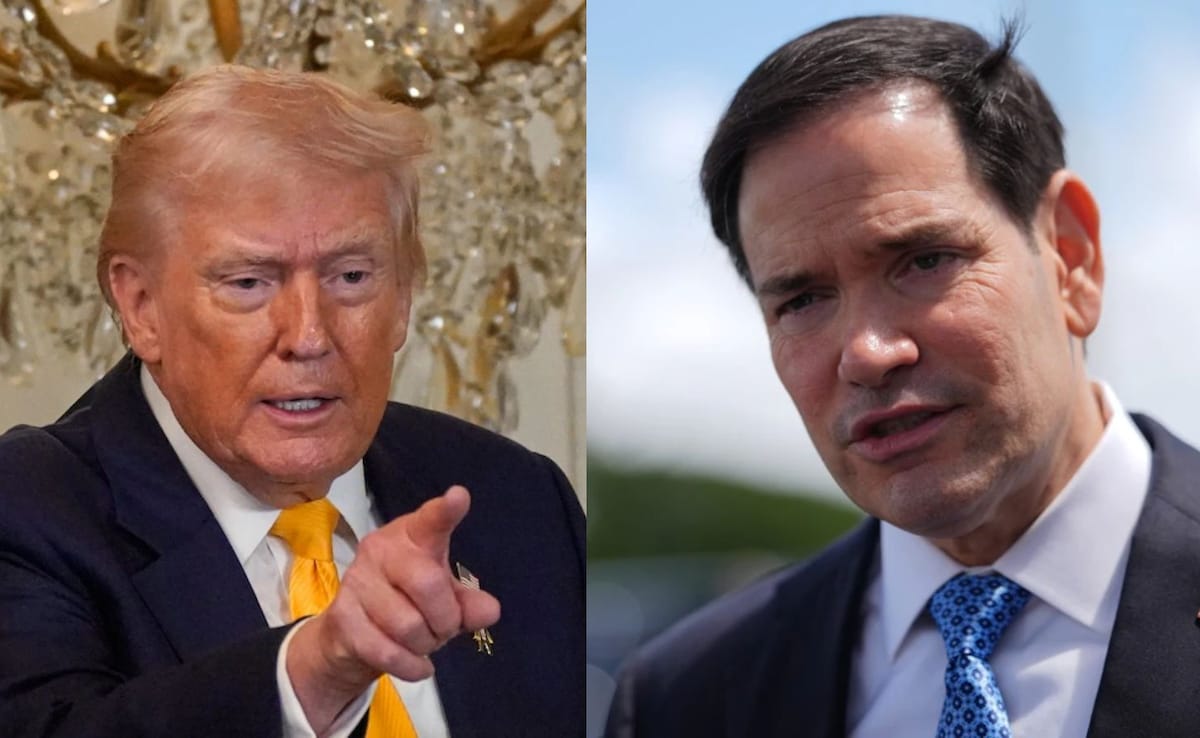
A diplomatic storm exploded when it emerged that Donald Trump had amplified a right-wing podcast transcript branding India a "hellhole." The public spat quickly escalated into a frantic exercise in damage control, culminating in US Secretary of State Marco Rubio arriving in New Delhi to absorb the friction. Confronted directly by journalists about the anti-India rhetoric, Rubio attempted to dismiss the incident, attributing the underlying sentiment to "dumb comments" by "stupid people" and emphasizing that the US President is actually a "big fan" of Prime Minister Narendra Modi.
But brushing this aside as a localized internet controversy misses the deeper geopolitical friction. The reality is that the US-India strategic partnership is suffering from structural whiplash. Washington wants a military counterweight to China in the Indo-Pacific but refuses to tolerate the protectionist economic policies that India uses to build its domestic industries. New Delhi expects unyielding respect for its sovereignty and strategic autonomy while continuing to buy discounted Russian oil and expanding military ties with Pakistan's leadership. This fundamental disconnect cannot be smoothed over by press conference charm offensives.
The Strategy of Strategic Ambiguity
The "hellhole" comment was not an isolated slip of the tongue. It reflects a growing frustration within the American political establishment regarding the economic terms of the bilateral relationship. For decades, US foreign policy treated India as the ultimate democratic alternative to authoritarian China. Washington was willing to overlook minor trade disputes in exchange for long-term security alignment.
That calculation has changed. The current administration views international relations through a transactional lens, where trade deficits are tallied like a corporate balance sheet.
Underneath the public praise for Modi, the structural grievances are acute. The United States has a massive trade deficit in goods with India. To the White House, this imbalance is the direct result of unfair economic practices. Washington regularly targets India’s protectionist barriers, which include high agricultural tariffs, strict foreign direct investment restrictions, and an unpredictable regulatory environment for global technology giants.
India defends these policies as essential safeguards for its developing economy. It has no intention of dismantling its tariff walls just to placate American exporters. This creates an unyielding economic stalemate.
The Tariff Friction and the Dirty 15
The underlying tension became undeniable when the US Treasury Department introduced its "reciprocal tariff" framework. The policy targeted a group of nations colloquially termed the "Dirty 15"—economies that run substantial trade surpluses with the US while maintaining high import duties on American products. India, with a trade-weighted average import tariff hovering around 11.5% compared to the American rate of roughly 2.5%, sat squarely in the crosshairs.
Country          Average Import Tariff Rate
-------------------------------------------
United States    2.5%
India            11.5%
The administration threatened a 26% tariff on Indian goods to mirror New Delhi’s protectionist stance. White House officials frequently cite extreme examples to justify the aggression, such as India's 100% tariff on certain American agricultural products.
The threat forced immediate compliance measures. New Delhi dispatched its commerce minister to Washington on multiple occasions, reportedly offering to cut billions of dollars worth of tariffs on American imports to avoid the penalty.
Yet, the reprieve was temporary. When the administration pivoted away from targeted exceptions toward a sweeping, uniform global tariff, it signaled that structural compliance, not piecemeal concessions, was the new benchmark.
The economic fallout of this friction goes beyond trade balances. A sustained tariff conflict threatens to weaken the Indian rupee, driving up the cost of crude oil imports and triggering domestic inflation. For an economy trying to position itself as the world’s next manufacturing hub, these systemic shocks are highly destabilizing.
The Pakistan Pivot and Shifting Security Alliances
While trade relations deteriorate, the security architecture supporting the alliance is also showing cracks. New Delhi has long operated under the assumption that its status as a vital strategic partner would guarantee exclusive American backing in South Asian regional disputes. Recent diplomatic developments have upended that assumption.
The Indian diplomatic core watched with deep concern as Washington renewed active engagement with Pakistan's military leadership. Following a brief but intense cross-border conflict between India and Pakistan, Trump hosted Pakistan Army Chief Field Marshal Asim Munir at the White House, openly praising the military leader.
During his New Delhi press conference, Rubio attempted to minimize the strategic implications of the meeting. He stated that US engagement with Islamabad occurs at a tactical level and does not come at the expense of America's alliance with India.
New Delhi is not reassured. Indian officials consistently point out that armed terrorist groups continue to operate from Pakistani territory. From India's perspective, any American legitimization or modernization of Pakistan's military apparatus directly undermines Indian national security.
Washington is playing a double game. It views India as an essential partner for containing China on a global scale, but still relies on Pakistan for localized logistical and counter-terrorism objectives in Central Asia.
The Limits of Personal Diplomacy
The modern US-India relationship relies heavily on personal chemistry between top leaders. Photo opportunities and highly publicized phone calls are used to project an image of seamless unity. When the "hellhole" controversy threatened to derail Rubio's diplomatic mission, the White House orchestrated an immediate pivot, leaking details of a phone call where Trump referred to Modi as a "good friend."
This reliance on personal diplomacy is an unstable foundation for international relations. It creates a volatile environment where policy shifts based on political whims rather than institutional agreements.
A state department can delete a controversial press conference video from its social media channels, but it cannot delete the underlying policy shifts. The reality is that India is actively diversifying its alliances to hedge against American volatility. New Delhi is quietly strengthening economic and strategic ties with Western Europe and Asian neighbors, ensuring it is not entirely dependent on an unpredictable Washington.
The United States wants a traditional, compliant ally. India demands recognition as an independent global power that acts exclusively in its own self-interest. As long as these two vision statements remain fundamentally incompatible, no amount of diplomatic cleanup or staged camaraderie will prevent the underlying alliance from fracturing.
The era of Washington tolerating protectionist economics in exchange for vague promises of geopolitical alignment is over. New Delhi must now decide whether to fundamentally reform its economic model or prepare for a prolonged period of strategic friction with its most powerful partner.
Vantage on Firstpost Analysis provides an in-depth breakdown of the geopolitical fallout and the specific media reactions surrounding Marco Rubio's recent diplomatic visit to New Delhi.