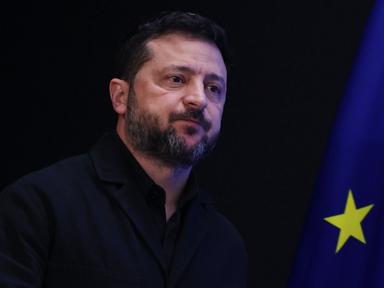
Ukrainian President Volodymyr Zelenskyy urged supporters to push for new U.S. sanctions on Russia after President Donald Trump signed an executive order putting the sweeping restrictions on hold, a clash that exposed a sharp rift between Kyiv and Washington over fuel prices, energy markets, and war leverage. Zelenskyy pointed specifically to the Lindsey Graham Act—legislation passed by Congress with bipartisan backing and signed by Trump in September 2026—arguing that waiving its enforcement just as it was set to take effect blunts a major tool meant to pressure Moscow.
A standard wire report frames that moment as a straightforward diplomatic dispute: Trump freezes penalties, Zelenskyy protests, missiles fall on Ukrainian cities. That framing misses the mechanics underneath. Waiving or pausing sanctions is not a single switch pulled in the Oval Office; it is a tug-of-war between statutory authority, global oil and diesel flows, maritime evasion networks, and high-stakes summit diplomacy.
Why Washington Paused the Sanctions
Presidents have long used statutory waivers and national-interest exemptions to manage the economic shockwaves of foreign policy. Even when lawmakers write tough sanctions bills, executives routinely retain discretion over timing, licensing, and waivers to avoid sudden price spikes or supply chain bottlenecks at home.
In mid-October 2026, Trump told Congress the pause served the national interest and argued that easing pressure could help cool elevated fuel costs and move talks toward ending the war. Critics across party lines pushed back, contending that global fuel prices were driven more by broader Middle East turmoil—including conflict involving Iran—than by blocking Russian barrels.
Energy markets rarely respond to sanctions in a neat, linear way. When Western buyers pull back or face tighter compliance rules, cargoes reroute rather than vanish overnight, while refining margins and shipping rates absorb the friction.
- Refinery bottlenecks: Strikes on energy infrastructure and shifts in product trade change how much crude versus refined diesel or jet fuel reaches global markets.
- Waiver trade-offs: Broad waivers can lower compliance anxiety for traders and consumers in the short term, yet they also remove financial pressure on Moscow's state budget.
- Diplomatic sequencing: Leaders sometimes hold back new penalties ahead of high-level meetings—such as trilateral talks involving the United States, Russia, and China—to preserve bargaining chips.
That tension explains why Zelenskyy appealed directly to public and political supporters rather than treating the waiver as a closed chapter. Once an executive pause takes hold, reviving enforcement requires sustained congressional pressure, European coordination, or a shift in the White House's calculation on inflation and negotiations.
How Moscow Adapts When Pressure Shifts
Sanctions on Russian energy have never operated in a vacuum. Over several years of war, shipping operators, trading houses, and insurers built dense workarounds designed to keep crude and refined products moving even when Western banks and vessel registries step back.
Maritime intelligence from Windward highlights how fluid that trade has become. In October 2026, sanctioned tankers still carried roughly 60 percent of seaborne Russian oil, aided by reflagging to Russia, ownership shifts to shell companies in jurisdictions such as China, Hong Kong, and the United Arab Emirates, and fresh unsanctioned tonnage stepping into the gap.
"Compliance rests on attestation documents that are provided by the buyer and seller of the oil and cannot be verified by all parties in the marine service chain." — Windward market intelligence
Even when governments blacklist individual ships, enforcement faces structural limits. Older vessels change managers, insurers outside traditional Western pools step in, and crude prices—such as Urals averaging above $100 per barrel in October 2026—can run well above notional price caps when buyers are willing to pay market rates.
At the same time, sanctions are not the only factor shaping Russia's energy ledger. Ukrainian drone strikes on refineries and logistics hubs, alongside Moscow's own fuel export and import swings, alter physical supply in ways paper restrictions alone cannot.
| Mechanism | How It Works in Practice | Why Enforcement Struggles |
|---|---|---|
| Executive waivers & holds | The White House delays or waives statutory restrictions in the national interest. | Creates immediate breathing room for energy markets while reducing leverage on Moscow. |
| Shadow fleet & reflagging | Operators rotate vessel flags, ship managers, and shell owners across jurisdictions. | Tracking beneficial ownership across complex corporate chains takes time and cross-border cooperation. |
| Service & insurer blacklists | Regulators target banks, insurers, and terminals tied to sanctioned cargoes. | Alternative financiers and regional service providers can emerge faster than new designations. |
| Physical infrastructure strikes | Attacks hit refineries, terminals, and transport nodes directly. | Damage cuts capacity physically, though repairs and rerouted flows can partially offset losses. |
What the Pause Means for Kyiv and Allies
For Ukraine, the timing of the sanctions freeze hit right as winter approached and Russian strikes hammered power and energy infrastructure. Sanctions are an indirect weapon—they squeeze revenue over months rather than stopping a missile tonight—but Kyiv views them as essential to limiting how long Moscow can sustain high-intensity warfare.
The friction also spilled into broader military and technological disputes. Arguments over satellite communications speeds, access to military-grade systems, and deep strikes inside Russia underscored that sanctions policy is entangled with every other pillar of Western support.
The European Counterweight
Washington's pause did not freeze every Western measure. The European Union has continued rolling out sanctions packages targeting Russian banks, maritime insurers, ship managers, and terminals, while pairing financial pressure with aid mechanisms for Kyiv.
Yet European action cannot fully replace U.S. financial reach on its own. Dollar clearing, secondary sanctions authority, and Washington's diplomatic weight with major oil buyers in Asia carry outsized clout when enforced consistently.
The Counterargument on Leverage and Talks
Supporters of a more transactional U.S. approach argue that rigid sanctions can harden negotiating positions or push Moscow and Beijing closer together economically without producing an immediate ceasefire. From that viewpoint, holding penalties in reserve—or pairing them with direct talks—is meant to test whether leaders in Washington, Moscow, and China can strike a broader settlement.
Skeptics counter that lifting or pausing pressure before a verifiable truce hands away leverage for free. If Moscow keeps selling oil at high prices and routing trade through friendly hubs while Washington holds back enforcement, the Kremlin has less reason to make concessions at the table.
What to Watch Next
Tracking whether the pause turns into a permanent shelved policy or a temporary detour comes down to three concrete signals. Watch for whether Congress attempts to force stricter implementation, whether U.S. waivers translate into actual cargo flows or remain mostly political leverage, and whether summit diplomacy produces real battlefield restraint or simply buys time before another round of strikes. Watch the next round of shipping and financial designations closely, because how Washington and Brussels police the shadow fleet will show whether sanctions still have teeth.


