By demanding that regional powers formally recognize Israel as a precondition for a comprehensive peace deal with Iran, President Donald Trump has fundamentally altered the parameters of Middle Eastern diplomacy. The White House is linking a 60-day ceasefire extension, the reopening of the Strait of Hormuz, and the lifting of naval blockades directly to an expanded roster of sign-ups for the Abraham Accords. This strategy shifts the focus from a bilateral security arrangement with Tehran into a sweeping regional realignment. The administration is using the lifting of economic pressure on Iran as leverage to force concession from neutral and hostile neighbors alike, aiming to build an anti-envelopment architecture around the Persian Gulf.
It is a high-stakes gamble that uses a temporary cessation of hostilities to secure permanent diplomatic gains. On the surface, the framework appears to offer something for everyone. Iran gets to freely sell oil, reclaim a portion of its frozen foreign banking assets, and escape a crippling maritime blockade. The global economy gets a stabilized energy market with an open, mine-free Strait of Hormuz.
Yet underneath the optimism of negotiations that Trump claims are proceeding nicely lies a brutal geopolitical reality. By making it mandatory for countries like Saudi Arabia, Qatar, Pakistan, and Turkey to simultaneously sign onto the Abraham Accords, the White House is trying to solve two entirely separate regional crises with a single piece of paper. This approach risks breaking the fragile progress already made in Islamabad.
The Architecture of Forced Consensus
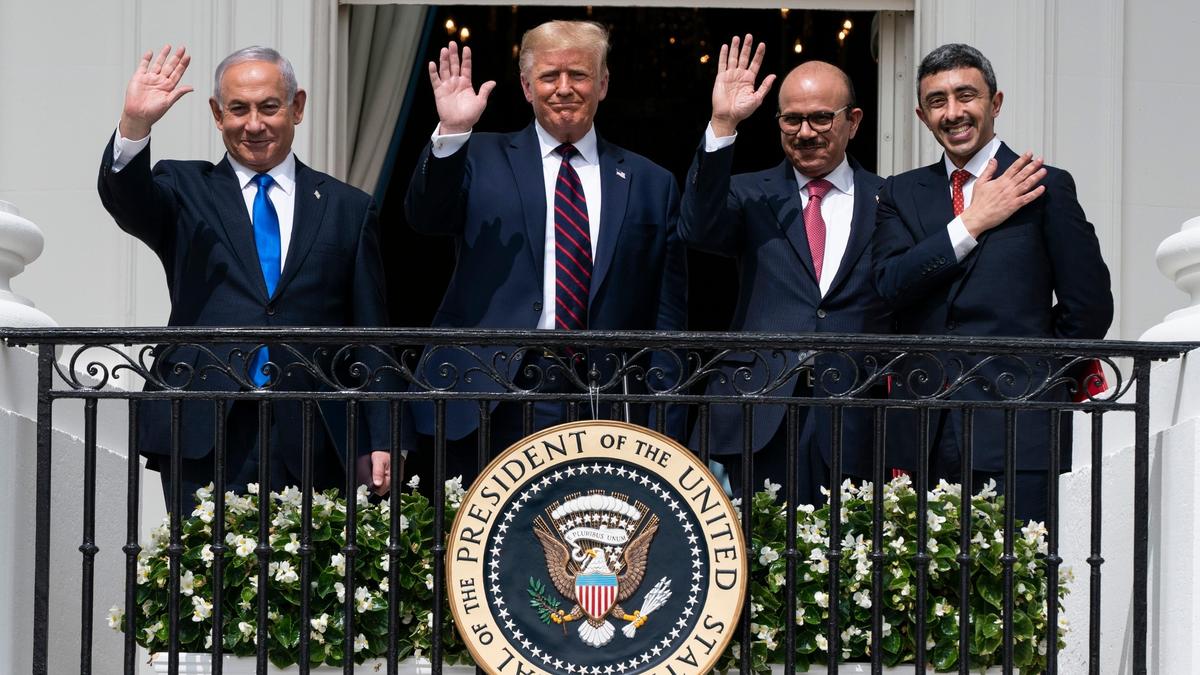
The mechanism at play is classic real estate transactional diplomacy mapped onto international statecraft. During his first term, Trump used bilateral incentives to secure normalization agreements between Israel and the United Arab Emirates, Bahrain, Morocco, and Sudan. Now, the administration is using a negative incentive. The threat of a resumed military campaign and a permanent naval blockade against Iran is being used to compel compliance from third-party nations that are not even combatants in the primary conflict.
Saudi Arabia and Qatar are the immediate targets of this pressure campaign. For Riyadh, normalization with Israel has always carried an explicit price tag, including a defense treaty with the United States and a clear path toward a two-state solution for Palestine. Crown Prince Mohammed bin Salman reiterated these parameters as recently as late 2025.
By tying the normalization requirement to the broader Iranian peace package, the White House is attempting to bypass these long-standing conditions. The message to Riyadh is clear. If you do not sign, you jeopardize the permanent de-escalation of the Iranian nuclear threat on your doorstep, and you will be blamed for the collapse of the deal.
This strategy creates a profound dilemma for regional capitals. Turkey and Pakistan face intense domestic political blowback for any overt diplomatic alignment with Jerusalem. Egypt and Jordan, which already maintain decades-old peace treaties with Israel, find themselves being ordered to join a secondary framework that offers them zero net benefits while complicating their delicate domestic balances. Trump has conceded that he might tolerate one or two holdouts, but the underlying text remains uncompromising. If a country refuses to sign, the administration views it as an act of bad intention.
The Vulnerability of the 60-Day Window
The entire diplomatic structure rests on a highly volatile foundation. The current blueprint relies on a 60-day ceasefire extension. Within this narrow window, several complex, moving parts must lock into place simultaneously.
- Iran must clear the naval mines it deployed in the Strait of Hormuz.
- Tehran must agree to operate under a framework that enforces zero tolls on international shipping.
- The United States must dismantle its April maritime blockade of Iranian ports.
- A multinational group of historically adversarial states must draft, sign, and ratify normalization treaties with Israel.
This timeline is dangerously optimistic. Foreign policy senior officials acknowledge that while the economic relief is immediate, the structural verification of Iran's nuclear and regional concessions takes months to implement.
Furthermore, the domestic political divisions within Tehran remain a wild card. Earlier rounds of talks in Islamabad collapsed precisely because of perceived fractures among the Iranian leadership. While top negotiator Mohammad Bagher Ghalibaf travels to Qatar to iron out details, hardline factions in Tehran are already balking at the secondary demands. A senior Iranian source confirmed that Tehran has not agreed to hand over its highly enriched uranium stockpile, flatly contradicting early optimism from American diplomats.
If Iran refuses to surrender its enriched material, the nuclear core of the deal remains empty. No amount of regional normalization agreements can mask a failure to permanently contain Iran's breakout capability.
The Fiction of a Complete Regional Reset
The fundamental flaw in this strategy is the assumption that regional recognition equals regional stability. The original Abraham Accords proved that trade and diplomatic offices could open between nations that were never actively at war. They did not, however, prevent the explosive regional escalation that consumed the Middle East over the last two years. Normalization did not stop the missile exchanges, nor did it suppress the proxy networks operating out of Lebanon, Yemen, and Iraq.
To believe that expanding the accords to Ankara or Islamabad will automatically pacify Iran is to mistake the symptom for the disease. Iran's regional influence is built on asymmetric deterrence and ideological proxy networks, not formal diplomatic status. Even if Trump achieves the ultimate objective, getting Iran itself to sign onto what he calls an unparalleled world coalition, the structural drivers of the conflict remain.
Consider a hypothetical example. If a future regional proxy group launches a rogue drone strike against an energy facility in the Gulf, an abstract normalization treaty does not provide an automatic defense mechanism. It merely creates a legal paradox where signatories are bound to peace agreements that their local proxies are actively violating on the ground.
The Price of Failure
The administration's rhetoric leaves no room for partial success. Secretary of State Marco Rubio has maintained that the deal must result in a completely open strait without compromise. Trump has doubled down on this binary framework, stating that it will either be a great deal or there will be no deal at all.
By escalating the demands to include a sweeping transformation of the region's diplomatic alignment, the White House has significantly raised the barrier to entry for any peace agreement. If Saudi Arabia holds firm on its requirement for a two-state path, or if Turkey rejects the mandate entirely, the entire Iranian peace architecture could collapse under its own weight.
The alternative to a deal is not a return to the previous status quo. It is a swift resumption of active conflict. If these expanded negotiations fail, the United States has already signaled that its naval blockade will return with greater intensity, accompanied by the threat of direct military action against Iran's remaining infrastructure. The regional powers currently being pressured to sign the accords are well aware of this downside. They are being forced to choose between a politically costly diplomatic concession or the immediate threat of a regional war that will inevitably disrupt their economies and threaten their security.
The coming weeks will reveal whether this strategy represents a masterclass in coercive diplomacy or an over-reach that scuttles a viable ceasefire. Forcing sovereign nations to sign historic accords under the clock of a 60-day deadline is a maneuver that breaks every conventional rule of international relations. In the Middle East, rules that break often take the surrounding peace down with them.