Governor Kathy Hochul signed an executive order on Tuesday establishing the nation's first statewide moratorium on new hyperscale data centers. The order pauses environmental permits for facilities requiring 50 megawatts of electricity or more for up to one year, directly challenging President Donald Trump’s aggressive federal push to shield the artificial intelligence industry from local regulation. This bold move sets the stage for a dramatic constitutional clash over energy infrastructure, states' rights, and the physical limits of the American power grid. New York has drawn a hard line, asserting that local communities and ratepayers will no longer quietly subsidize the massive resource demands of Silicon Valley.
The Boiling Point of the Empire State Grid
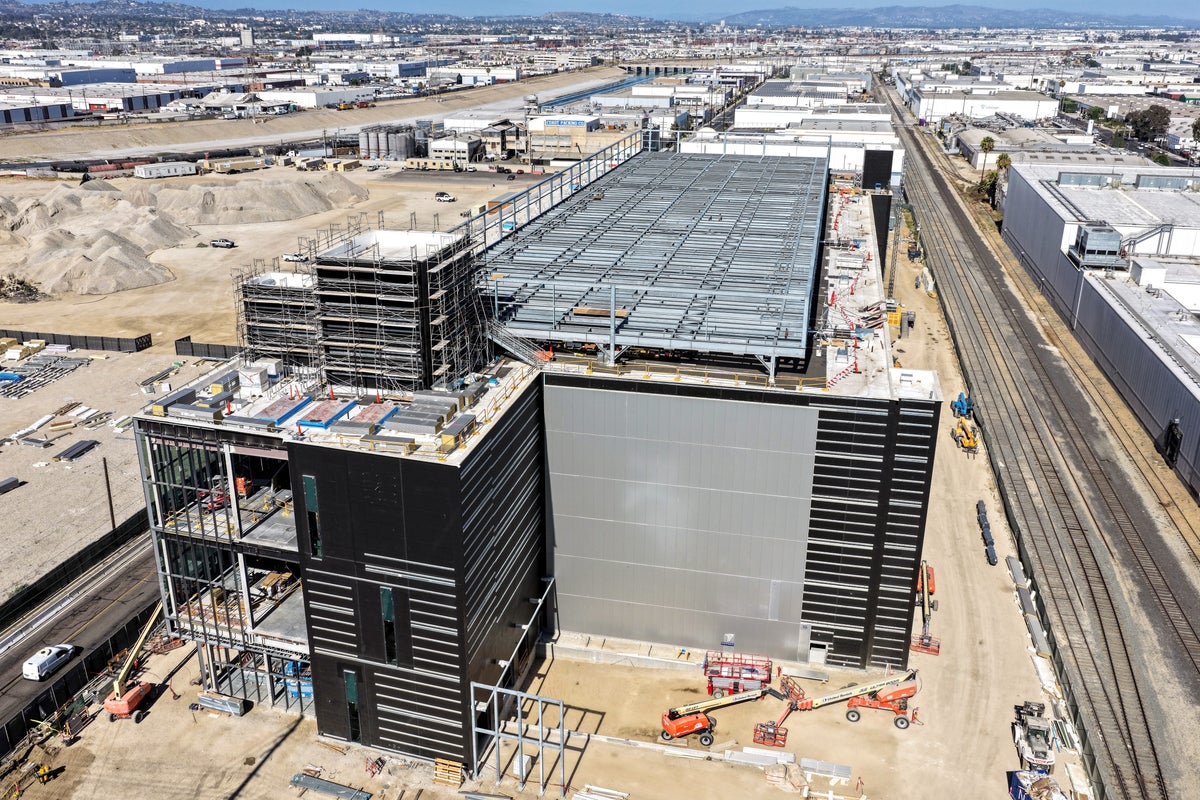
Beneath the corporate rhetoric of digital transformation lies a stark physical reality. Data centers are not ethereal clouds. They are concrete fortresses packed with thousands of hot, humming servers that consume electricity at a rate that threatens to break local distribution networks.
The New York Independent System Operator reported that projects, including data centers, are currently waiting to connect more than 12 gigawatts of electricity demand to the state’s grid. To put that in perspective, a single gigawatt can power roughly 750,000 homes. If even a fraction of these proposed facilities come online without massive upgrades, the state faces a dual threat of rolling blackouts and soaring residential utility bills.
For years, tech giants built these massive facilities with the quiet cooperation of state and local governments. They promised jobs and high-tech prestige. In return, they received lucrative tax exemptions and virtually unchecked access to cheap energy. But the rapid rise of generative artificial intelligence has fundamentally altered the math. AI queries require significantly more energy than standard web searches.
The public has noticed. Everyday citizens are seeing their monthly electric bills climb. When transmission lines must be upgraded to support a new server warehouse, those infrastructure costs are frequently passed down to residential ratepayers. It is a classic case of privatized profits and socialized costs.
By halting discretionary environmental permits for one year, the state is attempting to force a reset. The Department of Environmental Conservation will use this window to draft a Generic Environmental Impact Statement. This study will evaluate the cumulative toll these facilities take on the power grid, local water supplies, and air quality. It is a necessary pause in a race that was running entirely out of control.
A Direct Challenge to the Trump National Framework
New York’s moratorium is not just a local regulatory speed bump. It is a direct assault on the Trump administration's sweeping federal agenda to accelerate AI development at all costs.
In December 2025, President Trump signed an executive order titled "Ensuring a National Policy Framework for Artificial Intelligence". The order was designed to preempt state-level restrictions on AI development. The federal administration argues that a fragmented patchwork of state laws undermines American competitiveness against global rivals like China. To enforce this vision, the executive order established an AI Litigation Task Force led by Attorney General Pam Bondi, tasked specifically with challenging state-level restrictions in court.
Furthermore, the Trump administration has threatened to withhold federal Broadband Equity Access and Deployment funding from states that enact what the White House deems "onerous" AI regulations. It is a heavy-handed approach designed to force states into submission.
Federal-State Policy Conflict

   Trump Administration Policy                New York State Policy
┌──────────────────────────────┐          ┌──────────────────────────────┐
│ • National AI Framework      │          │ • Statewide Moratorium       │
│ • State Law Preemption       │   VS     │ • One-Year Permit Freeze     │
│ • Pro-Growth Deregulation    │          │ • Ratepayer Protections      │
│ • Defend Global AI Lead      │          │ • Grid Stability First       │
└──────────────────────────────┘          └──────────────────────────────┘
Hochul’s executive order effectively dares the federal task force to sue. The legal battleground will likely center on the Dormant Commerce Clause, with federal attorneys arguing that New York is unconstitutionally regulating interstate commerce.
Yet, New York officials believe they are on solid legal ground. Historically, states have maintained primary authority over their own utility grids, environmental permitting, and local land-use zoning. If the federal government attempts to strip broadband funding or sue New York over an environmental safety pause, it will expose a glaring ideological contradiction. Conservatives have long championed federalism and states' rights. Bypassing a state's control over its own physical electrical grid to benefit multinational tech companies is a hard position to defend under the banner of local governance.
The End of the Corporate Tax Giveaway
For decades, the standard playbook for attracting data centers involved a race to the bottom on taxes. New York was no exception, offering generous sales tax exemptions on the highly expensive server hardware that these facilities must replace every few years.
Hochul is now signaling that the era of the free lunch is over. Alongside the permit freeze, she has called on state lawmakers to entirely repeal sales tax exemptions for massive data centers.
"New Yorkers work hard, and, on my watch, their tax dollars will not be used to benefit these large firms," Hochul stated during her announcement.
The state is also introducing a Community Investment Framework. This framework is designed to empower local municipalities when negotiating with developers. Under the new guidelines, any future data center project that hopes to gain approval after the moratorium is lifted will have to guarantee concrete local benefits. These include:
- Grid mitigation funds: Direct payments to offset transmission line upgrades so local residents do not see their utility bills climb.
- Labor agreements: Prioritizing prevailing wages, union labor, and apprenticeships for construction workers.
- Mandatory cooling alternatives: Forcing developers to utilize closed-loop dry cooling systems rather than draining millions of gallons of municipal water.
If tech companies want to access New York’s talent pool and financial markets, they will have to pay the true cost of their physical footprint.
The Green Energy Lie
The tech industry has long wrapped its expansion in clean energy promises. Companies proudly purchase Renewable Energy Certificates to claim their operations are carbon-neutral. But these paper transactions do not change the physical flow of electrons.
In the real world, a data center runs twenty-four hours a day, seven days a week. Solar panels do not produce power at night, and wind turbines can sit idle during calm weather. When green generation falls short, the local utility must ramp up fossil-fuel peaker plants to keep the server racks humming. In New York, this dynamic threatens to completely derail the state's ambitious climate mandates.
New York's power grid is already deeply divided. Upstate New York boasts an abundance of clean, zero-emission power from hydroelectric facilities and nuclear plants. Downstate New York, including New York City, still relies heavily on natural gas.
Tech developers have targeted upstate regions, seeking to gobble up cheap, clean hydropower. But doing so leaves less renewable energy available to transfer downstate, forcing urban areas to burn more fossil fuels to meet everyday demand. The state’s climate goals cannot survive a massive influx of energy-hungry server warehouses.
The moratorium forces a hard conversation about energy priorities. If a state has a limited budget of clean energy, should it go toward heating homes and powering public transit, or should it be used to train massive large language models? New York has decided that public infrastructure must take precedence over corporate experimentation.
The Escalating Local Backlash
While the legal battle brews in Albany and Washington, the real pressure on politicians is bubbled up from local town halls.
Across the state, quiet communities have found themselves targeted by developers proposing projects on scale with heavy industrial manufacturing. A proposed 300-megawatt facility near Ithaca generated fierce opposition from local residents worried about noise pollution, lake water depletion, and aesthetic degradation. Large data centers require massive industrial chillers and cooling towers that produce a constant, low-frequency hum. For neighbors, this noise is a persistent, sleep-depriving nuisance.
Furthermore, the employment promises made by developers rarely hold up under scrutiny. While a data center project creates hundreds of temporary construction jobs, a fully operational facility of fifty megawatts might only employ a few dozen highly specialized technicians once complete. For local economies, the trade-off is increasingly unappealing: massive land use, heavy strain on water and power, minimal long-term employment, and rising utility bills for residents.
The political calculation for Hochul is clear. With statewide elections on the horizon and voters deeply anxious about inflation and household expenses, defending corporate tech expansion at the expense of residential utility bills is a losing strategy. By pausing the buildout, the state is attempting to regain control of a narrative that was quickly slipping away.
The one-year freeze is a gamble. It risks driving immediate tech investment to more permissive states like Virginia, Ohio, or Texas. But by establishing a rigorous regulatory framework now, New York is betting that the long-term stability of its grid and the protection of its citizens will ultimately prove more valuable than a chaotic, unregulated construction boom. The rest of the nation, and the federal government, will be watching closely to see who blinks first.