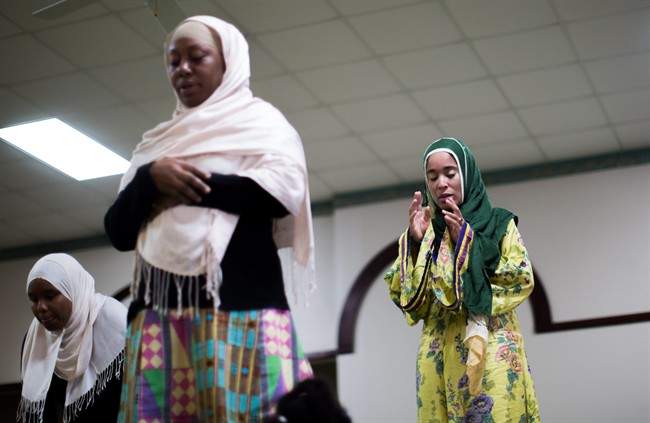
When a Regina mosque received municipal permission to broadcast the Islamic call to prayer over outdoor loudspeakers, the administrative decision seemed straightforward. It was a temporary accommodation meant to offer solace during a time of forced isolation, a minor policy tweak by a city council trying to balance public health restrictions with religious freedom. Instead, it triggered a wave of coordinated hostility that exposed the fragile underbelly of multiculturalism in Saskatchewan.
The threats that followed were not isolated outbursts of ignorance. They were the predictable outcome of a calculated mobilization by far-right networks exploiting local anxieties to test the boundaries of public intimidation. This incident pulled back the curtain on a systemic failure to protect minority communities when local politics and digital malice intersect.
The Friction Between Bylaws and Belief
For decades, the sound of church bells has been an accepted part of the sensory environment in Canadian cities. They ring out on Sunday mornings, at weddings, and during funerals, largely exempt from the noise restrictions that govern commercial and private citizens. This exemption is rarely questioned. It is woven into the historical fabric of the community, an unchallenged legacy of a foundational religious heritage.
When the Regina Islamic Centre requested a similar accommodation to broadcast the adhan, the call to prayer, for a few minutes a day during Ramadan, the city granted a temporary exemption to its noise bylaw. The goal was to provide a sense of connection for a congregation unable to gather in person.
The backlash was immediate and fierce.
Opponents quickly weaponized municipal regulatory frameworks to mask deeper biases. Public forums and city council feedback channels were flooded with complaints that framed the three-minute broadcast not as a religious observance, but as an aggressive occupation of public space. Critics argued that the exemption violated the secular nature of public policy, ignoring the long-standing double standard applied to Christian institutions.
This regulatory friction highlights a deeper societal discomfort with visible, audible non-Christian worship. The administrative machinery of local government proved ill-equipped to handle the ideological storm that followed. By treating the request as a simple noise variance rather than a significant milestone in community integration, the city inadvertently left the mosque exposed to a coordinated campaign of harassment without a proactive security strategy in place.
Anatomy of a Digital Swarm
The threats directed at the Regina mosque did not originate in a vacuum. They followed a distinct, repeatable pattern seen across middle America and Western Canada, where national extremist groups hijack local news stories to manufacture cultural crises.
The process begins on mainstream local social media pages. A routine news report or council announcement is posted. Within hours, the comment sections are flooded with standard talking points about creeping cultural replacement and the erosion of Western values.
Once the local algorithm is primed, the story is picked up by alternative media outlets and digital provocateurs. These actors strip away the local context, reframing a temporary, localized noise exemption as a symbol of a broader cultural surrender. The story is then pushed down into closed messaging apps and extremist forums.
In these unmonitored spaces, the rhetoric undergoes a dangerous transformation. Vague cultural grievances turn into specific, actionable threats of violence.
Monitored data from civil rights groups reveals that the majority of the most severe threats directed at the Regina congregation came from IP addresses outside the province, and in some cases, outside the country. Local anxieties were effectively weaponized by an international network of agitators who used the Regina mosque as a prop in a larger ideological war. The local community was left to deal with the physical fallout of an automated, borderless hate machine.
The Security Deficit and Police Inaction
When the threats escalated from online vitriol to direct phone calls and suspicious packages, the vulnerability of the congregation became undeniable. Places of worship are designed to be open, welcoming spaces. They are fundamentally unsuited to operate as high-security fortresses, yet they are increasingly forced to adopt that exact posture.
The response from law enforcement followed a frustratingly familiar pattern for minority communities. Officers took reports, increased occasional drive-by patrols, and issued standard statements condemning intolerance.
This reactive approach misses the point entirely.
Standard policing models are designed to respond to localized, physical crimes. They are structurally incapable of dealing with the asymmetrical threat profile facing modern religious minorities. A drive-by patrol car does nothing to stop a coordinated digital harassment campaign that paralyzes a community with fear, nor does it address the radicalization happening on local forums.
The burden of security has been shifted onto the victims.
Volunteer committees within the mosque were forced to divert scarce financial resources away from community outreach and social services to pay for commercial surveillance systems, reinforced entryways, and private security guards. This represents a hidden tax on religious freedom. A community cannot truly exercise its constitutional rights if the basic act of gathering requires a counter-terrorism budget.
The Myth of the Tolerant Suburb
There is a persistent myth that severe ideological polarization is a problem exclusive to major metropolitan areas or deeply divided foreign states. Mid-sized Canadian cities often pride themselves on a quiet, neighborly tolerance that supposedly inoculates them against such vitriol.
The Regina incident shattered that illusion.
In smaller urban centers, the impact of targeted hate is often felt more acutely because the communities are tighter and the infrastructure for support is smaller. In a metropolis, a targeted community can blend into a vast demographic landscape. In a city like Regina, a mosque is highly visible, making its members easy targets for harassment in their daily lives, at their workplaces, and in public parks.
The silence from the broader civic leadership during the height of the controversy was telling. While individual progressive groups offered solidarity, the political establishment largely attempted to distance itself from the fallout. Politicians feared that defending the mosque too forcefully would alienate conservative voters who had bought into the noise-bylaw narrative.
This cowardice created a vacuum. By failing to forcefully assert that public religious expression is a fundamental right, civic leaders allowed the extremists to set the terms of the debate. Tolerance that vanishes the moment it becomes politically inconvenient is not tolerance at all. It is merely compliance under favorable conditions.
Redefining Public Space in a Pluralistic Society
The debate over the call to prayer forces an uncomfortable question that most municipalities prefer to avoid. Who owns the acoustic space of a city?
For over a century, the auditory background of Canadian life has been monocultural. The acceptance of certain sounds and the rejection of others is a direct reflection of who holds cultural power. Demanding that a minority religion keep its practices strictly confined within four walls, while allowing traditional institutions to project their presence across entire neighborhoods, is an exercise in systemic exclusion.
True pluralism is messy. It requires an acceptance that the sights, sounds, and rhythms of public life will change as the population changes.
The resistance to the Regina adhan was a desperate attempt to freeze the cultural identity of the city in a bygone era. Municipalities cannot continue to court immigrant labor and celebrate population growth to boost their economies while simultaneously refusing to accommodate the cultural realities that come with that growth.
The threats directed at the Regina mosque were an extreme manifestation of a broader, mainstream resistance to sharing public space on equal terms. The administrative decision to grant the exemption was a small step toward equality, but the violent reaction proved that the legal right to exist is very different from the social permission to belong.
The path forward cannot rely on retreat. When institutions scale back their visibility to appease bad actors, the extremists win. Security must be viewed not as an internal logistical problem for minority communities, but as a collective civic obligation. If a city cannot guarantee the safety of its citizens when they step into the public square, its commitment to diversity is nothing more than a marketing slogan.
The events in Regina were a warning shot. The vulnerability exposed there remains unaddressed, a dormant fuse waiting for the next administrative decision to spark another cycle of managed outrage and real-world fear. The true measure of a community is not how it behaves during periods of quiet uniformity, but how it protects its most vulnerable members when the air is filled with friction.