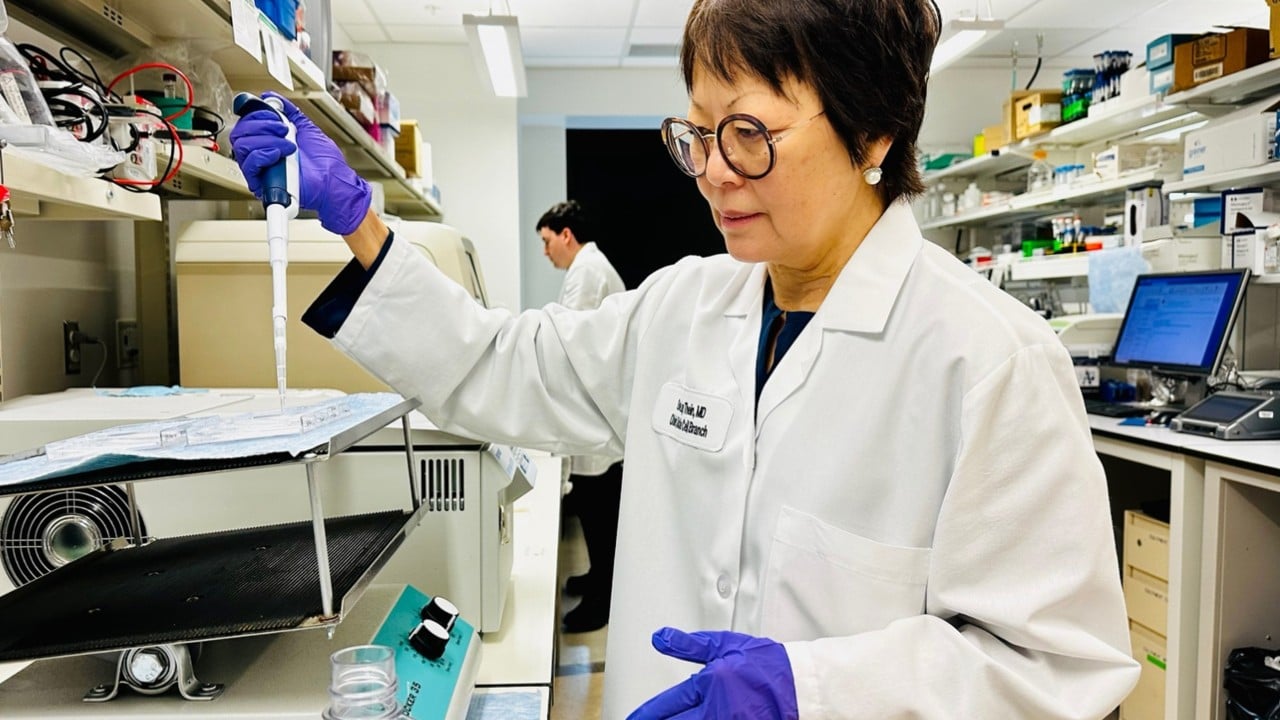
When a scientist from a developing nation breaks through the glass ceiling of Western-dominated research awards, the global media follows a highly predictable script. The narrative leans heavily on the triumph over adversity, the journey from a modest hometown to the glittering galas of Silicon Valley or London, and the commendable ability to adapt to shifting environments. This framing is comforting. It suggests that global science is a pure meritocracy where talent eventually wins.
The reality is far more complex and significantly more taxing. If you enjoyed this post, you should look at: this related article.
The recognition of pioneering researchers from Southeast Asia on the global stage highlights a deeper, unexamined tension. It exposes the immense friction between localized funding, global academic validation, and the structural brain drain that quietly siphons talent away from the global South. When we celebrate a researcher winning what the media calls an "Oscar of science," we rarely examine the systemic inefficiencies that make such an achievement an anomaly rather than a standard output of regional academic institutions. True scientific independence requires more than individual adaptability. It demands an overhaul of how developing nations fund, protect, and scale their intellectual property.
The Mirage of Institutional Support
Every year, millions of dollars are funneled into national research grants across developing economies with the explicit goal of creating world-class innovation. Yet, the structures distributing these funds are frequently bogged down by bureaucratic inertia. For another look on this development, see the recent update from Engadget.
In many regional universities, a senior researcher spends more time filling out compliance paperwork and justifying the purchase of basic laboratory reagents than conducting actual experiments. Grants are often tied to rigid, short-term fiscal cycles. This setup forces scientists to chase quick, low-impact publications rather than embarking on high-risk, high-reward longitudinal studies.
The brilliant mind that manages to bypass these hurdles does so through sheer political maneuvering and personal sacrifice, not because the system worked. They must build international collaborations not just for intellectual exchange, but as a survival mechanism to access equipment that their home institutions cannot or will not maintain.
The Equipment Deficit
A major bottleneck is infrastructure. A university might secure a multi-million-dollar grant to purchase a piece of high-end analytical machinery, such as a cryo-electron microscope or a next-generation gene sequencer. The acquisition makes for an excellent press release.
The trouble starts six months later.
When a specialized component fails, the institution often lacks the maintenance contract or the local expertise to fix it. The machine sits idle for months. Researchers are forced to ship their samples to labs in Singapore, Europe, or the United States to keep their projects alive. This reliance introduces massive delays and subjects local research to the intellectual property laws and priorities of foreign hosts.
The Asymmetry of Global Collaboration
International partnerships are routinely praised as the lifeblood of modern scientific progress. For an ambitious scientist from an emerging economy, collaborating with a top-tier Western institution is often the only path to high-impact journals. However, these partnerships are rarely relationships of equals.
Too often, researchers from the global South find themselves relegated to the role of data collectors or sample providers. They possess the unique local field access, the patient cohorts, or the specific regional environmental data. Yet, when the final paper is submitted to a prestigious publication, the primary authorship and the intellectual property rights frequently anchor themselves in the Western institution that provided the advanced computing power or the final layer of data analysis.
+--------------------------------------------------------+
|               TYPICAL ACADEMIC PIPELINE                |
+------------------------------------+-------------------+
| GLOBAL SOUTH COMPONENT             | WESTERN PARTNER   |
+------------------------------------+-------------------+
| * Fieldwork & Sample Collection    | * Advanced Labs   |
| * Local Bureaucracy Navigation     | * Data Analysis   |
| * Raw Data Generation              | * Senior Authors  |
+------------------------------------+-------------------+
This dynamic creates a subtle form of scientific colonialism. The local scientist must constantly adapt to this hierarchy, accepting secondary status in exchange for a sliver of global visibility. Breaking out of this cycle requires a researcher to not only be a brilliant mind in the lab, but a fierce negotiator outside of it. They must secure independent funding sources that allow them to dictate terms, a feat that is exceptionally rare.
The Compliance Trap
Global science speaks English and operates on Western standards of validation. While standardization ensures safety and replicability, it also creates a steep barrier to entry for innovations rooted in regional realities.
Consider the development of therapeutics derived from local biodiversity. A researcher in a tropical nation may identify a compound with immense medical potential. To bring this to a global market, or even to achieve validation in top-tier medical journals, the research must pass through regulatory pathways designed by and for multinational pharmaceutical corporations. The cost of running these validated trials is astronomical, easily eclipsing the entire annual budget of a regional university's science department.
The Peer Review Bias
The hurdles extend to the publication process itself. Editorial boards of major scientific journals remain heavily concentrated in Western nations. Papers submitted from institutions outside a select circle of recognizable universities frequently face harsher scrutiny during the initial screening process.
A methodology that would be accepted without question if signed by a Harvard or Oxford address is often picked apart when originating from a regional Asian or African institution. Researchers must spend disproportionate energy proving their basic credibility before their actual scientific findings are even evaluated.
Rethinking the Metric of Success
The obsession with global awards and Western validation distorts local research priorities. When a nation's highest scientific honor is effectively measured by how well its scientists please foreign award committees, local problems get ignored.
Emerging economies face distinct, immediate challenges. These range from climate-induced agricultural shifts to tropical diseases that receive little attention from global pharmaceutical giants. When top scientific minds are forced to align their research with the trends that appeal to international journals to secure funding, they pivot away from solving the urgent issues affecting their own communities.
A scientist working on optimizing local palm oil waste management or tackling dengue fever variants may struggle to find space in a journal obsessed with theoretical quantum computing or generic western oncology models.
The current system rewards the individual outlier who managed to escape the gravitational pull of local institutional limitations. True progress, however, is not measured by the lonely pioneer who wins an international prize. It is measured by the baseline capability of a nation's scientific ecosystem to retain its brightest minds, protect its data, and solve its own existential problems without needing a stamp of approval from the opposite side of the world. Nations must build funding models that value domestic utility as highly as international prestige, or they will remain perpetual onlookers in the global technological race.