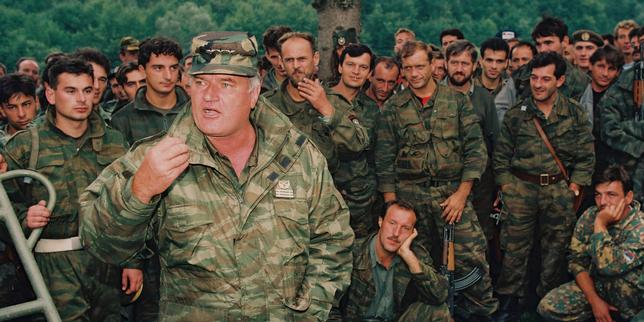
The man known across the world as the Butcher of Bosnia is finally gone. Ratko Mladic died at 84 years old inside a United Nations detention unit in The Hague while serving a life sentence.
If you followed the Yugoslav wars or studied international criminal law, his passing closes a dark chapter of modern European history. Yet, his death doesn't bring true closure. Decades after the bloodshed in the Balkans, his name still triggers fierce division, stubborn historical revisionism, and an unhealed trauma for the families of his victims.
The Rise of a Nationalist Commander
Born in 1942 in a small village near Kalinovik, Mladic watched World War II tear his family apart. His father was killed by Croatian fascist forces, a personal tragedy that deeply warped his worldview and fueled a lifelong obsession with ethnic grievances.
He climbed the ranks as a strict career officer in the communist Yugoslav People's Army. But when Yugoslavia violently fractured in the early 1990s, Mladic didn't hesitate. He chose ethnicity over ideology.
He took command of the Army of the Republika Srpska, leading military campaigns designed to carve out an ethnically pure Serb state. Under his direct orders, cities turned into killing fields.
Sarajevo and Srebrenica
Mladic orchestrated two of the most horrific atrocities on European soil since the end of the Second World War.
The siege of Sarajevo lasted nearly four agonizing years. Snipers targeted civilians walking down open streets, and relentless artillery fire rained down from the surrounding hills. Mladic famously ordered his men to shell the city to make the population lose their minds.
Then came July 1995. When Mladic's forces overran the United Nations safe area of Srebrenica, they separated thousands of Muslim men and boys from their families. Over the span of a few days, more than 8,000 individuals were systematically executed and dumped into mass graves.
Footage of Mladic walking through the captured town, handing out candy to children while planning industrial-scale murder, remains one of the most chilling images of modern warfare.
Fifteen Years in the Shadows
Indicted by the International Criminal Tribunal for the former Yugoslavia in 1995, Mladic vanished.
For over a decade, he lived a life of stealth. Protected by loyal elements within the military and political establishment, he hid out in various towns across Serbia. Many wondered if he would evade justice forever, just like fugitive warlords of past eras.
The net finally tightened in May 2011. Serbian authorities arrested him in a quiet northern village called Lazarevo. He was living under an alias, frail and aging, but still defiant. Extradited to The Hague, he faced a grueling trial that ultimately ended with a conviction for genocide, crimes against humanity, and war crimes.
Why the Shadow Won't Lift Today
Mladic spent his final years dealing with failing health, suffering strokes and chronic illnesses. Yet, his physical decline never matched his ideological footprint.
Even from his prison cell, Mladic remained a hero to hardline nationalists who viewed him as a patriotic defender of the Serb nation. Walk through parts of Republika Srpska today, and you will find murals honoring his likeness, while local politicians routinely downplay or outright deny the scale of the Srebrenica genocide.
Survivors and victims' associations, like the Mothers of Srebrenica, spent decades fighting for accountability. They watched him live to an old age—something thousands of his victims never got to experience.
Justice delivered by international courts matters, but it cannot rewrite cultural memory or instantly heal communities fractured by hate. Mladic is gone, but the political divisions he weaponized remain deeply embedded in the soil of the Balkans.