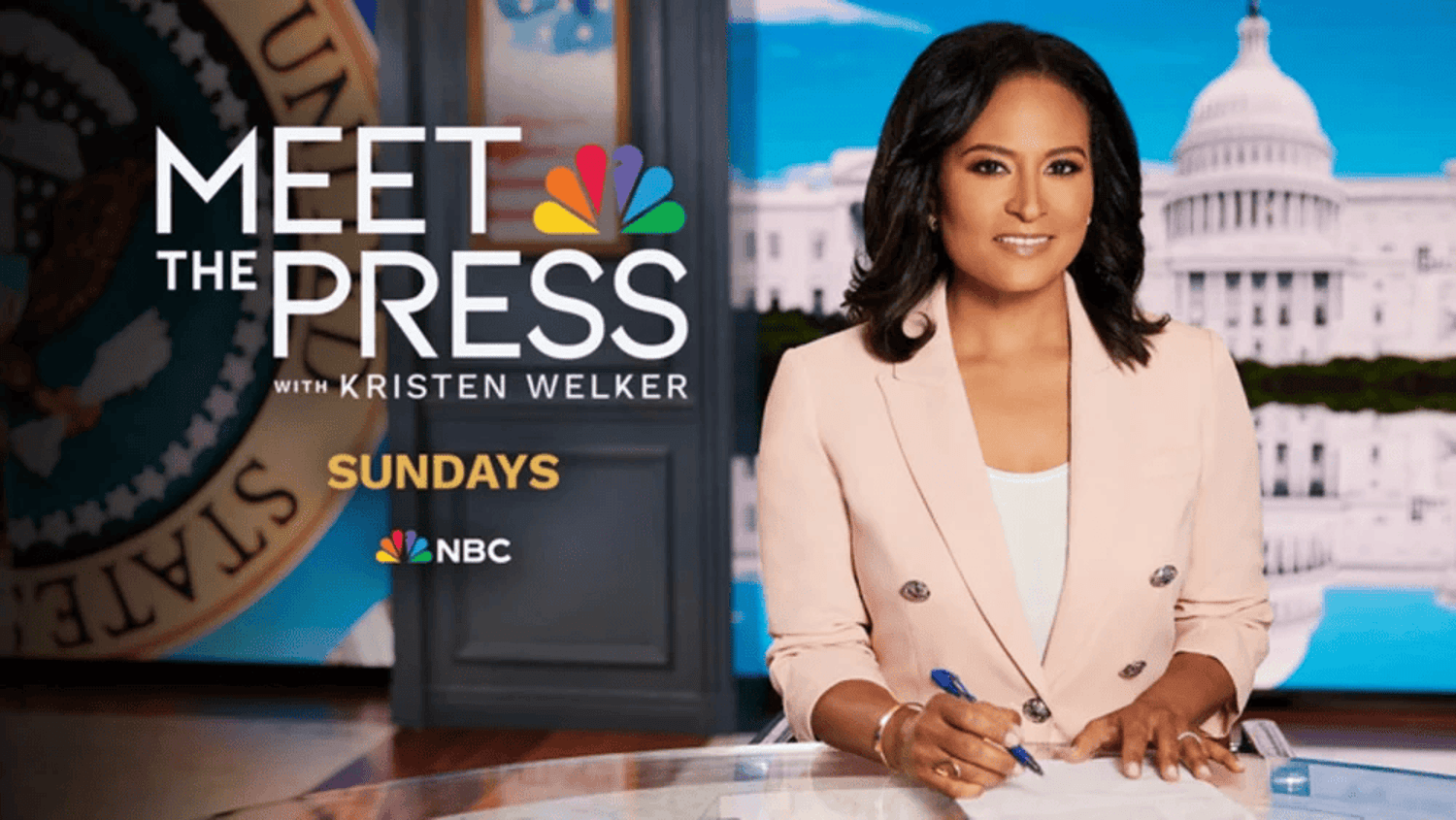
Rain pounded the roof of a weathered Wisconsin barn on Friday, a heavy, rhythmic thudding that repeatedly forced the television crew to stop their cameras. Inside, sitting across from NBC’s Kristen Welker, was Donald Trump. The setting was intentionally rustic, a backdrop designed to evoke heartland stability and the quiet certainty of the American working class. But the conversation unfolding under that tin roof was anything but quiet.
By the time the interview aired on Sunday morning, the rustic tranquility had evaporated completely. What remained was a stark, unfiltered look at a presidency grappling with the friction between campaign poetry and the messy, violent prose of governing.
The core of that friction can be summarized in three months of modern warfare. When Trump campaigned for his return to the White House, his rhetoric was anchored by a singular, seductive promise: no new wars. It was a line that resonated deeply with a country exhausted by decades of foreign entanglements. Yet, on February 28 of this year, missiles flew, forces moved, and America entered a hot war with Iran.
Welker pressed him on this gap between the promise and the reality. The response from the president was a fascinating exercise in rhetorical recalibration.
"First of all, I didn't guarantee no war," Trump said, his voice competing with the Wisconsin downpour. "Why would I have built the strongest military in the world?"
It is a striking pivot. The absolute certainty of the campaign trail was replaced with a transactional defense. Trump argued that a three-month conflict does not qualify as an "endless war," the specific noun he spent years weaponizing against his political opponents. He framed the strikes as a necessary, isolated surgery to prevent a nuclear threat, claiming he was doing the world a service.
But the logic twisted in on itself. Moments later, he repeated a claim that American strikes had already obliterated Iranian nuclear sites the previous year. If the threat was gone, the necessity of the current war became a moving target. When asked why his first-term strategy of abandoning the Obama-era nuclear deal had not resulted in the "better deal" he had personally guaranteed, he offered a rare concession to the agonizingly slow pace of global diplomacy.
"It takes years to do these things," he muttered.
Time, however, is a luxury that domestic politics rarely affords. While the administration manages a new war abroad, the machinery of American democracy is grinding through its own internal crises. Consider what happens when the slow, deliberate processes of governance collide with a political strategy that demands instant vindication.
Look at California. The state is currently tallying the ballots from its primary election. Because of its massive population and laws that allow mail-in ballots to be counted up to seven days after election day—provided they are postmarked on time—the process is notoriously slow. It is an administrative reality, a bureaucratic slog that happens every election cycle.
But inside the Wisconsin barn, that administrative slowness was reframed as something sinister. Trump seized on the shifting numbers as definitive proof of cheating, pointing to late-tallied mail ballots that have eroded the leads of his preferred candidates for governor and mayor of Los Angeles.
"All I have to do is look," Trump insisted, dismissing the legal mechanics of the count. "All I have to do is look."
"But that's not evidence," Welker countered.
"And I listen," Trump shot back. "And I listen to people. And let's see what happens."
The tension in the barn was no longer just about foreign policy or vote counting. It was about the very definition of truth and the legitimacy of the institutions tasked with finding it. The friction point arrived when Trump began repeating unproven conspiracies about rigged elections, extending the accusation of corruption to the network and to Welker herself.
"When you play right into their hands, you're either crooked or you're stupid," Trump told her, his patience entirely spent.
Then, he stood up. The interview, meant to last a full hour, was over. The president walked out, leaving the cameras to capture the empty chairs and the sound of the Midwestern rain still hitting the roof.
The abrupt exit underscored a broader pattern of a presidency operating on raw instinct and personal grievance. Just days before the interview, Acting Attorney General Todd Blanche announced that the Department of Justice was scrapping a controversial plan to create a $1.776 billion "Anti-Weaponization Fund." The fund, born out of a settlement over the leak of Trump’s tax returns, had drawn fierce criticism from both sides of the aisle for its total lack of oversight. Critics openly feared it would be used to distribute payouts to individuals involved in the January 6 Capitol riot—individuals Trump had already granted a sweeping pardon to upon taking office in January 2025.
In the barn, before the walkout, Trump defended the dead fund with a shrug of regret, calling it a great idea and admitting he was disappointed it was dead. When Welker asked if people who assaulted police officers should receive taxpayer cash from such a fund, the president hesitated.
"I wouldn't be inclined to say so," he said, "but I have to see it."
The interview left viewers with a disquieting portrait of a nation in suspension. Abroad, the three-month-old war with Iran continues, pushing domestic gas prices up by $1.50 and straining alliances. At home, handpicked federal prosecutors are launching voter fraud investigations in California based on little more than complaints about the duration of the count.
We are left with the image of an interview cut short, an unfinished conversation inside a leaking barn, and a presidency that refuses to be bound by the very rules it is tasked to enforce.