Sound travels strangely across wide asphalt.
If you have ever stood at the edge of a major boulevard in the San Fernando Valley during the late afternoon, you already know the specific acoustic signature of the place. It is not the sharp, vertical echo of downtown Manhattan or the damp rumble of a subway beneath your boots. It is a flat, relentless wash of white noise—rubber meeting sun-baked pavement, exhaust pipes muttering in low gear, the distant whine of a leaf blower two blocks over, and the sudden, metallic slap of a suspension dropping into a pothole. You stop hearing it after ten minutes. Your brain files the kinetic energy of four-thousand-pound machines hurtling past your elbow at forty-five miles per hour under the same mental folder as the hum of a refrigerator.
Until the sound changes.
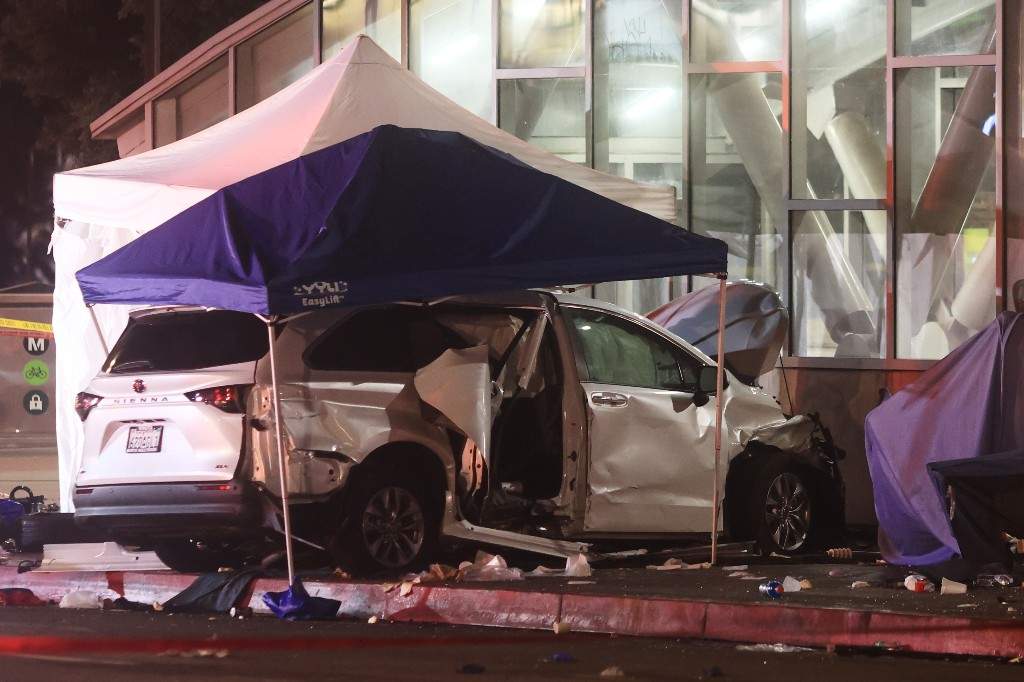
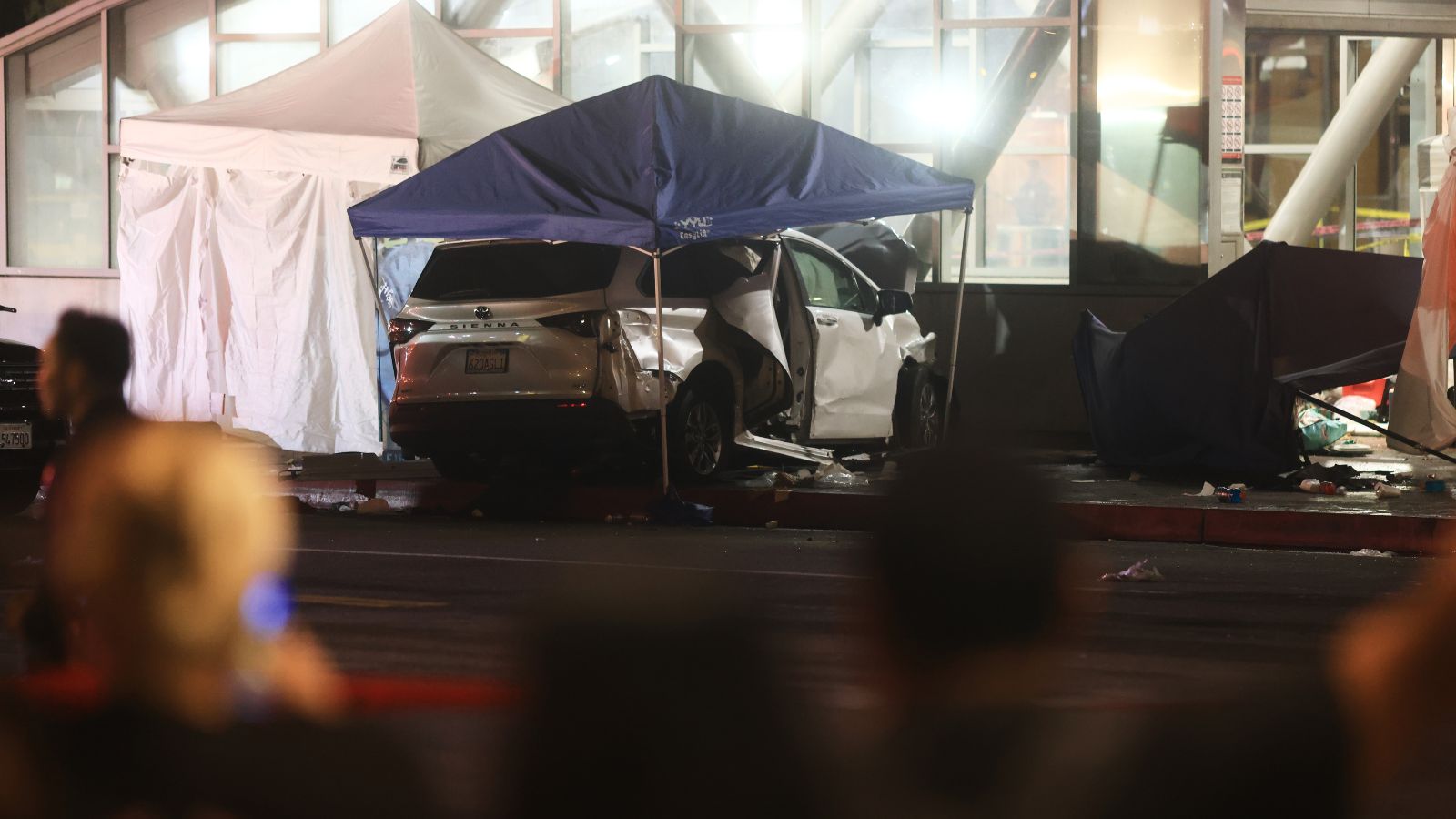
In North Hollywood, a neighborhood defined by its sun-bleached stucco, strip-mall taco stands, and the perpetual motion of commuters cutting between the 170 and the 101 freeways, three people died when a vehicle left the roadway and struck pedestrians on the street. In the flat, sterile shorthand of a live news ticker, the event arrives as a single line of text: Three dead after vehicle crashes into people in North Hollywood. You read the headline while waiting for your coffee to brew. You feel a brief, familiar flicker of secondhand grief, maybe a flash of frustration at reckless drivers, and then you scroll down to see what happened in the stock market or who got traded to the Lakers.
That is how live updates work. They turn a sudden, irreversible rupture in the human fabric into a data point.
I know what that rupture feels like from the inside, though my own brush with it happened three miles south of North Hollywood on a Tuesday morning when the glare off the windshield turned the world into white milk. I was standing on a concrete island waiting for a walk signal, holding a paper bag of groceries, when a sedan jumped the curb twelve feet to my left. I did not hear the engine rev. I heard a sound like a heavy wooden crate being dropped off the back of a truck, followed by the high, thin tinkle of safety glass scattering across the sidewalk like spilled ice. Nobody died that morning—the car hit a municipal light pole instead of the woman standing next to me with a stroller—but for six months afterward, every time I walked along a street without a parked car between me and the traffic lane, the skin between my shoulder blades went cold.
Once you have heard metal meet concrete at street level, you stop reading headlines about "vehicle crashes" as isolated accidents. You start seeing them for what they actually are: the predictable outcome of how we have chosen to build our cities, how we have engineered our machines, and how casually we ask human flesh to share space with industrial speed.
The Architecture of a Forgiving Mistake
To understand why three people can be killed on a sidewalk in North Hollywood in a matter of seconds, you have to stop thinking about bad drivers for a moment and start looking at the geometry of the street itself.
Consider a hypothetical pedestrian—let’s call her Elena, though she could be any of the thousands of people who walk through North Hollywood every day to catch the B Line subway, pick up a prescription, or walk home from a shift at a restaurant on Lankershim Boulevard. Elena is doing everything the social contract asks of her. She is walking on the sidewalk. She is looking up from her phone. She is waiting behind the painted white line at the crosswalk.
Now consider the geometry separating Elena from the travel lane. Usually, it is a six-inch vertical slab of poured concrete.
In highway engineering, there is a concept known as the "clear zone." When engineers design an interstate freeway, they assume that drivers are human, and humans make mistakes. People sneeze. People drop their phones. People suffer sudden medical emergencies, misjudge curves, or drive drunk. Because mistakes are statistically guaranteed over millions of miles, freeway designers build wide, unobstructed shoulders, breakaway signposts, and energy-absorbing guardrails so that a driver who drifts out of their lane hits dirt or yielding metal rather than a concrete bridge abutment. The highway is engineered to forgive human error.
Surface streets in neighborhoods like North Hollywood operate on the exact opposite principle.
Across the San Fernando Valley, boulevards were laid out in the mid-twentieth century to move massive volumes of suburban traffic at high speeds. They are wide, straight, and flat—visual cues that tell a driver’s subconscious brain that they are on a highway, even when the posted speed limit says thirty-five miles per hour. Yet lining those exact same high-speed corridors are bus stops, liquor stores, apartment entrances, and narrow sidewalks packed with people who have no cars of their own. We have built highways through living rooms, and then we act surprised when the furniture gets smashed.
When a vehicle leaves the road on a street built like a runway, that six-inch curb does nothing. At forty miles per hour, a modern crossover SUV carries roughly the same kinetic energy as a small artillery shell. A six-inch piece of concrete is not a barrier; it is a launch ramp.
Why the Numbers Keep Climbing
If you feel like you have been seeing more headlines like the one from North Hollywood lately, you are not imagining things. Your eyes are tracking a statistical reality that safety advocates have been screaming about for over a decade.
For decades, traffic deaths in the United States fell steadily as seatbelts, airbags, and crumple zones turned cars into protective cocoons for the people inside them. Between 1975 and 2009, pedestrian fatalities dropped by more than half. We believed we were solving the problem of road violence through better automotive engineering.
Then, around 2010, the curve bent sharply upward—and it has refused to come back down.
According to data from the Governors Highway Safety Association and the National Highway Traffic Safety Administration, pedestrian deaths in the United States surged by roughly seventy-seven percent between 2010 and 2022, reaching levels not seen since the early 1980s. In Los Angeles alone, traffic collisions have consistently killed more people in recent years than homicides. Look closely at the numbers in L.A., and a stark geographic pattern emerges: the carnage is not distributed evenly across the city. Wide arterial roads in the San Fernando Valley—stretches like Lankershim, Victory, Sherman Way, and Roscoe—regularly appear on the city’s High Injury Network, the roughly six percent of streets that account for more than two-thirds of all severe and fatal pedestrian collisions.
Why did the trend reverse so violently? Three forces collided on the American street at the exact same moment.
First, the vehicles themselves mutated. Walk through any parking lot in North Hollywood today and look at the front grilles of the trucks and SUVs parked there. Fifteen years ago, the hood of an average family sedan came up to an adult’s mid-thigh. Today, the squared-off, blunt front end of a full-size pickup or large SUV often reaches a grown man’s chest—or a child’s forehead. Physics is unforgiving about geometry. When a low-slung sedan strikes a pedestrian, the impact hits the legs, throwing the person onto the hood where the sheet metal flexes and absorbs some of the blow. When a tall, flat-fronted SUV or truck strikes a pedestrian, the impact hits the pelvis and torso directly, driving the body downward under the wheels rather than upward onto the hood. Studies by the Insurance Institute for Highway Safety have found that vehicles with hood heights over forty inches are roughly forty-five percent more likely to cause pedestrian fatalities than vehicles with lower, sloped hoods.
Second, distraction went from an occasional lapse to a permanent state of consciousness. A driver looking down at a text message for just four seconds at forty-five miles per hour travels the length of an entire football field completely blind.
Third, our streets were never redesigned to match the reality of either heavier vehicles or distracted drivers. Cities painted crosswalks—thermally applied white stripes on asphalt—and called them safety improvements. Paint, as urban planners like to say, is not infrastructure. Paint does not stop a four-thousand-pound machine from mounting a curb.
The Invisible Ripple of a Three-Line Update
When a live news feed reports that three people are dead in North Hollywood, the story usually ends within twenty-four hours. Once the yellow crime-scene tape is rolled up, the tow trucks haul away the twisted wreckage, and the fire department hoses the fluids off the asphalt, traffic resumes its normal, impatient flow. Commuters pass the spot the next morning without knowing that anything happened there, save perhaps for a fresh scar on a utility pole or a bouquet of supermarket carnations taped to a lamppost.
What the live update never captures is the blast radius of those three deaths.
Think of a single human life not as a solitary point, but as the center of a dense web of obligations, habits, and quiet dependencies. Let’s return to a hypothetical scenario to trace what happens when that center is suddenly erased.
Suppose one of the three victims was a sixty-two-year-old grandfather walking back from a neighborhood market with a bag of fruit. Before 4:00 PM, he was the person who picked his seven-year-old granddaughter up from elementary school every afternoon because his daughter works a double shift at a clinic in Burbank. He was the person who knew how to fix the finicky pilot light on his landlord’s water heater. He was the person his elderly sister called every Sunday evening from Guadalajara just to hear a familiar voice.
At 4:01 PM, all of those threads snap simultaneously.
His daughter does not just lose a father; she loses her childcare, her financial margin, and her anchor in the world. Over the next year, she may have to cut her hours at work, fall behind on rent, and navigate the labyrinth of probate courts, funeral expenses, and trauma counseling—all while trying to explain to a seven-year-old why Grandpa never came to the school gate on Tuesday. Multiply that single web by three. Add the witnesses who stood ten feet away and will wake up with nightmares for years. Add the paramedics who arrived first on the scene and had to carry the memory of that sidewalk home to their own dinner tables.
We use the word "accident" to describe these events, and the word itself does quiet, insidious work. An accident is what happens when you spill a glass of milk on the kitchen floor. It implies an act of God, an unforeseeable bolt of lightning against which human beings are powerless. When we call a fatal crash on a known high-injury corridor an accident, we absolve ourselves of the responsibility to ask why the street was built to allow it in the first place.
What Other Cities Already Know
The hardest part of watching Los Angeles bury its pedestrians year after year is knowing that this is a solved problem. There is no mystery left in the physics of street safety. We do not need to wait for self-driving cars, artificial intelligence, or futuristic smart-grid sensors to stop vehicles from killing people on sidewalks.
We already have the technology. It is made of concrete, steel, and deliberate friction.
In 1997, the Swedish parliament passed a policy called Vision Zero, built on a radical yet simple ethical premise: it can never be ethically acceptable that people are killed or seriously injured when moving within the road transport system. Instead of blaming human beings for failing to be infallible, Swedish engineers redesigned streets so that human errors would not carry a death sentence.
They narrowed traffic lanes, because psychological studies prove that drivers instinctively slow down when a road feels tight and speed up when it feels wide. They installed raised crosswalks that act as speed tables, forcing cars to physically slow down before crossing pedestrian paths. They placed steel bollards—thick, concrete-filled posts anchored deep into the earth—along the edges of busy sidewalks and bus stops. If a driver has a heart attack, falls asleep, or loses control on a street lined with rated bollards, the vehicle stops dead against the steel before it can touch a single person waiting for a bus.
Look at what happened when cities took that engineering seriously. In Oslo, Norway—a bustling capital city of roughly seven hundred thousand people—urban planners systematically removed street parking, narrowed arterial lanes, and installed physical barriers protecting pedestrians and cyclists. In 2019, Oslo recorded zero pedestrian deaths for the entire calendar year. Not a reduction. Zero.
Meanwhile, in Los Angeles, the city adopted its own Vision Zero initiative in 2015, pledging to eliminate traffic deaths by 2025. That deadline came and went while fatalities actually climbed above the baseline from when the program began. Why? Because here, every proposal to narrow a four-lane boulevard, install protected bollards, or lower speed limits triggers a fierce political war over commute times and parking spaces. We have repeatedly decided, through budget votes and community board meetings, that shaving ninety seconds off a driver’s trip across the Valley is worth more than installing the physical infrastructure that keeps people alive on the sidewalk.
How You Walk Differently Once You Know
You cannot wait for city hall to pour concrete on every corner of North Hollywood before you walk out your front door tomorrow morning. Until our streets are built to protect human life over vehicle throughput, survival on foot in a car-centric city requires a quiet, constant vigilance that most drivers never have to think about.
If you walk in neighborhoods crisscrossed by wide, fast boulevards, treat every sidewalk edge like the platform of a subway track. Never stand directly at the curb while waiting for a walk signal; stand back behind a thick utility pole, a fire hydrant, or a mature tree trunk whenever one is available. Those fixed objects are the only informal bollards most American sidewalks have. Keep one ear open to the pitch of approaching engines—an accelerating exhaust note tells you more about a driver’s intentions than a green walk sign ever will. And when you step into a crosswalk, make eye contact with the person behind the wheel, even when you have the legal right of way. Right of way is a legal concept; momentum is a physical law, and momentum always wins.
For those of us behind the wheel, the shift is simpler and harder at the same time. Every time you turn the ignition in a modern vehicle, you are taking command of two tons of steel capable of erasing three families in less than two seconds. Treating a residential boulevard like a freeway ramp because you are five minutes late to an appointment is not a minor traffic infraction; it is a gamble placed with someone else’s life as the collateral.
Back in North Hollywood, the live updates eventually stopped refreshing. The headline drifted down the page, replaced by new emergencies, new scores, new noise. Somewhere in the Valley, three families are learning how to navigate a silence that will never again be filled, while four blocks away, the afternoon traffic still hums across the asphalt at forty-five miles an hour, separated from the people walking home with their groceries by nothing more than six inches of concrete.