The ink on the parchment in Brasília was still wet, but thousands of miles away in a damp, slate-roofed barn in the Swiss canton of Bern, a dairy farmer named Hans was looking at a ledger that had not balanced in three years.
He did not know Luiz Inácio Lula da Silva by face. He did not speak Portuguese, and the sprawling Cerrado savannahs of Brazil felt as distant to him as the craters of the moon. Yet, on this crisp morning, a continent-spanning bridge had just been thrown across the Atlantic Ocean. The Mercosur-EFTA Free Trade Agreement was no longer a stack of bureaucratic whispers in Geneva; it was a living, breathing reality that would soon determine how much Hans paid for his soybean feed, and how easily a family in São Paulo could afford a wedge of aged Gruyère.
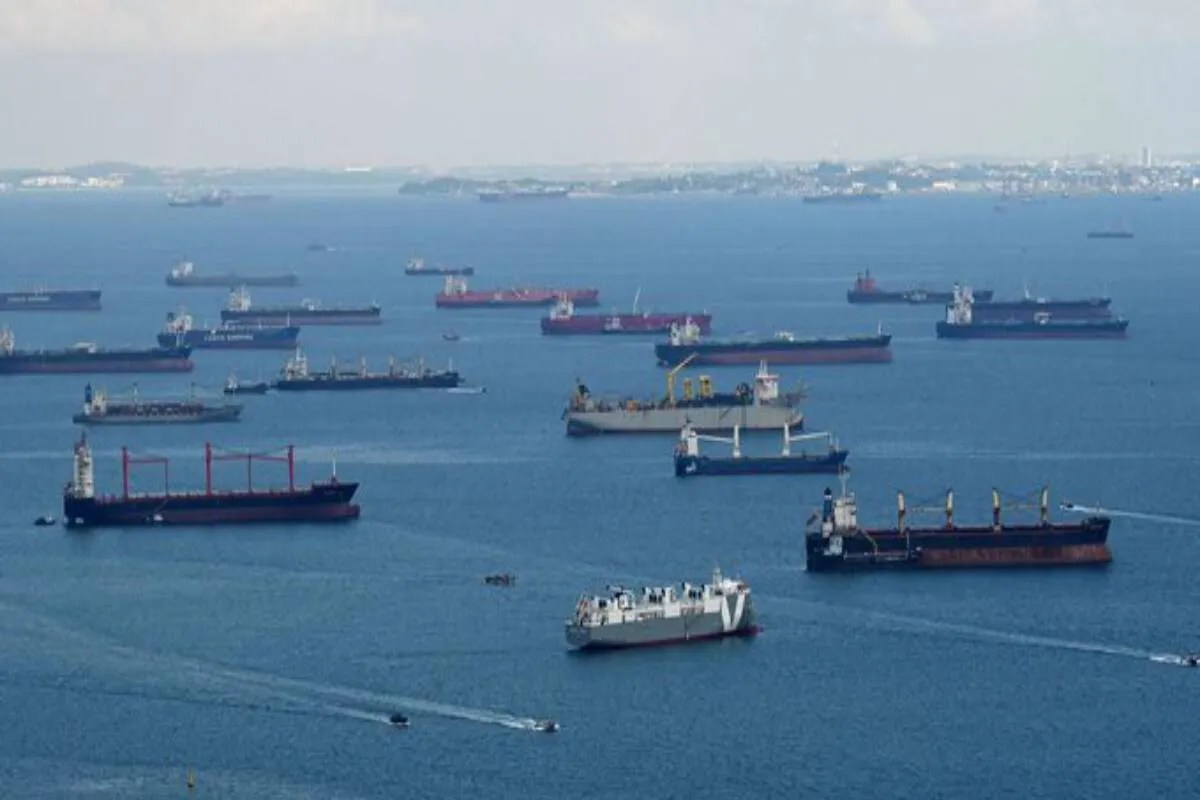
We tend to look at international trade through the wrong end of a telescope. We see massive macroeconomic metrics—gross domestic product percentages, tariff reduction schedules, container ship tonnage—and we mistake them for weather patterns. We think they happen to us, rather than by us. But behind every inked signature between South America’s largest trading bloc and the European Free Trade Association lies something infinitely more fragile and human: an anxious bet on the future.
Consider what actually happens when nations trade across oceans. It is rarely a clean transaction of state power. It is a series of quiet compromises made in cramped kitchens and sun-baked packing sheds.
For decades, the Mercosur nations—Brazil, Argentina, Paraguay, and Uruguay—have sat atop an agricultural powerhouse. They grow the protein that feeds millions. They cultivate the coffee that fuels late-night shifts in Zurich and Oslo. Yet, for just as long, an invisible wall of protectionist tariffs has stood in their way. European markets, eager to protect their domestic agricultural sectors, threw up high financial fences. The result was a grinding friction. Exporters in South America watched perishable goods sit at ports, suffocating under bureaucratic red tape, while European consumers paid inflated prices for goods grown under the exact same stringent environmental protocols they claimed to champion.
Then came the signing ceremony.
President Lula stepped up to the podium, his signature a swift stroke of historical revisionism. The agreement links Mercosur with Switzerland, Norway, Iceland, and Liechtenstein. It is an accord that eliminates customs duties on the vast majority of industrial and agricultural exports. It is a mutual acknowledgment that isolationism is a luxury modern economies can no longer afford.
To understand why this matters, step inside a hypothetical processing plant in southern Brazil. Let us call it AgroSul.
Maria has worked at AgroSul for fourteen years. Her hands are scarred from years of sorting crates, her rhythm as steady as a metronome. When the news of the EFTA agreement crackled over the breakroom radio, she did not cheer. She paused, a coffee mug halfway to her lips, and calculated what it meant for her shift. Lower tariffs mean higher export volumes. Higher volumes mean the old sorting machine—the one that breaks down every Tuesday—might finally get replaced. It means her daughter, studying veterinary science in Curitiba, might actually find a market for specialized agricultural consulting when she graduates.
This is the human calculus of trade. It is not just about cheaper steel or imported machinery. It is about the dignity of steady work and the quiet relief of a ledger that finally stays in the black.
Of course, treaties of this magnitude never arrive without a shadow.
Across the ocean, European farmers took to the streets in tractors, their engines roaring in protest against what they perceived as an existential threat to their livelihoods. Their fear is real, and it deserves to be honored. When you have plowed the same ancestral fields for generations, the sudden influx of hyper-competitive South American agriculture feels less like globalization and more like an invasion.
This is where the true friction of our modern world lies. We are caught between the urgent necessity of global integration and the deeply human need for local preservation. How do you protect a Swiss dairy farmer whose family has made cheese by hand since the nineteenth century, while simultaneously opening doors for a Brazilian cooperative trying to lift an entire rural community out of poverty?
There is no easy answer. The Mercosur-EFTA agreement attempts to walk this razor's edge by embedding strict sustainability chapters, labor standards, and environmental safeguards into the text. It demands that growth no longer comes at the expense of the Amazon rainforest or local ecosystems. Whether those enforcement mechanisms have teeth or are merely diplomatic window dressing remains the central question of our decade.
History suggests that trade changes culture long before it changes laws.
When tariffs drop, palettes shift. A Norwegian family tasting Brazilian coffee processed through sustainable cooperatives begins to see South America not as a distant destination on a travel brochure, but as an active participant in their daily morning ritual. Conversely, an engineer in São Paulo driving a Norwegian-equipped electric vehicle feels a tangible connection to Scandinavian innovation.
We are knitting the world closer together, stitch by frayed stitch.
Lula’s pen stroke in Brasília was a momentary flash of cameras and handshakes, but its ripples will be felt for generations. They will be felt in the lowered price of pharmaceuticals in South America and the expanded export sheets of European tech firms. They will be felt in Hans’s barn in Bern and Maria’s packing plant in Paraná.
The map of the world is not drawn by politicians alone. It is redrawn every single day by the goods we buy, the labor we value, and the invisible threads of commerce that bind our survival together. The ocean between South America and Europe has not shrunk. But the walls across it have finally begun to crumble.
The morning mist still clings to the Swiss Alps, and the sun is just beginning to burn off the dew over the Brazilian plains. Somewhere out on the dark, restless Atlantic, a container ship cuts silently through the swell, carrying a cargo of coffee, steel, and fragile human hope.