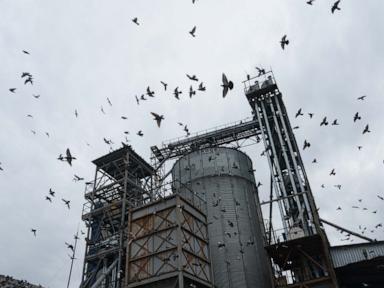
Silence.
That is the most terrifying sound inside a steel mill, a place engineered to roar with the fury of an artificial volcano, where molten iron normally spills like captured sunlight into massive ladles while overhead cranes groan under the weight of forty-ton slabs. Recently making headlines in this space: The Hidden Cost of Silent Workplaces (And Why Our Economy Is Stalling).
When the power grid goes dark in central Ukraine, the silence arrives like a physical blow. It smells of cooling slag, ozone, and damp concrete. Inside the cavernous halls of the plants in Kryvyi Rih or Zaporizhzhia, there is no dramatic explosion when a substation eighty miles away takes a missile hit. Instead, the lights flicker once, twice, and die. Then comes the frantic, terrifying race against thermodynamics. If liquid pig iron cools inside a blast furnace because the electric blowers have stopped, it does not simply wait to be reheated. It turns into a solid, immovable mountain of metal, effectively destroying a billion-dollar piece of industrial machinery from the inside out.
We read headlines about Russian strikes choking Ukraine’s economy, and our eyes glaze over the percentages. Steel output down. Grain exports stalled. GDP projections revised downward by two or three points. We treat these numbers like weather reports from a distant planet, abstract fluctuations on a financial ticker that belong to economists in tailored suits. Additional insights on this are detailed by Bloomberg.
We have gotten the story completely backward. Those statistics are not dry economic metrics; they are the vital signs of a patient being systematically starved of oxygen, and the bloodstream that carries that oxygen connects directly to the price of bread in Cairo, the cost of structural rebar in Warsaw, and the stability of the global economy you rely on every single morning.
The Anatomy of an Economic Chokehold
To understand what happens when an army targets power plants and railway junctions rather than trenches, consider a hypothetical steelworker named Mykola in Dnipro. Let us call him a composite of the tens of thousands of metallurgists keeping Ukraine’s industrial heart beating.
Mykola does not carry a rifle, yet he works on the front lines. For months, his shift has been dictated not by the clock, but by the schedules of rolling blackouts imposed by Ukrenergo, the national grid operator. When a barrage of ballistic missiles and Iranian-designed drones slams into thermal power stations and high-voltage transformers, the grid does not merely dip; it fractures.
Think of a modern industrial economy as a human circulatory system. Electricity is the heartbeat, and the railways are the arteries. You can have the strongest muscles in the world—massive iron ore deposits in the Krivbas basin, some of the richest black soil on earth across the central steppes—but if you stop the heart and clamp the arteries, the limbs begin to die.
Before the full-scale invasion in 2022, metallurgy was the undisputed backbone of Ukrainian exports, accounting for roughly a third of the country's foreign currency earnings and employing hundreds of thousands of people. Even after the catastrophic loss of Mariupol’s Azovstal and Illich steelworks, the surviving plants in central and eastern Ukraine fought tooth and nail to keep producing. By early 2024, steelmakers had actually managed a remarkable recovery, pushing output back up toward seven million tons a year.
Then came the systematic campaign against energy generation.
When electricity tariffs surge because domestic thermal plants are reduced to twisted rubble—forcing Ukraine to import expensive power from European neighbors at peak rates—the math of making steel collapses. Steelmaking is famously energy-intensive; an electric arc furnace consumes enough power in an hour to run a small town for a day. When power is rationed, furnaces are throttled back. Production costs skyrocket while output plummets. Suddenly, Ukrainian steel is priced out of the very international markets it desperately needs to fund the state budget.
I remember standing near a rail yard in western Ukraine during an autumn blackout, watching a freight train loaded with rolled steel coils sit completely motionless for eleven hours. The diesel locomotives brought in to replace dead electric engines were stretched thin, prioritized for military transport. Rain streaked the rusted sides of the gondola cars. Every hour that train sat idle wasn't just a logistical delay; it was a contract breached, a penalty fee incurred, and a few thousand dollars less flowing back into the treasury to pay teachers, doctors, and soldiers.
The Grain Trap on the Black Sea
If steel is the muscle of Ukraine’s economy, grain is its lifeblood. And right now, that blood is clotting at the ports.
Walk along the docks of Odesa or Chornomorsk on a gray morning, and you will see the towering grain elevators rising like concrete cathedrals against the Black Sea mist. Inside those silos sit millions of tons of wheat, corn, and sunflower oil. To a farmer in the Poltava region, that golden harvest represents a year of backbreaking labor, diesel bought on credit, and fields cleared of unexploded ordnance by hand.
To the rest of the world, it is survival.
When Russia unilaterally withdrew from the Black Sea Grain Initiative in mid-2023, conventional wisdom predicted total maritime paralysis. Yet, in one of the most audacious displays of asymmetric warfare in modern naval history, Ukraine used aerial and sea drones to push the Russian Black Sea Fleet back toward Novorossiysk, carving out a unilateral shipping corridor hugging the coastlines of Romania and Bulgaria.
For a brief window, the miracle worked. Millions of tons of cargo moved once again through the Bosphorus. Farmers began to breathe.
But a corridor is only as strong as the ports that feed it. Recognizing they could not easily blockade the ships at sea without risking their remaining naval vessels, Russian planners shifted tactics. They turned their sights on the piers, the cranes, the silos, and the civilian cargo vessels moored at the docks.
Consider what happens next when a ballistic missile strikes a port terminal in Odesa:
- Immediate physical destruction: A single hit can obliterate tens of thousands of tons of grain and shatter loading equipment that takes two years to manufacture and install.
- The invisible tax of fear: Maritime insurance rates for vessels entering Ukrainian ports explode overnight. Shipowners hesitate. Captains demand hazard pay. Every ton of corn exported suddenly carries a massive "war risk" surcharge that eats directly into the farmer's razor-thin margin.
- Railway bottlenecks: When ports shut down for days to clear rubble and repair power lines, thousands of grain hoppers back up along the tracks stretching hundreds of miles inland. The entire national rail network seizes up like a highway after a multi-car pileup.
Look at the human math behind that bottleneck. If a farmer in central Ukraine cannot get his corn to Odesa, he has to sell it locally at a steep discount, often below the cost of production. Next spring, he won't have the cash to buy fertilizer or seed. He will plant less. And six months after that, a family in Lebanon, Egypt, or Kenya—countries that rely heavily on Black Sea wheat—will find that the price of flatbread has jumped thirty percent.
We like to pretend that global supply chains are resilient, automated networks that seamlessly route around damage. That is a comforting illusion. In reality, global trade is a tightrope strung over an abyss, and the wind is picking up.
Why the Numbers Hide the Real Danger
It is deeply unsettling to look at a macroeconomic chart and realize that the lines are lying to you—not out of malice, but because spreadsheets cannot measure exhaustion.
On paper, Ukraine’s economy has shown astonishing resilience. The National Bank of Ukraine has managed inflation far better than anyone predicted in the dark days of February 2022. Western financial aid has kept pensions paid and the currency relatively stable. Looking purely at high-level indicators, an analyst sitting in London or New York might conclude that the situation is under control, that the economy is absorbing the punches.
That conclusion is dangerously naive.
There is a massive difference between surviving a sprint and surviving a marathon while someone systematically removes your oxygen supply. When energy infrastructure is repeatedly hammered, businesses do not just lose a day of work; they lose the ability to plan. You cannot sign a five-year supply contract when you do not know if you will have electricity tomorrow morning. You cannot attract private foreign investment when your factory roof might be pierced by shrapnel next Tuesday.
More insidious still is the quiet depletion of human capital.
Every time a steel mill idles a blast furnace, skilled engineers—men and women whose expertise took twenty years to forge—are placed on reduced pay. Some are drafted into the military, leaving critical maintenance gaps that cannot be filled by novices. Others leave the country entirely, taking their irreplaceable institutional knowledge to plants in Germany, Poland, or Canada. You can rebuild a transformer substation in six months if you have the parts and the money. You cannot manufacture a master metallurgist overnight.
The Invisible Bill Landing on Your Desk
It is fair to ask why a reader thousands of miles away, worried about their own mortgage, grocery bill, and retirement account, should care about the electrical grid in Kryvyi Rih or a grain silo in Pivdennyi.
Here is the blunt truth: you are already paying for it.
Every time a major industrial exporter is knocked offline, global supply tightens. When Ukrainian steel disappears from the European market, European construction firms must source their metal from further afield—often from Asia, at higher shipping costs and with a significantly heavier carbon footprint. Those costs do not vanish into thin air; they are baked into the price of cars, appliances, infrastructure projects, and housing across the Western world.
Similarly, every stalled grain ship creates volatility in global agricultural commodities. Even if your country grows its own wheat, food is priced on a global market. A shortage in North Africa drives up demand for American, Canadian, and Australian grain, pushing up prices at your local supermarket.
Beyond the immediate economic shockwaves lies a much darker precedent. What we are witnessing is the weaponization of economic attrition on an industrial scale. If an aggressor proves that a modern, interconnected nation can be brought to its knees not by defeating its army on the battlefield, but by methodically pulverizing its power plants, ports, and factories until the state is economically unviable, that blueprint will be copied. Every major power on earth is watching closely to see if the international community has the stamina to defend not just territory, but the economic arteries that keep a free society alive.
Reinventing the Grid Under Fire
Yet, if you spend time talking to the engineers, rail workers, and port operators on the ground, you encounter something that defies the bleakness of the headlines: a fierce, almost stubborn ingenuity.
Nobody is sitting around waiting for a miracle. Across Ukraine, a quiet revolution in energy and logistics is taking place out of pure necessity.
Recognizing that massive, centralized Soviet-era thermal power plants are sitting ducks for ballistic missiles, Ukrainian businesses and municipalities are aggressively decentralizing. Steel plants and food processors are installing hundreds of smaller, distributed gas-turbine generators, solar arrays, and industrial battery storage systems. You can destroy one giant power station with three missiles, but you cannot easily knock out five hundred separate micro-grids scattered across an industrial belt.
At the same time, Ukrainian Railways—Ukrzaliznytsia—has become perhaps the most battle-hardened logistics company on the planet. When overhead electric catenary wires are blown down by shrapnel, repair crews rush into the danger zone before the smoke has even cleared, often restoring power within hours. Where tracks are severed, freight is instantly rerouted along secondary branches, kept moving by an aging fleet of diesel locomotives maintained with cannibalized parts and sheer willpower.
International partners, too, are slowly waking up to the reality that air defense is economic policy. Every Patriot battery, every IRIS-T system, and every mobile anti-drone team deployed around a power substation or a Black Sea port yields an immediate, measurable return on investment. Protecting a transformer is infinitely cheaper than paying to rebuild it while simultaneously subsidizing a collapsed state budget.
The Pulse Beneath the Rubble
It is easy to feel helpless when confronted with geopolitical crises of this magnitude, to view the destruction of an economy as an unstoppable force of nature. It is not. It is a deliberate campaign of attrition, and it can be broken—through air defense, through decentralized energy investment, and through keeping trade corridors open and insured.
Think back to that silent steel mill in central Ukraine.
Hours after the missile strike knocks out the regional grid, emergency backup diesel generators roar to life, coughing thick black smoke into the night sky. They do not have nearly enough power to run the rolling mills or the massive cranes, not even close. They provide just enough electricity to keep the cooling water circulating through the walls of the blast furnace, preventing the molten iron inside from freezing into a solid, fatal block.
In the dim amber glow of the emergency lights, men in fire-retardant coats and smudged helmets stand watch over the gauges, monitoring the temperature degree by degree, refusing to let the fire go out in the dark.