We have been looking at the sky all wrong.
For decades, the collective imagination of humanity has pinned space exploration to a very specific image. We think of silver suits, columns of fire ripping through the Florida humidity, and the cold, silent vacuum of the cosmos. We watch rockets land themselves on floating barges and marvel at the engineering. It feels distant. It feels like a theater production happening millions of miles away, funded by billionaires, meant for a future none of us will live to see. In other news, take a look at: The Automated Affidavits Bottleneck: Why Generative AI Destroys the Evidential Chain of Custody.
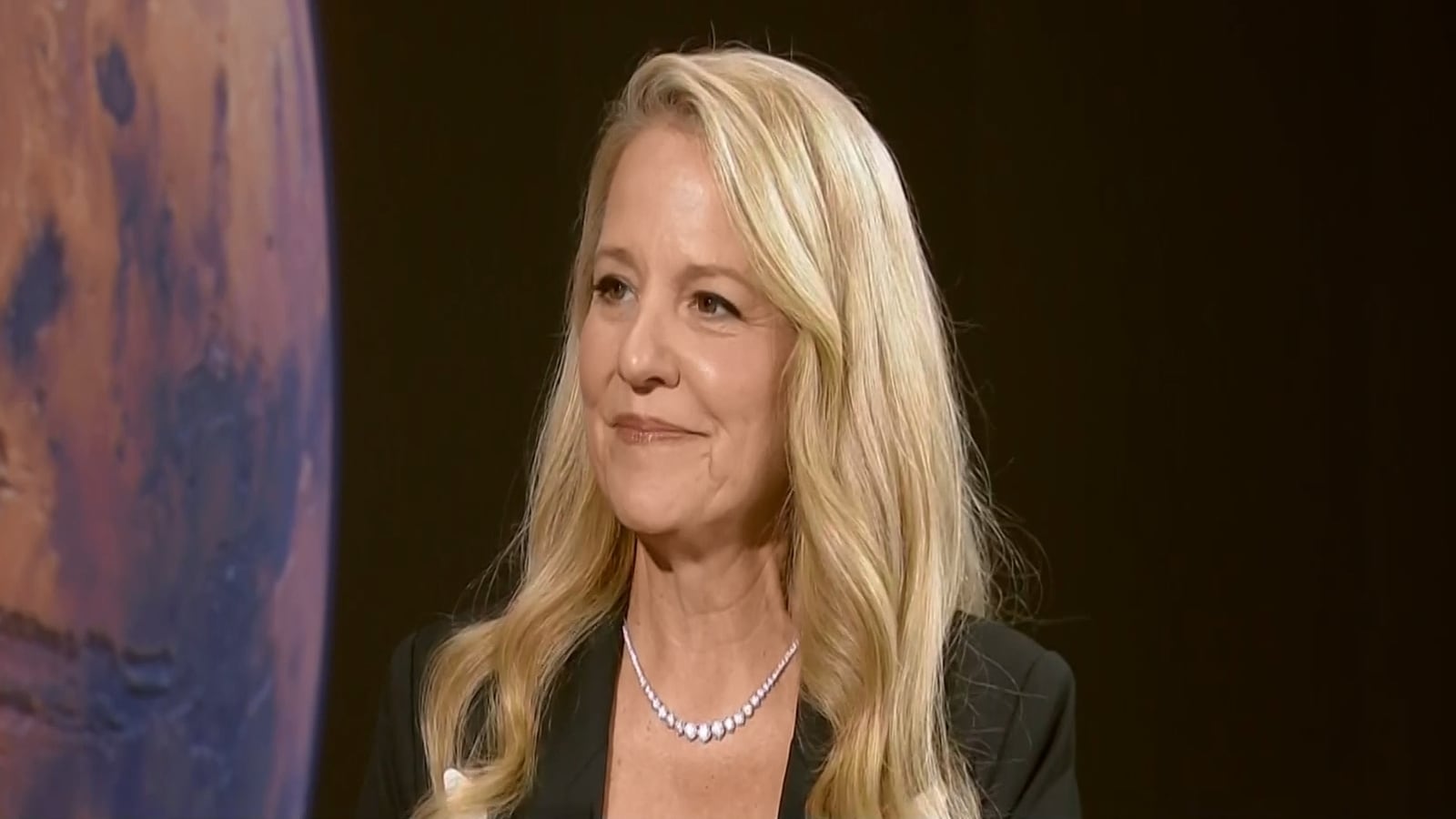
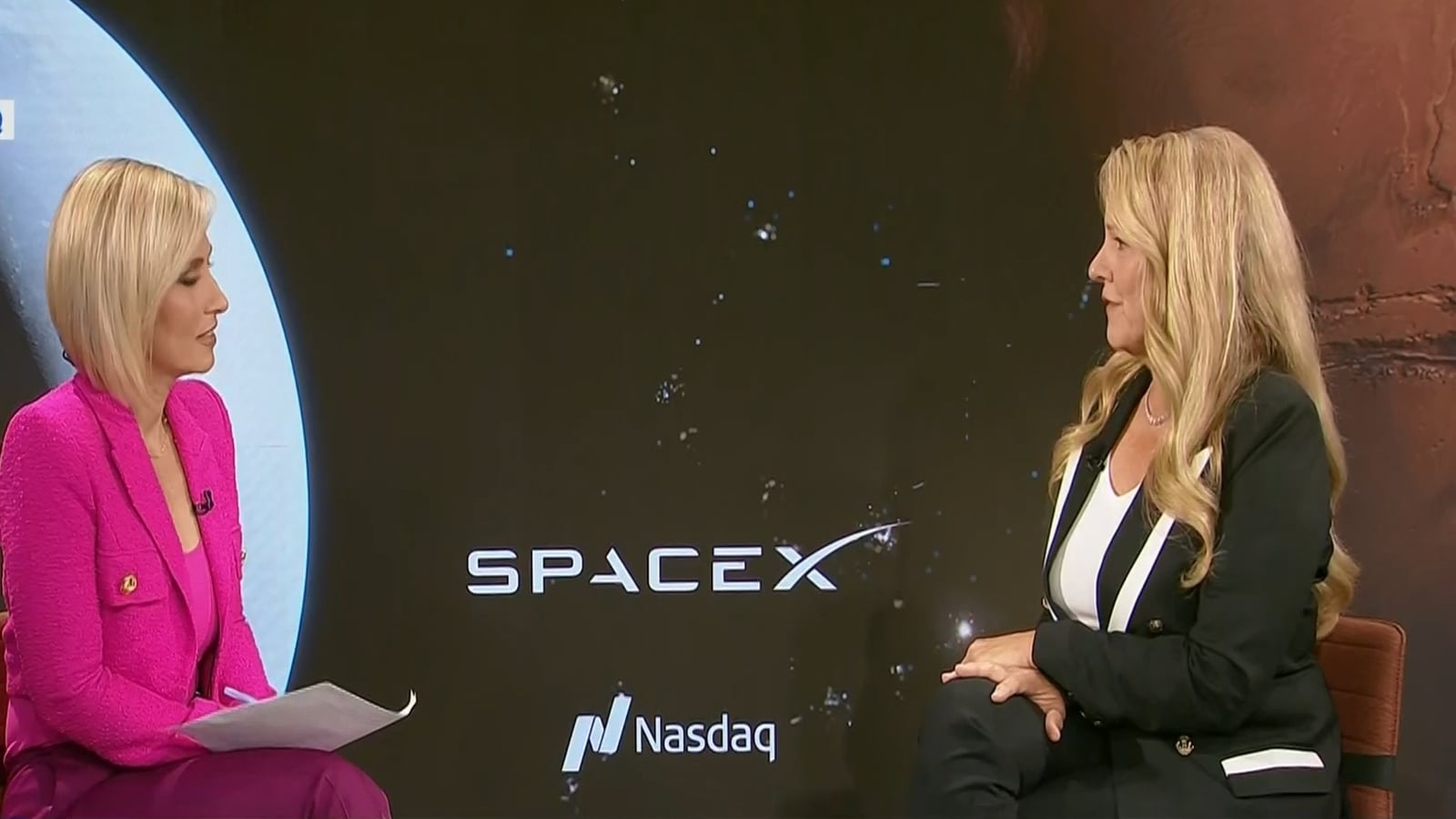
But Gwynne Shotwell, the operating brain behind SpaceX, sees something else entirely. When she looks at a rocket, she isn't just looking at a vehicle designed to leave Earth. She is looking at the ultimate factory floor for the technologies that will redefine daily survival on the ground.
The numbers being tossed around Wall Street recently are dizzying. Analysts talk about a $28.5 trillion market opportunity. It is a figure so large it loses all meaning. It becomes an abstract concept, a data point on a PowerPoint slide meant to make fund managers lean forward in their chairs. To understand what that number actually means, you have to look away from the launchpad. You have to look at a shipping dock in Rotterdam, or a dark highway in Ohio, or a kitchen table where a daughter is trying to figure out how to care for her aging father. The Next Web has provided coverage on this fascinating issue in great detail.
The future of space is not about leaving. It is about automating the world we already inhabit.
The Driver Who Never Tires
Consider a logistics worker. Let's call him Marcus.
Marcus has spent twenty-two years driving freight across the American Midwest. He knows the precise glare of the sun at 4:15 PM on Interstate 80. He knows how coffee stops being effective around hour nine, shifting from a stimulant to a dull ache in the back of his skull. Marcus is tired. His knees hurt from decades of clutching and braking. His industry is short hundreds of thousands of drivers, meaning the pressure to push the limits of federal driving logs is a constant, unspoken shadow over his paycheck.
When people hear about self-driving cars and autonomous freight, they think of Silicon Valley software. They think of cameras and radar sensors stuck to the bumper of a sedan.
They miss the infrastructure.
A self-driving semi-truck cannot function in a vacuum. It requires an unbroken, low-latency stream of data to navigate construction zones, sudden cloudbursts, and the erratic behavior of human drivers. It needs to know what is happening three miles ahead before its onboard sensors can even detect it. Terrestrial cellular networks are notoriously fragile, plagued by dead zones and terrain interference.
This is where the orbiters come in. The massive constellation of low-Earth orbit satellites shifting overhead right now isn't just delivering high-speed internet to rural cabins. It is building the invisible nervous system for autonomous transport.
Shotwell understands that the entity controlling the launch capability controls the deployment speed of this nervous system. If you can put mass into orbit at a fraction of the cost of your nearest competitor, you aren't just a launch company. You are the foundational utility company for every autonomous vehicle on Earth.
For Marcus, this does not mean an overnight pink slip. It means a slow, inevitable migration of his job description. The trucks will begin to drive themselves on the long, monotonous stretches of highway, managed by an orbital grid that never blinks, never gets sleepy, and never misses a sudden brake light in the fog. Marcus becomes a harbor pilot, boarding the truck only at the edge of the city to navigate the messy, unpredictable chaos of urban delivery docks.
The value is not in the rocket itself. The value is in the flawless execution of the network it leaves behind in the sky.
The Metal Hands in the Kitchen
The second pillar of that unimaginable valuation is even closer to home. It walks on two legs.
Humanoid robotics has long been the domain of science fiction and creepy laboratory videos where engineers push metal contraptions over with hockey sticks to prove their balance. But the transition from a lab prototype to a commercially viable product requires three things: massive computational power, advanced materials science, and an obsessive culture of manufacturing optimization.
Rockets are, by definition, an exercise in extreme manufacturing. They require managing immense thermal stress, weight distribution, and component reliability under conditions that would tear ordinary machines apart. The lessons learned from building a reusable booster that can withstand reentry are directly transferable to building an actuator for a mechanical knee that needs to walk twenty miles a day without failing.
Let’s look at another reality. Across the developed world, demographic cliffs are no longer a future warning; they are a current crisis. Japan, Italy, South Korea, and increasingly the United States are graying at a rate unprecedented in human history. There are simply not enough human hands to care for the generation entering their eighties and nineties.
Picture a home where an elderly woman lives alone. She wants to stay in her house. She wants her independence. But she can no longer lift a twenty-pound grocery bag, or safely get out of a deep bathtub, or reliably scrub her floors. Her children live three states away, trapped in their own economic hamster wheels.
A humanoid robot in this context is not a luxury gadget for tech executives. It is a baseline healthcare solution.
When Shotwell speaks of these technologies unlocking trillions in value, this is the market. It is the monetization of assistance. A robot capable of navigating a human home, operating human tools, and performing repetitive, physically demanding tasks requires a supply chain of motors, sensors, and software that can only be mass-produced by an organization accustomed to building complex hardware at scale.
The company that perfects the orbital network provides the brainpower; the company that perfects the manufacturing provides the body.
The Hidden Friction of Progress
It is easy to get swept up in the grand vision. Writers do it all the time. We paint pictures of a frictionless future where machines do the heavy lifting and humans sit back to enjoy the fruits of automated labor.
But the transition is going to be incredibly messy. It is going to feel violent to the people whose livelihoods are caught in the gears.
When we talk about a $28.5 trillion shift, we are talking about the displacement of capital and labor on a scale we haven't seen since the Industrial Revolution. Every autonomous truck replaces a driver. Every robotic picker in a fulfillment center replaces a warehouse worker. Every automated assistant shifts the dynamics of domestic labor.
We have a habit of romanticizing technology while ignoring the immediate human cost. The anxiety is real. You can feel it in the truck stops along Route 66, where the conversation over stale coffee isn't about the beauty of space flight, but about how many years a man has left before his commercial driver's license becomes a relic of a bygone era.
I used to think that the race to Mars was the ultimate goal of modern aerospace. It is a clean, heroic narrative. It fits into a textbook. But watching the strategic moves being made by the leadership of these companies reveals a far more grounded reality.
Mars is the North Star—the aspirational goal used to recruit the brightest minds on the planet. But the business model? The business model is entirely about Earth.
It is about creating an ecosystem where a single corporate entity owns the transport that puts the satellites up, the satellites that guide the cars, and the manufacturing facilities that build the robots. It is vertical integration taken to a cosmic scale.
The Invisible Framework
We must stop evaluating tech companies by the products they sell today. A satellite internet dish is not just an internet provider. It is a placeholder. It is a way to generate billions of dollars in recurring revenue to fund the development of the next generation of heavy-lift vehicles.
Every time a Falcon 9 punctures the atmosphere, the cost of accessing space drops. As that cost drops, things that were once economically absurd become standard operating procedure.
Think about the global supply chain. Right now, if a critical manufacturing component breaks in a factory in Germany, and the replacement is in Taiwan, it takes days to ship via traditional air freight. It has to go through customs, ground transport, airports, and sorting facilities.
With point-to-point orbital transport—using the exact same rocket architectures developed for satellite deployment—that component can be placed anywhere on the globe in less than an hour. The implications for global trade are profound. The concept of inventory changes completely when the distance between any two points on Earth is reduced to forty-five minutes.
This is the tapestry of the new economy. It is an interlocking puzzle where space, robotics, and autonomy are not separate industries, but different chapters of the same book.
The Final Metric
The true measure of this transformation won't be found in the stock prices or the quarterly earnings reports that drive the financial news cycle. Those are lagging indicators. They are the scoreboard, not the game.
The true measure will be found in the subtle, almost unnoticeable changes in the fabric of everyday life.
It will be found when Marcus realizes he hasn't had to touch his steering wheel during an entire cross-country transit, allowing him to watch his daughter's graduation via a crystal-clear satellite feed while his truck navigates a torrential downpour outside Chicago.
It will be found when an aging parent can stay in the home they built for another decade, supported by a silent, mechanical companion that never gets tired of lifting, cleaning, or watching for falls.
The $28.5 trillion opportunity isn't about conquering the stars. It is about building an invisible infrastructure that wraps around our world, quietly taking over the dangerous, the dull, and the desperate tasks of human existence. We look up at the rockets in awe of their power, oblivious to the fact that they are slowly, piece by piece, rebuilding the very ground beneath our feet.