Silence.
That is the first thing that breaks your brain when you spend enough time watching orbital telemetry feeds in a windowless basement room, nursing lukewarm coffee at three in the morning while a metal box the size of a school bus screams past the curve of the Earth at seven point six kilometers per second. There is no roar of wind, no dramatic explosion from a Hollywood soundstage, and no flashing red alert when things go wrong—just a flat line of numbers that suddenly stops updating, followed by the cold realization that a multi-million-dollar piece of human ingenuity has just become an unguided artillery shell.
We have spent seventy years throwing metal into the sky, and until very recently, we treated the vacuum of space like a junkyard where nothing ever rusted and nothing ever needed fixing. Every dead satellite, every spent rocket stage, every stray bolt left behind by a clumsy glove during a spacewalk stays up there, whipping around the planet faster than a rifle bullet. To understand what happens when one of those stray fragments hits an active spacecraft, picture a bowling ball dropped from a skyscraper onto a glass coffee table, except the bowling ball is moving at twenty-eight thousand kilometers an hour.
For decades, the only way to deal with something broken or obsolete in orbit was to let it burn up in the atmosphere—if it was low enough—or nudge it into a higher graveyard orbit and pray it never collided with anything else. You could not send a mechanic up with a blowtorch. Sparks do not behave in zero gravity the way they do in a suburban garage; molten metal floats away in lethal, glowing spheres, gases expand uncontrollably without air pressure to hold them down, and a single slip of a hand tool sends both the astronaut and the wrench spinning in opposite directions into the dark.
Then, inside China’s Tiangong space station, someone turned on a laser and quietly rewrote the rules of orbital survival.
A Scalpel Without a Hand
It sounds like science fiction, or worse, like the opening scene of a cold-war thriller about orbital weapons. Let’s be honest about that fear right away, because anyone who has ever read a newspaper headline about space technology feels that immediate, cold prickle at the back of the neck. When a major superpower announces a world-first precision laser experiment in space, our minds immediately jump to blinding spy satellites or slicing enemy spacecraft in half from across the void.
That fear is understandable. History gives us plenty of reasons to flinch whenever military-adjacent hardware goes into orbit.
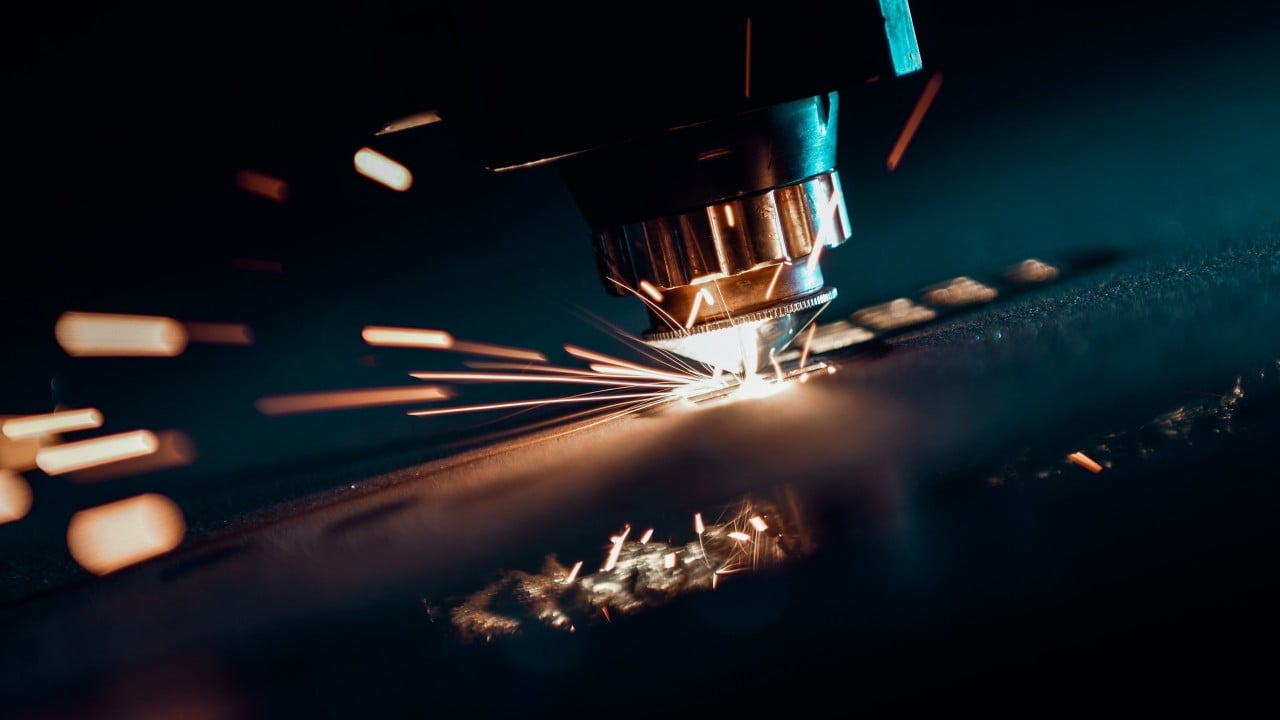
Yet if you look past the reflexive panic and examine what actually happened aboard the Tiangong station, the reality is both far more practical and, in its own quiet way, far more transformative. Engineers from the Chinese Academy of Sciences successfully conducted an in-orbit laser processing experiment—essentially using a high-precision beam of light to cut, engrave, and reshape materials under microgravity conditions.
Stop and appreciate how absurdly difficult that is.
On Earth, laser cutting is an established industrial workhorse. You walk into any modern aerospace machine shop in Toulouse, Seattle, or Shenzhen, and you will see robotic arms guiding focused beams of light through titanium plates like a warm knife sliding through butter. Down here, though, gravity is your silent partner. Gravity pulls molten slag downward out of the cut. Gravity helps convective air currents carry away the scorching heat and vaporized metal fumes so they do not cloud the lens or ruin the surrounding material.
Take away gravity, and the physics turns hostile.
Without weight, molten metal does not drip; it balls up due to surface tension, clinging to the edges of the cut like stubborn beads of mercury. Without air convection, heat does not rise; it pools and radiates unpredictably, warping thin metal sheets or cracking delicate alloys. And if vaporized metal drifts back onto the optical lens of your laser, the beam heats that microscopic film of grime and shatters your own equipment from the inside out.
To pull this off in orbit, the team had to build a compact, self-contained processing unit capable of operating inside the strict safety limits of a crewed space station. Think about the stakes inside Tiangong while that test ran. Three human beings were living, breathing, and sleeping just meters away from a device firing concentrated optical energy capable of vaporizing solid material, inside a pressurized tin can where a single hull breach or toxic chemical leak means death within minutes.
The Mechanic in the Void
Let us ground this in a hypothetical scenario—a story about what this actually means for the people who keep our modern world running.
Imagine a flight director named Elena, sitting at a console in Darmstadt or Houston five years from now. Her team oversees a constellation of weather and climate-monitoring satellites that track moisture levels over drought-stricken farmland across East Africa and the American Midwest. One Tuesday morning, a micrometeoroid—a fleck of cosmic dust no larger than a grain of sand—punches through a secondary structural strut on their flagship satellite. The strut bends just enough to jam the deployment mechanism of a primary radar antenna.
Today, that satellite is functionally crippled. Millions of dollars of sensors, years of calibration, and vital data for millions of farmers are lost because a piece of metal the size of a pencil refused to unfold by three centimeters. Nobody can fly up to fix it; launching a dedicated repair mission costs more than building a whole new spacecraft from scratch.
Now replay Elena’s Tuesday morning in a world where orbital laser processing has matured from a laboratory box inside Tiangong into an automated tool mounted on a servicing tug.
Instead of writing off a hundred-million-dollar asset, Elena’s team sends a robotic servicing vehicle to rendezvous with the damaged satellite. There is no astronaut risking their life in a bulky pressure suit, no clumsy mechanical claws trying to saw through twisted titanium and creating a fresh cloud of orbital shrapnel in the process. Instead, a stabilized optical head locks onto the jammed strut. With sub-millimeter precision, a pulse of light vaporizes a clean, microscopic notch at the exact stress point of the bent metal. No physical force pushes the satellite off its trajectory. No debris cloud is born. The tension releases, the antenna clicks smoothly into place, and within forty minutes, climate data is streaming back down to Earth.
This is not a fantasy. It is the direct logical destination of what just happened four hundred kilometers above our heads.
Why Building in Space Changes Everything
The deeper revolution here is not just about fixing what breaks; it is about stopping the absurd practice of building things on Earth that were never meant to survive a rocket launch.
Anyone who has ever worked around aerospace hardware knows the dirty secret of spaceflight: rockets are violent, vibrating, bone-rattling monsters. During the eight minutes it takes to reach orbit, a satellite endures acoustic vibrations loud enough to liquefy human organs and gravitational forces several times its own weight. As a result, engineers spend billions of dollars making spacecraft heavy, thick, and over-engineered—not because they need that bulk in the weightlessness of space, but simply so they do not shake apart on the ride up.
It is like building a delicate crystal chandelier inside a fortified concrete bunker just so you can survive the truck ride to the ballroom, and then being forced to hang the entire bunker from the ceiling.
Once you can cut, weld, and manufacture with precision lasers directly in microgravity, you break that tyranny. You can launch raw spools of metal, flat stacks of composite sheets, and compact optical components packed tightly inside a rocket fairing like bricks in a crate. Once in orbit, robotic factories can unroll, cut, and fuse those materials into structures that could never survive an earthly launch: massive, gossamer-thin solar arrays spanning kilometers to beam clean energy down to the ground; giant space telescopes with mirrors ten times wider than the James Webb, assembled piece by piece without worrying about folding origami hinges that might jam in the cold dark.
The Invisible Chessboard
Still, it would be naive to pretend this breakthrough exists in a geopolitical vacuum. We have to hold two truths in our heads at the exact same time, even when they rub against each other uncomfortably.
The first truth is scientific and deeply human: mastering precision manufacturing in microgravity is a genuine leap forward for our species. Every nation that pushes humanity toward living and working off-world—whether it is NASA testing 3D printers on the International Space Station or the Chinese Academy of Sciences perfecting orbital laser cutting aboard Tiangong—expands the toolkit we will need if we ever hope to build permanent lunar bases or survive a multi-year voyage to Mars. You cannot carry spare parts for every possible failure when you are fifty million kilometers from home; you have to carry raw material and a beam of light capable of shaping whatever tool you suddenly need.
The second truth is strategic and sobering. Dual-use technology—tools that can build a hospital on the Moon or disable a communications network in low Earth orbit—is the defining reality of twenty-first-century statecraft. A laser precise enough to trim a jammed solar panel bracket with zero debris is built on the exact same optical tracking, beam-steering, and thermal-management breakthroughs required for orbital defense systems.
Pretending otherwise insults the reader’s intelligence. In space, intent is invisible from the ground; only capability can be measured by radar and telescopes. When China demonstrates that it can stably fire, focus, and control a high-precision industrial laser in orbit—keeping the optics clean, managing the heat in a vacuum, and preventing stray reflections inside a crewed module—every space agency and defense ministry from Washington to Tokyo takes quiet, urgent notes. Not because a laser on Tiangong is a death ray, which it emphatically is not, but because the threshold of what is technically possible in orbit just moved upward.
The Light That Leaves No Trace
I keep coming back to that image of the melt pool in zero gravity—a tiny bead of liquid metal suspended in darkness, held together only by its own atomic attraction while a beam of invisible light carves a line thinner than a human hair.
For most of human history, shaping the physical world meant brute force. We smashed flint against stone, hammered glowing iron on anvils, poured molten steel into sand molds, and riveted aluminum skins onto aircraft frames. Even when we moved into the computer age, our heavy industry remained loud, dirty, and chained to the pull of the Earth beneath our boots.
Up in the quiet dark above the atmosphere, force is an enemy. Push against an object in space, and it pushes back, sending you tumbling away into nothingness. Strike a piece of metal, and the vibration echoes through the frame without air to dampen it. The only tool that belongs truly and natively to the void is light itself—massless, silent, exerting virtually zero mechanical recoil while delivering pinpoint energy across empty space.
Somewhere above the night side of the Pacific right now, Tiangong is gliding silently through the stars, its solar wings catching the last copper glare of an orbital sunrise. Inside its metallic hull, the experimental chamber sits powered down, holding sample plates marked with clean, microscopic incisions that no human hand could ever have carved in the weightless dark. We have spent decades learning how to survive in space by hiding inside pressurized shells; with a single focused beam of light, we finally started learning how to build there.