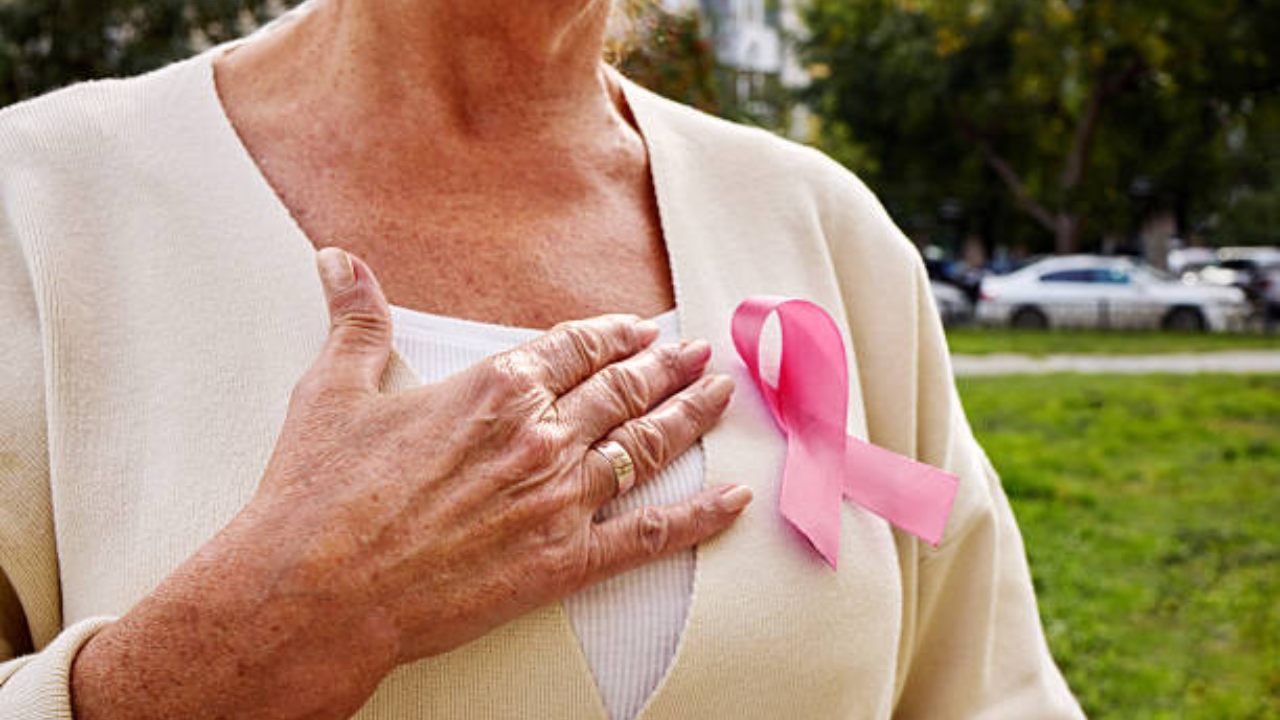
The fluorescent lights in an oncology clinic have a particular hum. Not quite a buzz, not quite a whine, just a low-frequency vibration that settles right behind your eyes while you wait for someone in a crisp white coat to tell you what a microscopic cluster of cells means for the next decade of your life.
Silence. Then footsteps. You might also find this related story interesting: Why Everything You Know About a Human Shamonda Virus Case is Wrong.
In Oregon, a woman hears words nobody wants to hear in an exam room, and suddenly the ordinary architecture of a Tuesday afternoon—the coffee mug on the kitchen counter, the half-folded laundry in the basket, the way late-afternoon rain hits the fir trees outside—takes on a sharp, fragile weight. Breast cancer. Two words that carry centuries of fear, thousands of clinical trials, and an immediate, relentless demand to make decisions before your hands have even stopped shaking.
When a diagnosis hits a household, the outside world usually splits into two groups. There are the people who bring casseroles and check in with gentle, careful voices. And then there is the digital room your partner has spent years building—a place full of headsets, chat logs, inside jokes, latency spikes, and strangers who somehow know the sound of your voice better than your neighbors do. As extensively documented in detailed reports by Healthline, the effects are significant.
People outside gaming still love to caricature it as a solitary cave. Dark room. Blue light. Wasted hours.
They are wrong. Dead wrong.
Consider what happens next: a husband steps up to a microphone, not with polished PR talking points or a corporate sponsor deck, but with raw grief and a stubborn refusal to sit quietly while his wife fights for her life. Out of that shockwave comes an audacious target. One million dollars for breast cancer research. A million dollars raised by a gaming community rallying around an Oregon woman’s diagnosis.
A million dollars sounds like a headline number. Clean. Round. Easy to scroll past on a phone screen while waiting in line for groceries.
Step closer. Look at what a million dollars actually represents when you are sitting on the sharp end of a medical crisis.
When a Diagnosis Rewrites the Room
Fear changes how time moves. Before a cancer diagnosis, time is elastic—you waste it, you postpone it, you assume there will always be another spring to fix the porch or start the book or schedule the checkup. Afterward, time becomes rationed. Every appointment is a checkpoint. Every blood draw is a quiet referendum on whether the treatment is working.
I have sat in waiting rooms where the air felt thick enough to chew, where strangers traded hushed stories about port flushes, fatigue that sleep cannot touch, and the agonizing stretch of days between a scan and the results. You learn a strange new vocabulary overnight. Receptor status. Staging. Margins. Chemo brain. Survivorship. You realize how quickly abstract medical science becomes deeply, painfully personal when the person lying under the thin paper gown is the person you share a kitchen with.
To make sense of how medical research actually moves forward—and why grassroots fundraising matters so much—let’s use a metaphor. Think of cancer research like mapping a sprawling, shifting mountain range in thick fog. For decades, scientists used paper maps and compasses, charting one ridge at a time, learning what worked on one type of terrain and discovering it failed on another. Modern oncology has satellite imagery, molecular markers, and targeted therapies that can spot specific terrain features from miles away. Yet charting new routes, testing hypotheses, and running clinical trials costs staggering amounts of money. Grants are competitive. Lab supplies are expensive. Promising ideas stall every year not because researchers lack brilliance, but because funding runs dry before the map is finished.
That is the invisible stake behind every charity stream and community drive. It is not just about raising awareness—awareness does not pay for sequencing assays or laboratory reagents. Research funding buys time. It buys better treatments with fewer brutal side effects. It buys the chance that a future patient in Oregon—or anywhere else—hears a gentler prognosis than the one delivered yesterday.
You do not have to be a scientist to feel the urgency of that math. You just have to love someone whose life now depends on what science knows today versus what it might discover tomorrow.
The Unlikely Engine Inside the Headset
If you have never spent time inside an active gaming community, it is easy to underestimate what happens when thousands of people lock into a shared goal.
Let’s introduce a hypothetical character—clearly labeled as one—to trace how this kind of momentum builds from the ground up. Call him David, a mid-level graphic designer in his thirties who logs into his favorite multiplayer lobby three nights a week to unwind after long client revisions. David has never met the Oregon woman whose diagnosis sparked the campaign. He does not know her favorite trail in the Pacific Northwest or how she takes her coffee.
What David does know is loyalty. He knows what it feels like when a teammate goes down in a tough match and nobody abandons the objective. He knows how quickly a chat channel can turn from sarcastic banter into genuine solidarity when someone posts that a parent is in the hospital or a job fell through.
One evening, David sees the campaign pinned in the community hub. A husband trying to turn his wife’s breast cancer battle into a million-dollar push for research.
At first, David hesitates. Ten dollars? Twenty? Does a small donation even matter when the goal is seven figures?
Doubt. Then a single click.
That small moment—repeated thousands of times across time zones, paychecks, and living rooms—is where online communities defy every lazy stereotype thrown at them. Gamers already understand shared risk, coordination, and showing up night after night even when the odds look steep. Channel that culture toward a real-world crisis, and something electric happens. Donations stack. Milestones get unlocked. People who came for a casual stream end up staying for hours, typing encouragement in chat, sharing links with cousins and coworkers, and treating a medical research goal like a boss fight that everyone refuses to lose.
"People often assume online spaces are shallow because they are mediated by screens, yet some of the fiercest real-world generosity starts in rooms where people have practiced showing up for each other every single week."
It is worth pausing here and being honest about something important: crowdfunding and community fundraising are not a replacement for systemic healthcare infrastructure or public science funding. Anyone who has navigated medical bills, insurance denials, or hospital logistics knows how heavy that burden can be on a family. A million dollars raised for breast cancer research is extraordinary—a testament to love turned into action—and it also highlights a deeper truth about how society distributes hope. Often, ordinary people step in with extraordinary effort because waiting on institutions feels unbearable when someone you love is hurting.
Why Stories Outlast Statistics
Facts inform the mind. Stories grab the collar and pull the heart into the room.
Think about how most news reports cover a story like this. You get the headline: an Oregon woman’s breast cancer diagnosis inspires her husband’s gaming community to raise $1 million for research. You get the dollar figure, a brief mention of the platform or event, maybe a quote about gratitude, and then the algorithm moves on to the next story within minutes.
Nothing in that summary is factually wrong. Yet almost everything that makes the story alive is left on the cutting room floor.
What did the husband feel the first time he had to explain to strangers why his voice was cracking on stream? What did his wife feel watching people she had only heard through a headset rally around her fight? How many late nights, quiet conversations, and moments of sheer exhaustion sit behind a number that looks effortless on a leaderboard?
When we strip away the human texture, we turn people into symbols. We flatten grief into inspiration porn and turn hard-won solidarity into a neat little feel-good blip.
But the real problem lies elsewhere: if we only pay attention to big round numbers, we miss the mechanics of how real change actually spreads.
Behavioral researchers who study prosocial giving have long noticed that people rarely give to abstract statistics alone. We give when we can picture a human face, understand a real stake, and feel part of a collective effort where our contribution is visible alongside others. A husband fighting for his wife gives that stake a pulse. A gaming community gives that pulse scale. Together, personal devotion and collective energy bridge the gap between caring in theory and acting in practice.
Let’s check another hypothetical scenario—again, strictly hypothetical—to see how that ripple moves outward. Suppose a college student named Maya watches a highlight clip from the fundraiser while eating cold leftovers between shifts. Maya has a family history of breast cancer that makes every routine exam feel slightly charged with dread. Watching a community pour a million dollars into research does not magically erase her anxiety, nor does it solve every flaw in healthcare. Yet it shifts the emotional weather in the room. Instead of feeling helpless in the face of a scary statistic, Maya sees thousands of strangers turning fear into motion. She donates what she can spare and texts her aunt to schedule her overdue screening.
One diagnosis. One husband. One community. Hundreds or thousands of downstream ripples nobody can fully tally on a spreadsheet.
What This Moment Demands of the Rest of Us
You do not need a gaming rig, a massive follower count, or a million-dollar budget to carry the spirit of this story forward.
Still, it helps to look plainly at what makes efforts like this succeed—and what traps people fall into when they want to help. Sometimes people want to support a cause, feel a brief surge of emotion, and then lose track of it by Friday. Or they assume that because a campaign already hit a big milestone, their small contribution is redundant.
Neither mindset holds up under scrutiny. Research breakthroughs are built on sustained momentum, not single bursts of applause. Patients and families facing cancer do not get a break after a headline fades; treatment stretches across months and years, filled with scans, side effects, recovery, and hope.
If this story moves you, let it move you toward something concrete rather than vague admiration. Look up reputable breast cancer research organizations that transparently direct funds toward scientific investigation. Check in on a friend or family member navigating a tough diagnosis—not with generic clichés, but with specific, practical help like rides to appointments, meals left on the porch, or quiet company when they are tired of talking about illness. And if you belong to an online community of your own—whether built around games, books, fitness, or local neighborhoods—notice the power sitting right there in your group chat.
Screens do not have to isolate us. Sometimes they are the exact place where a husband’s heartbreak meets a thousand strangers’ resolve, and a quiet Oregon living room becomes the center of a million-dollar wave of hope.
Light.