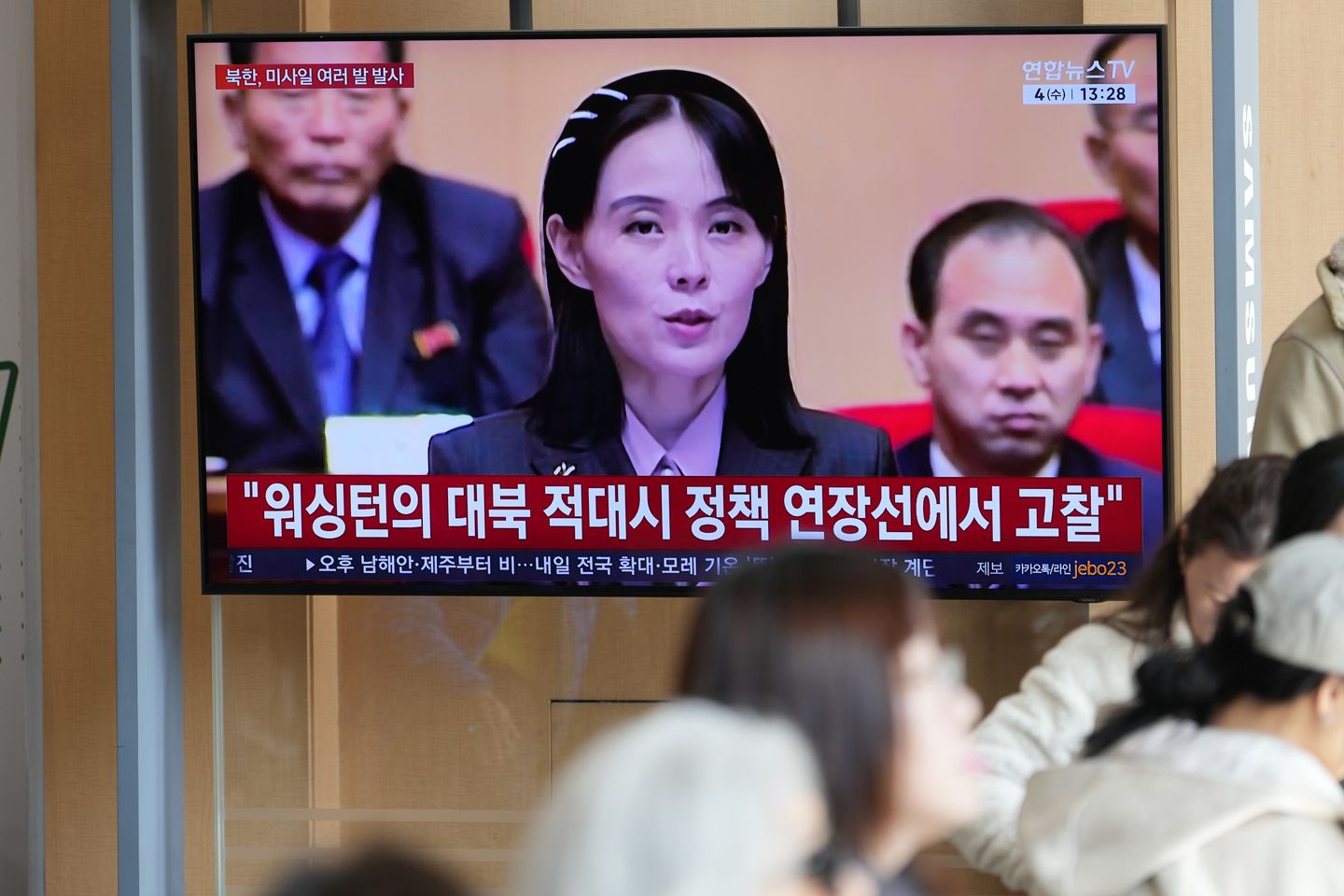
At 3:14 a.m. in Brussels, a mid-level trade diplomat named Clara stares at a cold espresso and a glowing television screen.
She is a composite of dozens of European civil servants who have spent the last several years living on American time, their sleep schedules dictated by the unpredictable rhythm of Washington politics. On the screen, county-by-county election maps are turning from red to blue. Across the Atlantic, voters have just delivered a stinging rebuke to the Republican Party, handing control of the House—and with it, a powerful legislative brake—back to the opposition.
Clara does not cheer. She does not pop champagne. She simply sets her ceramic cup down on a stack of tariff contingency binders and lets out a breath she feels like she has been holding since 2017.
Relief.
That is the word echoing through the marble corridors of Berlin, the glass towers of Ottawa, and the prime minister’s residence in London. Yet, if you listen closely to the official statements trickling out of foreign ministries from Paris to Tokyo, that relief is wrapped in several layers of thick, diplomatic bubble wrap. World leaders who spent the last two years publicly sparring with Donald Trump over trade wars, climate treaties, and the future of NATO are suddenly waking up to a fractured Washington. They know the rules of the game just changed. They just aren't sure if the table itself is still steady.
To understand why the world’s most powerful leaders are celebrating with one hand while gripping the railing with the other, you have to look past the cable news chyrons and step inside the rooms where global alliances are actually kept alive.
The Architecture of Anxiety
For the better part of seven decades, international diplomacy operated like a well-rehearsed symphony. Musicians might miss a note, and conductors occasionally argued over tempo, but everyone was reading from the same sheet music. Allies knew where the United States stood on collective defense, multilateral trade, and global institutions.
Then came the era of "America First," and the sheet music was tossed into the wind.
Consider the sheer psychological toll of governing a medium-sized democracy when your largest trading partner and primary security guarantor treats every treaty like a bad real estate deal. Ask any diplomat who attended the G7 summit in Quebec or the NATO gathering in Brussels during the height of these transatlantic clashes. The tension in those rooms wasn't theoretical; it was physical. Leaders who had spent their entire careers speaking the careful, measured language of statecraft found themselves ambushed by late-night social media posts, sudden steel and aluminum tariffs slapped on longtime allies under the guise of "national security," and public questioning of whether the United States would actually defend a small Baltic nation if tanks rolled across its border.
I remember sitting in a press briefing room in Munich during one of those peak moments of friction, watching a senior German official try to answer a simple question about joint defense spending. His hands were trembling slightly as he shuffled his notes. He wasn't afraid of the journalists; he was terrified of saying a single syllable that might trigger a retaliatory tweet from the White House before his plane even touched down in Frankfurt.
That is the invisible reality behind the headlines. When Washington sneezes, the rest of the world doesn't just catch a cold—it scrambles to rewrite its national budget.
So when American voters handed the Republican Party a sharp defeat in the midterm elections, breaking the one-party grip on Washington, the immediate reaction from capitals abroad was an unmistakable sense of validation. The fever, many hoped, had finally begun to break.
The Careful Art of Saying Nothing Loudly
If you read the official transcripts from world leaders in the wake of the Republican rout, you might miss the subtext entirely. Diplomacy, after all, is the art of telling someone to go to hell in such a way that they look forward to the trip—or, in this case, expressing profound gratitude to the American electorate without provoking the occupant of the Oval Office.
Look at how British Prime Minister Theresa May, who endured her own share of public undermining from Trump over her Brexit negotiations, framed the moment. Her office emphasized the enduring strength of the "special relationship" while quietly noting the importance of working with Congress across party lines. In Canada, where Prime Minister Justin Trudeau was famously labeled "dishonest and weak" after a contentious trade summit, officials welcomed the prospect of a more predictable legislative partner as the newly negotiated USMCA trade pact awaited ratification.
Even in Brussels, where European Commission President Jean-Claude Juncker had fought tooth and nail to prevent a full-blown automotive trade war, the tone shifted overnight from defensive crouch to cautious engagement.
Why the restraint? Because seasoned leaders understand a fundamental truth about American power: the president still holds the steering wheel on foreign policy.
Think of the U.S. government as a massive ocean liner. A newly empowered opposition in the House of Representatives acts like a heavy anchor dropped off the stern—it can slow the ship down, prevent reckless turns, and force the captain to negotiate before changing course. Congress controls the purse strings. A Democratic House can block funding for border walls, demand transparency on foreign entanglements, subpoena administration officials over the withdrawal from international agreements, and refuse to rubber-stamp punitive new trade measures without scrutiny.
- Oversight returns: Congressional committees can now investigate the sudden shifts in diplomatic posture that blindsided allies.
- Trade leverage shifts: Any new trade deal—including the revised North American agreement—now requires the blessing of lawmakers who actually care about labor standards and allied relationships.
- Institutional guardrails hold: Funding for NATO, foreign aid, and international climate initiatives has a fierce new line of defense on Capitol Hill.
Yet an anchor cannot steer the ship. The president still commands the military, negotiates treaties, imposes executive tariffs under existing national security statutes, and sets the rhetorical tone for the nation. A wounded, cornered leader doesn't necessarily become a compliant one. Often, the exact opposite happens.
When Domestic Pressure Becomes a Foreign Problem
History offers a sobering warning to anyone in Paris or Berlin popping corks too early. When American presidents face gridlock and relentless investigation at home, they almost always look abroad for wins they can achieve with the stroke of a pen.
It is an old political reflex. If you cannot pass legislation through a hostile Congress, you turn to the areas where executive power reigns supreme: trade enforcement, sanctions, military deployments, and diplomatic brinkmanship.
Take a moment to consider what happens next if the White House decides that the path to political recovery runs through doubling down on economic nationalism. A president blocked on domestic priorities might decide that slapping new tariffs on European cars or escalating a trade standoff with China is the cleanest way to project strength to his base.
This is the precise nightmare keeping our hypothetical trade diplomat, Clara, awake in Brussels. She knows that while a divided Washington makes wild, sweeping legislative changes impossible, it can also make executive actions sharper and more erratic.
Look at the relationships that suffered the most strain over the past two years:
The European Union watched Washington walk away from the Paris Climate Accord and the Iran nuclear deal—two painstakingly negotiated frameworks that European leaders considered essential to global stability. A new House majority will loudly support rejoining those efforts, creating a strange split-screen reality where foreign leaders are being courted by Capitol Hill while still being cold-shouldered by the White House.
Canada and Mexico spent agonizing months renegotiating NAFTA under the constant threat of devastating auto tariffs. Now, with Democrats holding the gavel in the House, the deal faces an entirely new set of demands regarding environmental enforcement and workers' rights. Relief at the weakening of Trump's hand is immediately tempered by the realization that the goalposts just moved again.
Traditional Asian allies, particularly Japan and South Korea, have had to navigate sudden shifts on trade alongside unpredictable, high-stakes personal diplomacy with North Korea. For leaders in Tokyo and Seoul, a stronger Congress means stronger backing for traditional alliances—but it also raises fears that the White House might make impulsive concessions abroad just to claim a headline-grabbing victory at home.
The Mirror Across the Water
There is another reason world leaders are keeping their celebrations quiet, and it has nothing to do with Donald Trump. It has to do with what they see when they look in their own mirrors.
The populist wave that carried Trump to power did not stop at the water's edge. Across Europe, established political parties are fighting for survival against nationalist movements fueled by the exact same anxieties: stagnant wages, fears over immigration, distrust of distant elites, and a sense that global institutions no longer work for ordinary people.
In Germany, Angela Merkel—long hailed as the steady anchor of the free world—has already announced she will step down as party leader after a string of bruising regional elections. In France, Emmanuel Macron’s approval ratings have plunged as fuel taxes spark furious protests across the countryside. Britain remains locked in a paralyzing political civil war over its exit from the European Union, while Italy is governed by a fiercely populist coalition that openly clashes with Brussels over budgets and borders.
When these leaders look at the American election results, they aren't just analyzing U.S. foreign policy; they are searching for clues about their own political survival.
Does the Democratic surge in American suburbs prove that moderate, institutional politics can beat back nationalist fury? Or does the sheer resilience of the Republican base—which actually gained seats in the Senate even as it lost the House—show that the anger driving this era isn't going anywhere?
Nobody knows. And anyone pretending to have a neat answer is selling something.
That uncertainty is the real invisible stake of this moment. For years, international politics relied on a predictable rhythm: elections happened, power changed hands within narrow ideological guardrails, and the underlying architecture of global cooperation remained intact. Today, every single election in a major democracy feels like an existential referendum on whether the post-World War II order will survive into the next decade.
Living in the Split-Screen World
So how does an ally actually operate when Washington speaks with two entirely different voices?
Diplomats are already adapting to a reality that would have seemed bizarre a decade ago: practicing bilateral relations with two separate branches of the U.S. government at the exact same time.
Imagine being an ambassador in Washington right now. On Tuesday morning, you sit across from State Department officials who insist that multilateral climate agreements are dead on arrival. On Tuesday afternoon, you take a cab up Pennsylvania Avenue to meet with incoming House committee chairs who promise that the United States is still committed to green energy and traditional alliances, urging you to just hold on for two more years.
You have to smile at both. You have to take both seriously. Because in the American system, both hold pieces of the truth.
This dual-track diplomacy requires a level of agility that tests even the sharpest foreign ministries. It means hedging bets on trade supply chains. It means European nations quietly accelerating talks on their own joint defense capabilities—not to replace NATO, which remains irreplaceable, but to ensure they aren't left defenseless if American politics lurches back toward isolationism in the next presidential cycle. It means signing bilateral trade deals with other partners—like the massive pact struck between the EU and Japan—to prove that global commerce can still move forward even when Washington steps back.
It is exhausting, expensive, and deeply uncertain work.
Back in Brussels, morning light finally begins to bleed through the gray November clouds outside Clara’s office window. The television in the corner is muted now, showing pundits gesturing wildly at electoral maps that will be dissected for months to come.
She stands up, stretches her stiff back, and walks over to the window. Down on the wet cobblestone street below, commuters are hurrying toward the metro, umbrellas tilted against a steady drizzle, completely unaware of the trade spreadsheets and diplomatic cables sitting on her desk. They just want their jobs to be secure, their air to be clean, and the peace they grew up taking for granted to hold for their children.
Clara picks up her cold espresso, pours it into the sink, and starts brewing a fresh pot. The storm hasn't passed. The wind is just blowing from two directions at once.