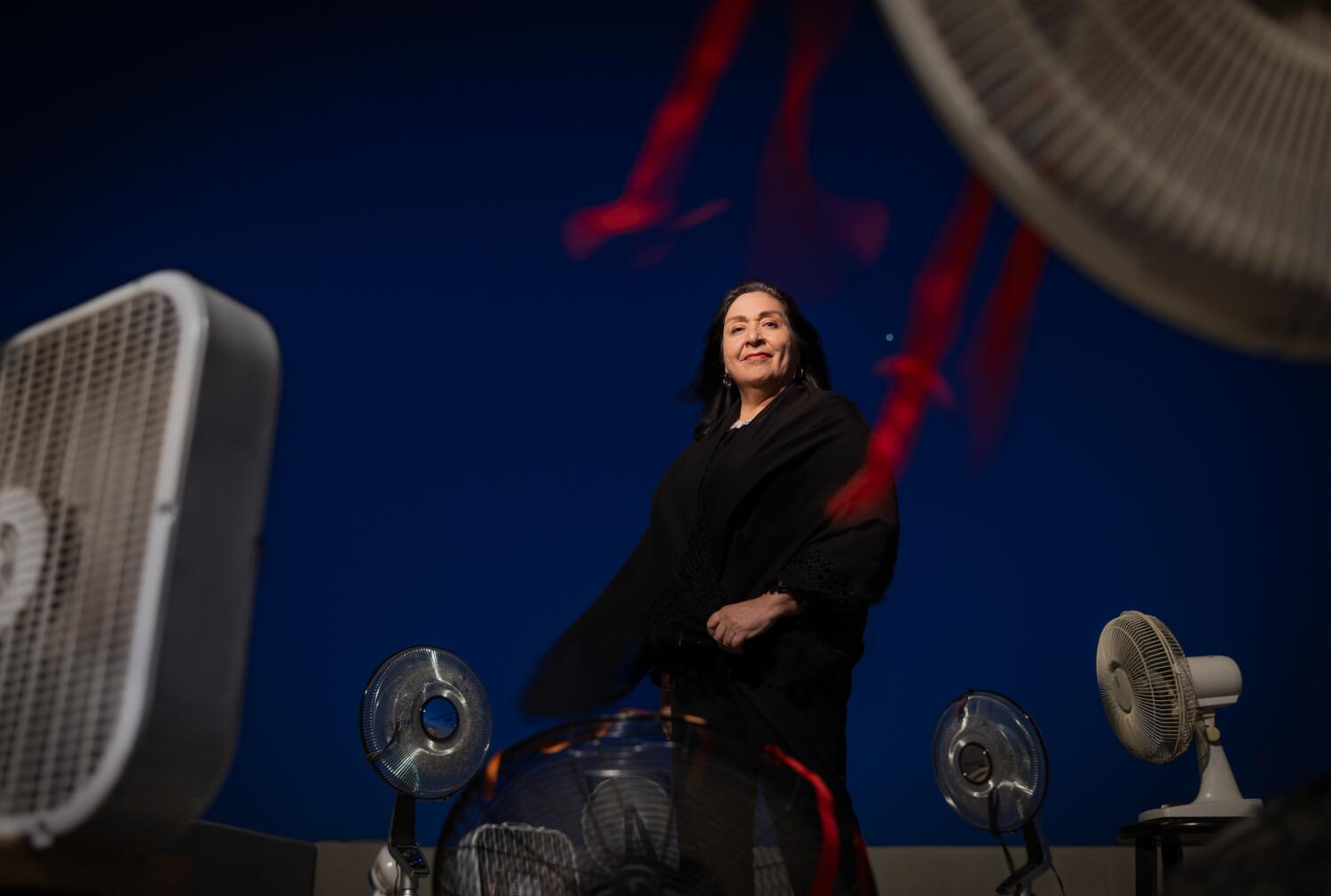
Los Angeles has a habit of announcing grand solutions with klieg lights and folding chairs, only to let them expire in a windowless basement once the cameras leave. The departure of Marta Segura from her dual role as the city’s first Chief Heat Officer and Director of Climate Equity was not just a personnel change. It was a surrender. By folding the specific, urgent mandate of heat management into the broader bureaucracy of the Sanitation Department, City Hall has effectively admitted that it views the deadliest weather phenomenon in America as a PR problem rather than a physical one.
The move signals a retreat from a specialized, data-driven defense against rising temperatures. It suggests that the city leadership believes heat is something that can be managed between trash pickups and sidewalk sweeping. It cannot.
The Mirage of Bureaucratic Efficiency
When the position was created in 2022, it was supposed to be a "pioneering" move. Los Angeles joined a small, elite group of global cities—Athens, Miami, Freetown—that recognized heat as a distinct threat requiring a distinct commander. The logic was sound. Heat does not behave like a flood or a fire. It is a slow-motion disaster that targets the elderly, the poor, and the unhoused with surgical precision. It requires a coordinator who can reach across the silos of public health, urban planning, and emergency services.
Instead, the city chose to merge the office with the Department of Public Works. On paper, this looks like a streamlining of resources. In reality, it is a dilution of power. A Chief Heat Officer needs the authority to challenge the building department on roof standards and the transit department on bus shelter designs. When that officer is buried under the hierarchy of a massive municipal department, their voice is muffled by the weight of existing contracts and entrenched interests.
The "quiet" nature of the firing—or the "transition" as the city prefers to call it—reveals a lack of stomach for the hard choices heat mitigation requires. You cannot cool a city without stripping away the asphalt that makes it a thermal battery. That means fewer parking spots and more trees. It means demanding that developers sacrifice square footage for airflow. These are political fights. By removing the independent advocate for heat safety, the city has removed the person most likely to pick those fights.
The Body Count Behind the Budget
Heat kills more Americans than hurricanes, lightning, tornadoes, and floods combined. In Los Angeles County, the official records often undercount the toll. If a person with a heart condition dies during a 105-degree week, the death certificate lists heart failure, not the environment that triggered it. Studies from UCLA and other institutions suggest the actual mortality rate during heat waves is significantly higher than the numbers reported by the coroner.
The city's decision to downsize its heat leadership happens against a backdrop of increasing thermal volatility. The "urban heat island effect" isn't a theory; it is a measurable physical reality where concrete jungles stay up to 10°F to 20°F hotter than surrounding rural areas.
Consider the infrastructure of a typical block in South LA versus one in Bel Air. The former is a heat trap of blacktop and low-slung industrial buildings. The latter is a canopy-shaded refuge. The Chief Heat Officer was tasked with closing that gap. Without a dedicated leader, the "Climate Equity" portion of the job title becomes a hollow phrase. We are returning to a status quo where survival is a matter of your zip code's tree density.
The Asphalt Lobby and the Tree Canopy
Urban cooling requires a massive shift in how a city manages its skin. This involves three main pillars:
- Reflective Surfaces: Replacing traditional asphalt with "cool pavement" coatings that reflect sunlight rather than absorbing it.
- The Canopy: Planting and, more importantly, maintaining thousands of trees in the most vulnerable neighborhoods.
- Human Infrastructure: Creating a network of cooling centers that people actually want to use, rather than sterile gymnasiums that feel like shelters.
Each of these pillars faces massive institutional inertia. The Department of Water and Power has its own priorities. The Bureau of Street Services has its own budgets. The Chief Heat Officer was the only person whose sole metric of success was a lower temperature. When you remove that specific focus, the trees don't get watered, the cool pavement projects get delayed by "budgetary concerns," and the cooling centers remain closed on weekends because of staffing issues.
The private sector is not going to solve this voluntarily. Developers will always choose the cheapest roofing material and the maximum building footprint unless forced otherwise. A strong heat office acts as a regulatory watchdog. A weakened, absorbed office acts as a rubber stamp.
The Failure of the "Dual Role" Model
Part of the structural collapse in LA’s strategy was the decision to make Segura the head of two different entities simultaneously. You cannot manage a department of dozens of employees while also serving as a high-level policy advisor to the Mayor. It is a recipe for burnout and a lack of focus.
By forcing the Heat Officer to wear the hat of the Director of Climate Equity, the city ensured that both roles would be under-resourced. It was a strategic error that allowed the city to claim it was doing twice the work with half the staff. In reality, it created a bottleneck. When Segura was removed, it wasn't just a person who left; it was the institutional memory of two years of data collection and community outreach.
Why Other Cities are Winning
Miami-Dade County has taken a different path. Their Chief Heat Officer, Jane Gilbert, has been given the latitude to work with the private sector to develop "Heat Action Plans" for outdoor workers. They treat heat as a labor issue, a housing issue, and an economic issue. They recognize that a worker collapsing on a construction site is a liability for the entire county.
Los Angeles, by contrast, has treated heat as a lifestyle inconvenience for those who can’t afford air conditioning. This is a fundamental misunderstanding of the physics of a city. When the temperature stays high overnight—a phenomenon known as "tropical nights"—the human body never gets a chance to recover. The heart keeps pumping harder to cool the blood. The strain is cumulative.
A city that ignores this is a city that is preparing for a mass casualty event. We have seen it in Europe in 2003 and in the Pacific Northwest in 2021. Los Angeles is not immune; it is simply lucky that it hasn't hit its breaking point yet.
The Cost of Inaction
The irony is that funding a robust Heat Office is a bargain. The economic cost of heat—measured in lost productivity, surged healthcare expenses, and strained power grids—dwarfs the salary of a few high-level administrators and a team of coordinators.
The city’s current path is one of reactive crisis management. We wait for the heat wave to arrive, we issue a press release telling people to drink water, and we hope the power grid doesn't fail. This is not a strategy. It is a prayer.
Real heat mitigation requires a decadelong commitment to changing the physical makeup of the city. It requires ripping up roads and mandating green roofs. It requires an official who has the ear of the Mayor and the power to veto projects that will exacerbate the heat island effect.
By folding the heat office into the Sanitation Department, the message from City Hall is clear: Heat is just another form of waste to be managed, rather than a threat to be defeated.
The city of Los Angeles needs to stop treating its climate goals as a series of press releases. The firing of the Chief Heat Officer is a regression to an era where we ignored the thermometer until people started dying. We are currently building a city that will be uninhabitable for its poorest residents within twenty years.
Demand a standalone Office of Thermal Resiliency with its own budget and its own mandate. Stop burying the experts under the weight of departments that are focused on the 19th-century problems of trash and sewers. If the city cannot protect its citizens from the sun, it has failed in its most basic duty of care.
The next heat wave is not a question of if, but when. And when it arrives, there will be no one at City Hall whose only job is to keep you alive.