Diplomacy rarely looks like the movies. There are no dramatic gavel slams, no sudden handshakes bathed in golden light, no sweeping orchestral swells when adversaries finally agree to sit in the same room. Instead, it smells like stale espresso in an airport lounge at three in the morning. It feels like the dull ache in your lower back after fourteen hours in a middle seat over the Pacific, staring at a map of shipping lanes that look dangerously close to closing forever.
For months, the world watched the headlines surrounding the Shenzhen summit with a mixture of breathless anxiety and cynical detachment. Seeing Xi Jinping, Donald Trump, and Vladimir Putin occupy the same physical orbit in southern China felt like watching three tectonic plates grind together under a glass dome. Pundits dissected every micro-expression. Markets twitched at every leaked seating chart. Everyone assumed the meeting was the inevitable collision of superpowers—a high-stakes poker game called by the players holding the biggest stacks of chips.
They were wrong.
According to Canadian Prime Minister Mark Carney, the true architect of that table in Shenzhen wasn't sitting in Washington, Beijing, or Moscow. He was sitting in Brasília. It was Luiz Inácio Lula da Silva—Brazil’s veteran, raspy-voiced president—who quietly planted the seed, watered it through backchannels, and convinced three men who rarely listen to anyone that they needed to listen to each other.
Wait. Stop and sit with that for a second.
The most consequential geopolitical gathering of the decade didn't originate from a superpower ultimatum. It came from the Global South. And if you don't understand why that matters to the price of your groceries, the stability of your pension, and the quiet fragility of the world you wake up in every morning, you are missing the biggest shift in modern history.
The Weight of an Empty Chair
To feel the invisible stakes of Shenzhen, you have to step away from the marble halls of diplomacy and look at a container port in Santos, Brazil, or a soybean farm in Mato Grosso, or a semiconductor assembly line just outside Shenzhen itself.
Consider a hypothetical scenario to make this concrete. Imagine Elena, a third-generation logistics coordinator working the night shift at a freight terminal in Rotterdam. Elena doesn't care about ideological posturing. She cares about manifests, customs clearances, and whether the cargo ships leaving Asia will actually arrive in Europe without being rerouted around war zones or choked off by retaliatory tariffs. Over the last few years, Elena has watched the global supply chain—a system that used to run with the quiet predictability of a heartbeat—develop an arrhythmia. Every time Washington slapped a new restriction on Beijing, or Moscow rattled sabers over energy corridors, Elena spent seventy-two hours straight rerouting shipments, watching insurance premiums double overnight, and explaining to small business owners why their inventory was stuck in limbo.
That is the human cost of great-power paralysis. When the world’s largest economies stop talking, the friction doesn't stay at the top. It cascades downward, grinding against the lives of ordinary people who never voted for a trade war and never asked for a cold conflict.
For years, the prevailing wisdom in Western capitals was that only a superpower could broker peace—or at least a truce—among other superpowers. The United States saw itself as the indispensable referee. China preferred bilateral deals where its sheer economic gravity tilted the table in its favor. Russia operated through disruption, treating diplomatic isolation as a badge of honor. Meanwhile, middle powers like Canada, Brazil, India, and the nations of the European Union were treated like spectators in the bleachers, expected to pick a jersey and cheer while the giants decided the rules of the game.
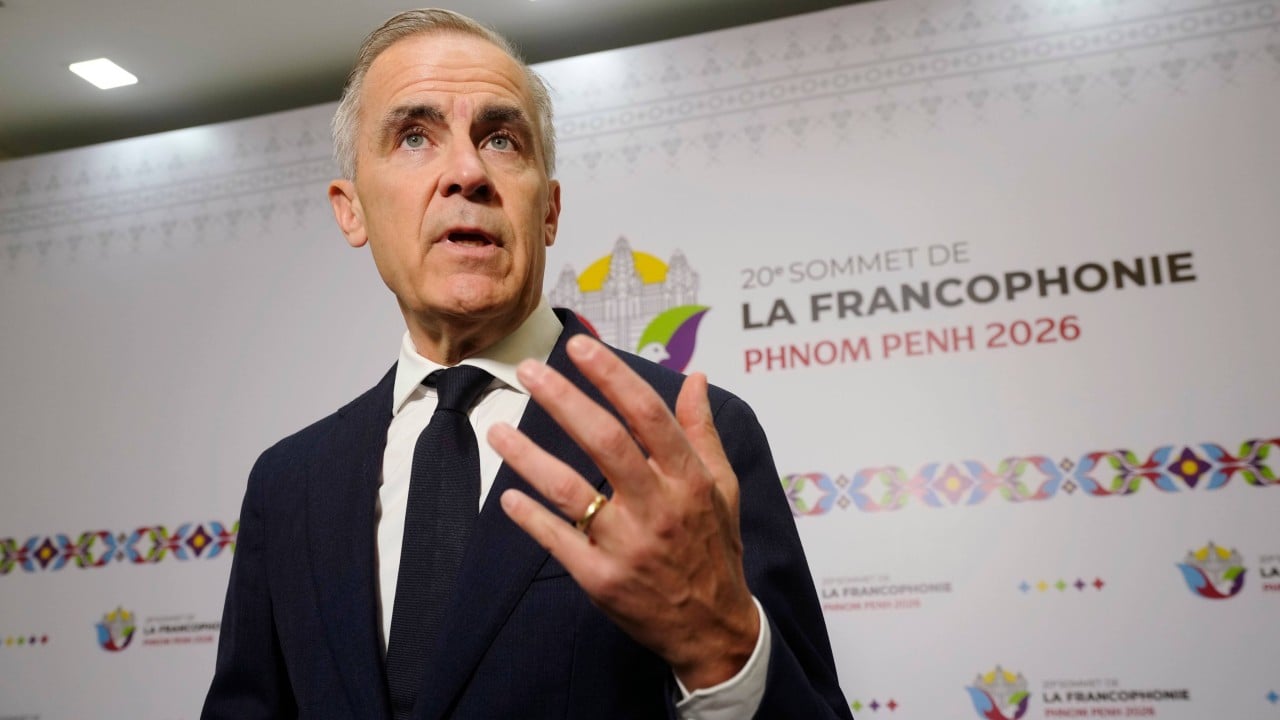
Mark Carney, a man who spent his career navigating the cold, unforgiving math of global finance as governor of both the Bank of Canada and the Bank of England before stepping into the political arena, knows better than most how fragile that illusion really is. When Carney revealed that Lula was the driving force behind the Shenzhen summit, he wasn't just sharing a piece of diplomatic trivia. He was pulling back the curtain on a fundamental realignment of global power.
Why Brasília Held the Key
Why Lula? Why would the leaders of the United States, China, and Russia—men with vastly different worldviews, massive egos, and deeply entrenched domestic pressures—entertain an invitation engineered by the president of Brazil?
To understand the answer, you have to understand the unique, almost paradoxical position Brazil occupies on the world stage. Think of international politics like a crowded, noisy dinner party where the three loudest guests have stopped speaking to one another and are threatening to flip the table. If one of those three guests tries to call a truce, the other two immediately suspect a trap. Every word is analyzed for hidden leverage. Every olive branch is checked for thorns.
Now imagine a fourth guest. This guest has no nuclear weapons. No aircraft carriers patrolling disputed seas. No history of invading neighbors or imposing unilateral financial sanctions. Yet, this guest feeds a massive portion of the planet, holds the lungs of the Earth within its borders, chairs major emerging-market blocs, and maintains working phone lines with every single person at the table.
That is Brazil under Lula.
I remember watching Lula speak at international forums years ago, long before his return to the presidency, and being struck by how completely he rejects the binary logic of modern geopolitics. Where technocrats speak in sterile metrics and defense hawks speak in zero-sum geometry, Lula speaks like a former union organizer from the factory floors of São Bernardo do Campo. In a labor dispute, you don't walk away from the table just because you despise the factory owner. You sit down because if the machines stop running, everybody starves.
Lula applied that exact factory-floor pragmatism to the highest levels of statecraft. Brazil relies heavily on Chinese demand for its iron ore, oil, and agricultural exports. At the same time, it shares deep historical, institutional, and economic ties with the United States and the broader Western hemisphere. And through the BRICS grouping, Lula maintained direct, unfiltered access to Vladimir Putin without ever endorsing Moscow's military ambitions.
Because Brazil posed no existential threat to Washington, Beijing, or Moscow, Lula possessed something none of the three superpowers had: plausible neutrality. He could walk into Beijing and tell Xi Jinping that escalating fragmentation was starving developing nations of capital. He could talk to Donald Trump in the language of transactional deal-making, framing a Shenzhen sit-down not as a concession, but as an opportunity to reset trade terms on a grand stage. And he could look Putin in the eye and argue that permanent isolation was a dead end, even for a resource-rich giant.
Carney’s acknowledgment of Lula’s role validates what many observers in the Global South have argued for a decade. The unipolar world isn't just fading; it is being actively replaced by a multipolar network where influence belongs to the connectors, not just the coercers.
The Anatomy of a Backchannel
People often ask how a summit of this magnitude actually comes together without collapsing under the weight of its own publicity before the planes even land. The truth is that public diplomacy is almost always the final act of a play that was rehearsed in the dark.
If Lula had held a press conference in Brasília and publicly challenged Trump, Xi, and Putin to meet in Shenzhen, the entire initiative would have died within forty-eight hours. Public invitations force leaders into defensive postures. Domestic critics immediately scream weakness. Cable news panels dissect who blinked first. Advisors draft endless lists of preconditions designed to make the other side walk away.
Instead, the groundwork required months of quiet, unglamorous persistence. It meant foreign ministers passing notes on the margins of G20 meetings. It meant trusted envoys flying commercially into secondary airports to avoid the press corps. It meant framing the venue—Shenzhen—with surgical precision.
Look at why Shenzhen mattered as a backdrop. Just four decades ago, Shenzhen was a sleepy collection of fishing villages across the border from Hong Kong. Today, it is a gleaming, hyper-dense metropolis of glass towers, electric vehicle factories, and hardware labs—the physical embodiment of China’s economic miracle and its deep entanglement with global supply chains. Choosing Shenzhen wasn't accidental. Beijing isn't the political capital; it is the commercial engine. Meeting there signaled that the agenda wasn't about redrawing ideological maps or relitigating historical grievances. It was about commerce, technology, energy, and the basic mechanics of coexistence.
For Carney, watching this unfold from Ottawa, the implications were immediate and personal. Canada lives in the shadow of the American elephant, as Pierre Trudeau famously put it, while simultaneously trying to navigate an increasingly assertive China and a volatile global trade environment. When the giants clash, countries like Canada get trampled in the grass. Seeing Brazil successfully nudge the three heaviest players into the same room proved that middle powers don't have to remain passive collateral damage. They can shape the room.
The Illusion of Control
Still, it would be naive—and frankly dishonest—to pretend that a single summit, no matter how cleverly brokered, erases decades of structural rivalry. Anyone who tells you that the Shenzhen meeting solved the deep fault lines between Washington, Beijing, and Moscow is selling you a fairy tale.
Let’s be candid about the reality on the ground. The trust deficit between these capitals is cavernous. The United States remains deeply anxious about losing its technological edge in artificial intelligence, quantum computing, and advanced manufacturing. China is navigating its own painful domestic economic transition, wrestling with demographic headwinds and a bruised real estate sector while refusing to accept containment. Russia remains locked in a grinding geopolitical standoff with the West that has fundamentally reshaped European security.
Even the sharpest critics of Lula’s diplomacy have a point worth wrestling with. They argue that bringing authoritarian leaders to the table without strict preconditions risks legitimizing aggressive behavior, trading long-term principles for short-term calm. They worry that "dialogue" becomes a stalling tactic—a way for adversaries to buy time while continuing the very policies that caused the crisis in the first place.
That fear is real. I feel it myself whenever I read the intelligence assessments coming out of maritime chokepoints or look at the accelerating pace of defense spending worldwide. There is nothing guaranteed about diplomacy. Sometimes, talking merely clarifies just how irreconcilable two positions truly are.
But consider the alternative.
In August 1914, the great powers of Europe stumbled into a catastrophic war largely because their diplomatic channels had rusted shut, replaced by rigid mobilization timetables and mutual paranoia. Half a century later, during thirteen terrifying days in October 1962, the world survived the Cuban Missile Crisis only because backchannels—clumsy, desperate, and deeply imperfect—remained open long enough for leaders to step back from the abyss.
Silence in international relations is never neutral. When leaders stop speaking directly, intelligence agencies fill the void with worst-case assumptions. Militaries prepare for contingencies that quickly become self-fulfilling prophecies. Markets price in chaos, choking off investment in the very technologies—clean energy, medical research, sustainable agriculture—that humanity desperately needs to survive the next century.
Lula’s gamble wasn't built on blind optimism. It was built on survival instinct. He understood that when three nuclear-armed powers drift toward open confrontation, the rest of the world doesn't get to opt out of the fallout.
What Comes After the Handshakes
Think back to Elena, our hypothetical logistics coordinator in Rotterdam, staring at her glowing monitors at three in the morning. When news of the Shenzhen summit broke, the container ships didn't suddenly teleport across the ocean. Tariffs didn't vanish with the stroke of a pen. Customs forms didn't magically simplify overnight.
Yet, something subtle shifted in the air. Freight insurers paused planned rate hikes. Commodity traders took a breath. Ministers in capitals from Ottawa to Jakarta began drafting proposals that assumed engagement rather than permanent decoupling. The ceiling stopped falling, even if the roof still needed massive repairs.
That is the true legacy of what Mark Carney revealed. For generations, the script of global politics was written exclusively in a handful of northern capitals, delivered as a monologue to the rest of humanity. By quietly engineering the Shenzhen summit, Lula da Silva proved that the script is now open for co-authors. He showed that moral authority and economic necessity, when wielded with patience by a nation willing to talk to everyone, can move mountains that aircraft carriers cannot budge.
Late that final evening in Shenzhen, after the motorcades had pulled away from the convention center and the television crews had packed up their tripods, a janitorial crew walked into the main hall to clear the table. They gathered the half-empty glasses of water, wiped down the polished mahogany surface, and stacked the heavy leather chairs against the wall. Outside, the neon skyline of the Pearl River Delta pulsed against the humid night sky, illuminating thousands of cargo cranes loading containers bound for every corner of the Earth. Nobody on that cleaning crew knew the name of the Brazilian advisor who had drafted the first quiet memo months earlier, or the exact phrasing Lula used to break the deadlock, yet the ships in the harbor were already turning their bows toward the open sea.