Silence.
That is the first thing you notice inside a federal grand jury room—not the cinematic banging of gavels, not the breathless murmurs of television pundits standing on courthouse steps, but the heavy, fluorescent hum of a windowless room where ordinary citizens sit on stiff chairs and decide whether the machinery of the United States government crossed a sacred line.
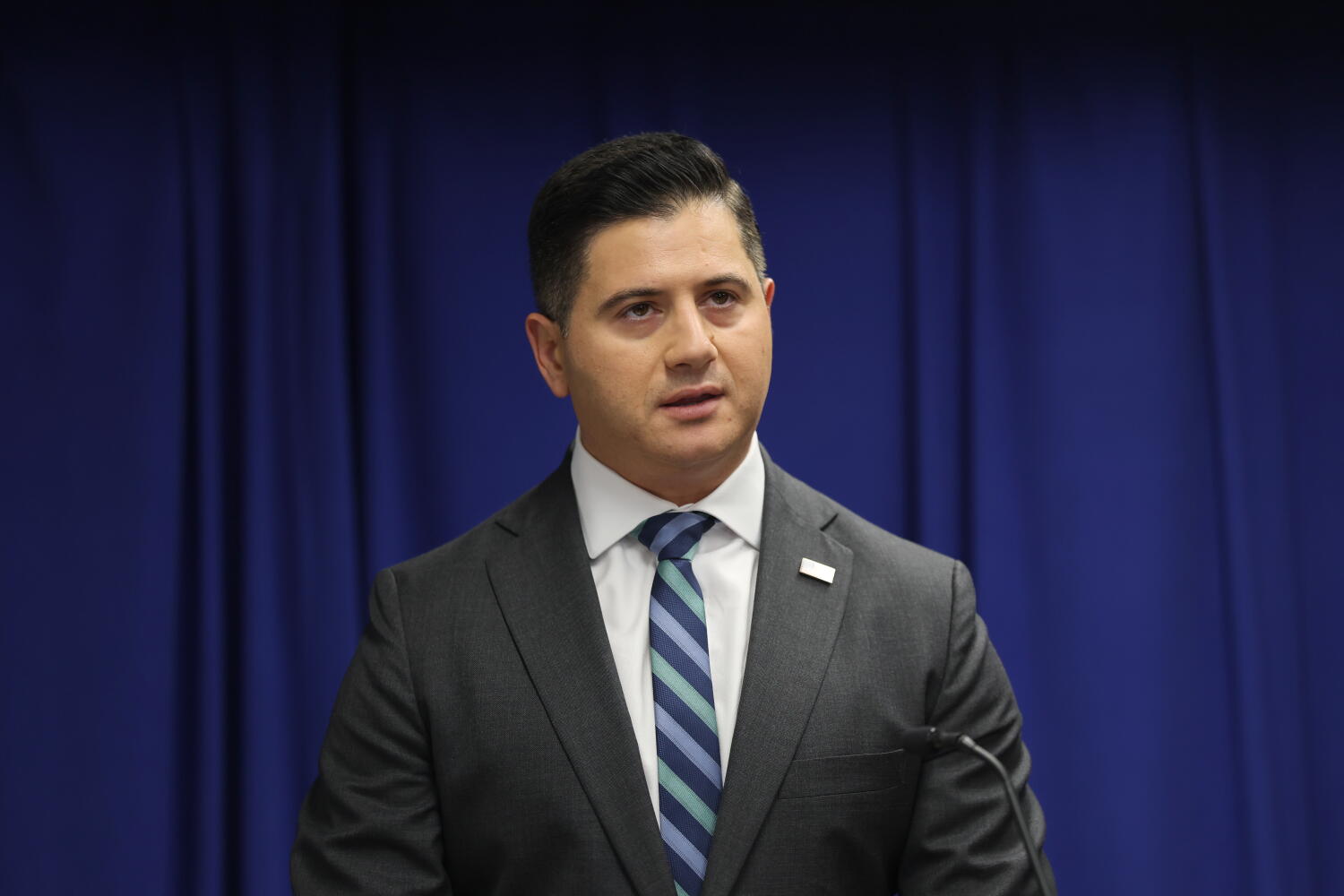
When news broke that the Department of Justice had tapped Bill Essayli, a seasoned prosecutor out of Los Angeles, to assist in a federal investigation examining the August 2022 FBI search of Donald Trump’s Mar-a-Lago estate, most political observers treated it like another routine personnel note in an endless cycle of Washington drama. A name. A title. A single paragraph buried beneath louder headlines.
They missed the point entirely.
To understand why this quiet reassignment matters, you have to strip away the partisan noise that has suffocated American civic life for nearly a decade and look instead at the fragile, invisible contract holding a constitutional republic together. Every democracy runs on a single shared assumption: that the people holding the badge, the subpoena power, and the keys to the prison cell are acting as referees, never as players on the field. Once citizens begin to suspect that the referee is wearing a team jersey underneath the striped shirt, the game itself stops making sense.
The Anatomy of a Fractured Trust
Consider a hypothetical scenario to see how that trust unravels in real life. Picture a retired civil servant named Arthur, living in a quiet suburb outside Columbus, Ohio. For thirty-five years, Arthur worked as a municipal auditor. He believed in paper trails, stamped receipts, and the quiet dignity of rules applied evenly to mayors and janitors alike. When he watched news footage of federal agents executing a court-authorized search warrant at a former president’s residence in Palm Beach in August 2022, Arthur felt two competing instincts collide inside his chest.
On one hand, his auditor’s brain saw the statutory reality. Under the Presidential Records Act and federal statutes governing classified national defense information, government documents do not belong to any individual officeholder once their term ends. If subpoenas go unheeded and sensitive materials remain unsecured at a private social club, law enforcement has both the authority and the obligation to retrieve them. That was the official position articulated by Attorney General Merrick Garland and federal prosecutors at the time: no person is above the law, and the search was a last resort after months of negotiations.
On the other hand, Arthur felt a cold knot in his stomach. Never before in American history had the FBI searched the home of a former president—especially one actively preparing to run against the sitting administration. To millions of Americans watching from their living rooms, the optics looked indistinguishable from the tactics used by strongmen abroad to kneecap political rivals.
Both realities existed simultaneously. That collision is the exact fault line where Bill Essayli now stands.
Who Is Bill Essayli, and Why Los Angeles?
In the architecture of the Department of Justice, geography is rarely an accident. When leadership in Washington wants an investigation to carry credibility—or when it needs an operator who understands both the granular mechanics of federal prosecution and the fierce political crosswinds surrounding high-profile cases—it often looks outside the Beltway.
Bill Essayli’s resume reads like a blueprint for high-stakes courtroom combat. Before entering politics as a Republican member of the California State Assembly representing Riverside County, Essayli spent years as an Assistant United States Attorney in the Central District of California, one of the busiest and most complex federal jurisdictions in the country. Prosecutors in Los Angeles do not spend their days theorizing about constitutional abstractions; they build wiretap cases, untangle financial fraud, manage reluctant witnesses, and convince twelve skeptical jurors that the government’s version of events meets the unforgiving standard of proof beyond a reasonable doubt.
Later, Essayli’s trajectory took him directly into the arena of elected office and conservative legal advocacy, giving him fluency in two dialects that almost never overlap: the dry, procedural precision of federal criminal practice and the raw, populist skepticism aimed at federal institutions.
Tapping someone with that specific background to assist in reviewing the Mar-a-Lago probe sends a deliberate signal. In the legal world, bringing in an outside or specialized prosecutor functions much like bringing an independent structural engineer into a building after an earthquake. You do not hire an engineer simply to admire the paint on the walls; you hire them to crawl into the basement with a flashlight and check whether the load-bearing beams cracked under pressure.
What a Federal Probe of a Federal Raid Actually Examines
When people hear that the Justice Department is investigating its own prior actions—specifically the execution of the Mar-a-Lago search warrant—popular imagination immediately jumps to cinematic extremes. Critics of the 2022 search hope to see handcuffs slapped onto former officials; defenders of the FBI fear a political witch hunt designed to punish career agents for doing their jobs.
The actual mechanics of federal oversight are far more surgical, and frankly, far more consequential.
Think of a federal search warrant as a precision surgical instrument. To obtain one, prosecutors and agents must submit a sworn affidavit to a federal magistrate judge establishing probable cause that evidence of a crime will be found at a specific location. Every sentence in that affidavit carries legal weight. Every limitation on the scope of the search—which rooms can be entered, which boxes can be opened, how attorney-client privileged materials are screened by a separate "filter team"—is governed by strict Fourth Amendment doctrine and internal Justice Department protocols.
A federal probe examining how that operation was conceived, approved, and executed focuses on concrete, verifiable questions rather than partisan talking points:
- Predication and Proportionality: Did investigators exhaust reasonable, less intrusive alternatives before seeking an unprecedented search of a former president’s residence, or did internal pressure accelerate the timeline?
- Warrant Scope and Execution: Did agents adhere strictly to the boundaries authorized by the magistrate judge, or did the sweep extend beyond what the underlying affidavits justified?
- Internal Communications and Candor: Were decision-makers at senior levels given complete, unvarnished assessments of the legal risks, and were any dissenting views within the bureau or the department properly documented?
These are not academic exercises. In criminal law, process is substance. If shortcuts are normalized when the target is famous, those same shortcuts inevitably trickle down to ordinary citizens who lack teams of appellate lawyers to defend them.
The Invisible Stakes for Everyone Else
I have spent years sitting in the back rows of federal courtrooms, smelling the stale coffee in paper cups and watching defendants stare at the back of their lawyers’ necks while a prosecutor reads from a binder. When you spend enough time in those rooms, you learn a sobering truth: the power of the federal government is overwhelming. When the Department of Justice decides to turn its full weight toward a single person, the disparity in resources is staggering.
That power is only tolerable in a free society because of restraint.
Restraint is invisible when it works. It looks like a prosecutor declining to bring a borderline charge because the evidence is thin. It looks like an FBI supervisor telling an eager agent to slow down and double-check a source. It looks like institutional humility—the willingness to admit that even well-intentioned officials can develop tunnel vision when the stakes are high and the cameras are rolling.
The controversy surrounding Mar-a-Lago exposed what happens when restraint becomes suspect. According to public reporting and congressional testimony over the past several years, Republicans argued that the 2022 search represented an unprecedented weaponization of federal law enforcement against a political opponent, pointing to the presence of armed agents and the breadth of materials seized. Conversely, Democratic lawmakers, former Justice Department officials, and Special Counsel Jack Smith’s filings maintained that the search was a textbook response to obstruction of a grand jury subpoena and the mishandling of highly classified documents affecting national security.
Both narratives hardened into concrete. Neither side budged.
By bringing Bill Essayli into the fold to examine the handling of that operation, the Justice Department is stepping directly into the crossfire between those two irreconcilable stories. If the review uncovers genuine procedural missteps, selective enforcement, or lapses in judgment, documenting them transparently is the only way to prevent those mistakes from becoming permanent precedents. Conversely, if the review confirms that career personnel followed established rules under extraordinary pressure, putting a prosecutor with conservative credentials on the team makes those findings far harder for skeptics to dismiss out of hand.
The Burden of Proof
Of course, skepticism cuts both ways, and honesty requires acknowledging the risk sitting squarely in the middle of this appointment.
Whenever a political figure or former partisan officeholder steps into a sensitive Justice Department role, critics will inevitably question whether the outcome was predetermined before a single file was opened. Legal analysts and former prosecutors have already noted that bringing a former Republican state legislator into a probe touching directly on Donald Trump invites immediate scrutiny over impartiality. Can a review designed to investigate perceived bias avoid the appearance of bias itself?
That is the paradox haunting modern American governance. Once an institution loses its presumption of neutrality, every effort to repair it risks looking like another partisan maneuver.
Essayli’s task, alongside the career investigators and attorneys working the file, will not be won at a podium or on cable news. It will be won—or lost—in the unglamorous, grueling work of assembling an evidentiary record so airtight, so thoroughly footnoted, and so grounded in verified documents that neither political tribe can easily wave it away.
Look back at Arthur, our retired auditor in Ohio, sitting at his kitchen table with the morning paper spread beside his coffee mug. Arthur does not care about Washington palace intrigue or which pundit scored points on Sunday morning television. He cares about a much simpler, older question: Are the rules real, or do they bend depending on who holds power?
Somewhere in a secure room right now, boxes of timelines, email chains, warrant drafts, and internal memos from August 2022 are being opened once again, page by page, under harsh fluorescent light.