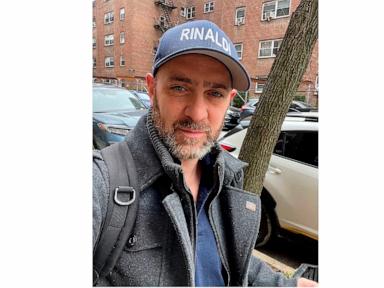
On June 24, 2026, local politics crossed a legal rubicon in a Queens courtroom. Perennial candidate Jonathan Rinaldi was arraigned on nearly twenty criminal counts, including multiple counts of forgery and criminal possession of a forged instrument. The criminal complaint filed by Queens District Attorney Melinda Katz did not target the usual backroom financial handshakes or petition-signature fraud. Instead, prosecutors unveiled a systematic campaign of digital fabrication. Rinaldi allegedly deployed consumer-grade artificial intelligence to manufacture political endorsements, invent fake scandals, and clone the institutional authority of legitimate news organizations.
This case marks the first major instance where a local political candidate faces prison time not for what they said, but for the specific mechanical act of programming a digital lie.
The defense has already attempted to frame the prosecution as a terrifying threat to free expression. Rinaldi publicly asserted that the charges represent an attack on political speech by the establishment. But a close read of the court-authorized subpoenas and search warrants reveals something far more calculated than standard campaign hyperbole. This was an active experiment in automated truth-bending. It has forced the legal system to apply century-old forgery statutes to a modern crisis of information.
The Mechanics of the Prompts
The transition from traditional mudslinging to automated forgery is remarkably simple. According to the criminal complaint, Rinaldi did not rely on complex coding or closed underground software. He used widely available public platforms. Between January and November 2025, during his primary campaign against incumbent City Councilmember Lynn Schulman, his official Facebook and Instagram accounts became a clearinghouse for doctored media.
The digital trail left by the candidate provides a blueprint for how cheap technology can distort a local race.
In October 2025, Rinaldi used Google to pull a photograph from a rival politician's official Instagram account showing a routine meeting with New York City Sanitation enforcement officers. Court records show he then instructed Google Gemini to slap that image onto a fake newspaper layout mimicking the Amsterdam News. His subsequent instructions to the program were explicit. He typed prompts directing the system to alter the headline to read that his opponent was being questioned by police. When the system made typographical errors, he followed up with corrections, scolding the engine because it added words and spelled the name wrong.
The objective was clear. He wanted to weaponize the graphic weight of a trusted community newspaper to validate a lie.
Later that same month, the campaign took an image of a former council member and used a face-swap tool. Rinaldi prompted an AI platform to take his own face and map it onto the body of a man shaking hands with the official. The instruction manual captured by investigators reveals the crude reality of the process. The prompt explicitly told the program to change the face while leaving the head intact because both subjects were bald. That fabricated handshake was then pasted into a forged New York Post template.
[Target Image: Legitimate Political Meeting]
       │
       ▼
[Prompt: "Face swap the man on the left... the head is ok they are both bald just change the face."]
       │
       ▼
[Output: Fraudulent Handshake Graphic]
       │
       ▼
[Final Product: Fake New York Post Article Layout]
This is the assembly line of modern political disinformation. It takes minutes. The legal vulnerability for the candidate, however, was not the lie itself, but the mimicry of trademarked branding and physical documents.
Forging the Institutional Seal
American courts have historically granted politicians a staggering amount of leeway to lie to the electorate. The First Amendment protects exaggeration, false promises, and negative attack ads. Political speech sits at the absolute peak of protected expression. But the Queens District Attorney is bypassing the speech debate entirely by focusing on the physical mechanics of forgery.
The law distinguishes between telling a lie and forging an instrument of authority.
When Rinaldi targeted the Queens Jewish Alliance, he did not merely claim they supported him. He took the organization's authentic, official endorsement sheet, stripped out the name of the incumbent candidate, and digitally inserted his own campaign information while preserving the organization's logo and branding. When the head of the alliance confronted him in a recorded phone call, Rinaldi did not deny the act. Instead, he laid bare his campaign philosophy, stating that when fighting the establishment, he had to use every tool at his disposal because he knew they would never give him a legitimate endorsement. He called it asymmetrical warfare.
The warfare extended into public institutions that are legally barred from participating in political campaigns.
Using OpenAI's video generation tool, Sora, the campaign produced videos featuring simulated locals declaring their support. More troublingly, the campaign published videos depicting what appeared to be active New York City police officers from the 112th Precinct and young children from P.S. 101 elementary school making official statements in favor of his candidacy. The videos carried the distinct watermark of automated software, but to an uncritical voter scrolling through a social media feed, they carried the weight of institutional backing.
The state is betting that juries will see a fundamental difference between a candidate making a false claim and a candidate manufacturing a fake video of children inside a public school house to simulate an endorsement. The former is a political sin; the latter is a criminal forgery.
The Exploitation of the Accountability Void
When the first reports of these fake news articles and endorsements surfaced in late 2025, Rinaldi initially resorted to a classic modern defense. He claimed his accounts had been hacked. It is a defense designed to exploit the general public’s technical confusion. If an account is compromised, the candidate is the victim, not the perpetrator.
The digital breadcrumbs, however, destroyed that narrative.
Even as the candidate claimed a mysterious hacker was uploading these highly specific, localized campaign graphics, his accounts continued to post real-time videos of him speaking at live community board meetings. The real and the fabricated coexisted on the same profile feeds. The prosecution's acquisition of server logs, search histories, and direct input prompts permanently dismantled the hacker alibi.
The broader problem is that local election infrastructure is completely unprepared for this level of automated deception.
| Layer of Protection | Operational Vulnerability in AI Era |
|---|---|
| Social Media Platforms | Moderation occurs post-distribution; take-downs happen days after voters have already processed the image. |
| Campaign Finance Boards | Audits focus heavily on dollar tracing, completely missing the zero-cost creation of deepfake media assets. |
| Local News Outlets | Forced to spend finite editorial resources debunking fabricated versions of their own reporting. |
The traditional check on political misconduct has always been the press and the opposing campaign. But when a candidate can generate five new simulated scandals in the time it takes an editor to verify one, the old model of fact-checking breaks down completely. The time lag between the publication of a digital forgery and its official retraction is the precise window where elections are won or lost.
Applying Old Laws to New Realities
New York lawmakers have spent the last few legislative sessions scrambling to pass explicit deepfake regulations. Proposals have circulated requiring clear provenance data, digital watermarks, and mandatory disclosures on any political communication altered by software. Some of these bills seek to ban the publication of unauthorized deepfakes within ninety days of an election.
But the Queens prosecution proves that the state does not necessarily need new tools to punish digital fraud. It just needs the will to enforce existing ones.
The charges against Rinaldi rely on third-degree forgery and criminal possession of a forged instrument. These are classic white-collar property crimes. Historically, they are used against people who alter checks, fake real estate deeds, or manufacture counterfeit merchandise. By treating a fake New York Post front page or a doctored institutional endorsement sheet as a forged instrument, prosecutors are treating political identity theft exactly like financial identity theft.
Third-degree forgery in New York occurs when a person, with intent to defraud, deceive, or injure another, falsely makes, completes, or alters a written instrument.
The legal battleground will center on whether a social media graphic constitutes a "written instrument" under the strict definition of the penal code. If the court rules that a digital image designed to look like a newspaper article fits this description, it sets a massive precedent. Every political operative who cleans up an opponent's quote or alters a photograph to make an adversary look sinister could suddenly find themselves operating in a criminal grey zone.
The High Cost of Cheap War
The defense will undoubtedly lean heavily on the argument that these posts were obvious satires, memes, or artistic expressions. In political discourse, exaggeration is routine. Satirical newspapers like The Onion use fake headlines daily without facing criminal indictments.
The distinction lies in the intent to deceive and the replication of authentic systems of trust.
When a candidate uses the exact font, layout, and logo of an active news organization to report a false arrest, the defense of "art" wears incredibly thin. The defense of "asymmetrical warfare" offered by the defendant himself in recorded calls suggests a clear understanding that the material was designed to deceive the public because legitimate means of securing support had failed.
Rinaldi currently faces a maximum sentence of two years in prison if convicted of the top counts. For a local campaign that ultimately won very few votes, the stakes have become historically high. This case will not stop the development of automated political tools. The software is out there, it is free, and it is getting better at a terrifying pace. What this case will do is determine whether the individual who inputs the prompt can hide behind the machine when the law comes knocking on the campaign door. The era of consequence-free digital fabrication in local elections is officially over. The blueprint for prosecuting it has just been written in Queens.