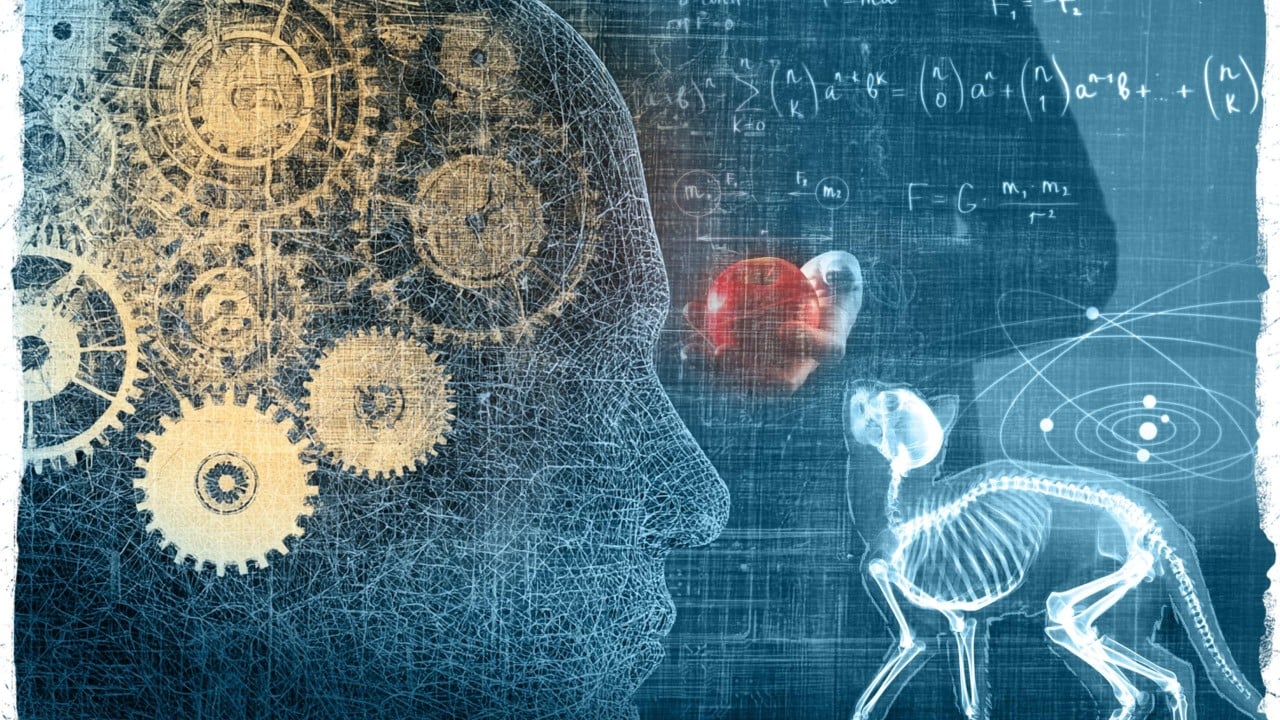
The intersection of quantum mechanics and neuroscience is defined by an analytical error: the assumption that biological wetware operates like a cryogenic processor. Schrödinger's famous feline paradox serves as a popular heuristic for superposition, yet mapping this macroscopic thought experiment onto neural tissue requires ignoring the fundamental thermodynamic constraints of the central nervous system. Brains operate at room temperature, bathed in a dense, aqueous environment replete with ionic currents, thermal fluctuations, and massive molecular collisions. Under these physical conditions, quantum states experience rapid decoherence, losing their phase coherence within fractions of a femtosecond.
This analysis deconstructs the structural breakdown that occurs when researchers attempt to bridge quantum computing principles with cognitive architecture. By examining the thermodynamic barriers of neural microtubules, evaluating the functional limits of quantum channel hypotheses, and establishing a rigorous taxonomy of biological information processing, this framework isolates the precise mechanical failures of quantum brain theories. The objective is to replace speculative pop-science analogies with empirical biophysics, mapping the actual constraints governing neuronal signal transduction.
The Thermodynamic Barrier of Biological Decoherence
The core mechanism preventing quantum computation in the brain is environment-induced decoherence. In a controlled laboratory setting, maintaining superposition requires absolute zero temperatures and ultra-high vacuums to prevent external particles from interacting with the quantum system. Conversely, the human brain operates at approximately $310\text{ K}$ ($37^\circ\text{C}$). At this thermal threshold, random kinetic energy dominates molecular structures.
Neurobiological tissue is not a closed system. It is flooded with water molecules, sodium, potassium, and calcium ions moving across semi-permeable membranes under chemical and electrical gradients. When a quantum state encounters this environment, it undergoes immediate entanglement with ambient thermal bath degrees of freedom. The phase relationships that define a superposition vanish almost instantaneously.
Calculations measuring environmental relaxation times in biological environments demonstrate that decoherence times for putative quantum bits within proteins range from $10^{-13}$ to $10^{-20}$ seconds. Action potentials, by contrast, operate on a millisecond timescale. A quantum state cannot store, process, or transmit cognitive information if it dissolves millions of times faster than the slowest physiological event required for a single neural spike. The temporal scale mismatch is absolute.
Microtubule Mechanics and the Orchestrated Objective Reduction Fallacy
The most prominent framework attempting to bypass the decoherence problem is Orchestrated Objective Reduction, popularized by physicist Roger Penrose and anesthesiologist Stuart Hameroff. This hypothesis posits that quantum computation occurs within the tubulin proteins of neuronal microtubules, protected from thermal noise by specialized shielding mechanisms.
To evaluate this model rigorously, one must examine the structural composition of microtubules. These hollow cylinders are composed of dimers of alpha and beta tubulin. The hypothesis suggests that electrons within these hydrophobic pockets can enter superpositions, and that anesthetic gases disrupt consciousness by binding to these pockets and altering quantum resonance.
This model collapses under quantitative scrutiny for three distinct reasons:
- The Screening Deficit: Proponents argue that water layers surrounding microtubules act as an orderly shield. However, thermodynamic laws dictate that any structured water layer at physiological temperatures remains transient, subject to constant thermal agitation that disrupts protective barriers.
- The Energy Scale Mismatch: The energy required to maintain quantum coherence at room temperature vastly exceeds the metabolic energy available per tubulin protein. Neurons consume adenosine triphosphate to maintain ionic gradients, not to sustain picosecond quantum states across thousands of interconnected cytoskeletal proteins.
- The Localization Paradox: Even if a transient quantum state could be initiated within a tubulin dimer, the mechanism by which this state translates into a macroscopic axonal firing pattern violates the conservation of information across scaling boundaries. Microtubules are structural scaffolds designed for intracellular transport via motor proteins like kinesin and dynein, not for quantum error correction.
Anesthetics do not operate by interrupting quantum resonance. Pharmacological data demonstrates that general anesthetics alter consciousness by binding to hydrophobic pockets in neurotransmitter receptors, specifically gamma-aminobutyric acid type A receptors, enhancing inhibitory chloride currents and hyperpolarizing the postsynaptic membrane. The quantum explanation introduces unnecessary variables while ignoring established receptor pharmacology.
The Cost Function of Information Processing in Neural Networks
To understand why the brain does not need quantum mechanics to achieve high-dimensional cognition, one must analyze its classical cost function. Classical neural networks optimize for energy efficiency, fault tolerance, and parallel distributed processing within severe biological constraints.
The brain weighs roughly 1.5 kilograms, representing about two percent of total body mass, yet it consumes 20 percent of the body's resting energy budget, approximately 20 watts. This energy is almost entirely consumed by ion pumps restoring resting potentials after action potentials and synaptic transmission. If the brain relied on quantum states requiring extreme shielding or error-correction overhead, the metabolic cost would scale exponentially, resulting in rapid systemic exhaustion and thermal damage.
Classical parallel processing solves the computational requirements of cognition without quantum mechanics. The human cortex contains approximately $86$ billion neurons, each connected to thousands of others, yielding roughly $10^{15}$ synapses. This massive fan-out and fan-in architecture creates an associative network capable of high-dimensional vector spaces, pattern completion, and probabilistic inference using classical stochastic firing rates.
Information in the brain is encoded not in fragile quantum phases, but in stable, frequency-modulated spike trains and synaptic weights modulated by long-term potentiation and long-term depression. These mechanisms provide robust resistance to noise. If a single ion channel fails or a stray thermal photon impacts a dendrite, the macroscopic network state absorbs the variance through statistical averaging across populations of neurons.
Mapping the Limits of Quantum Metaphors in Cognitive Science
Applying quantum terminology to psychology and decision-making creates an analytical category error. While mathematical frameworks from quantum mechanics, such as non-commutative probability spaces and Hilbert spaces, can model human decision-making under uncertainty, this utility is strictly mathematical rather than physical.
When humans make decisions that violate classical probability axioms, such as the Ellsberg paradox or the disjunction effect, researchers often invoke quantum cognition. This approach uses quantum amplitude interference to model preference reversals. However, framing a cognitive bias through a quantum wave equation is an isomorphism, not a mechanistic discovery. A mathematical tool can describe a behavioral pattern without the physical substrate of the brain executing quantum gates.
Economic utility models and psychological heuristics map well onto vector projections and matrix transformations. Treating these models as proof of quantum processing in neural tissue mistakes the map for the territory. The brain utilizes heuristics, framing effects, and bounded rationality because evolutionary pressures optimized biological organisms for fast, computationally frugal decision-making in volatile environments, not because neural tissue exploits subatomic entanglement.
Strategic Allocation of Computational Resources
Attempting to engineer neuromorphic hardware based on speculative quantum brain models diverts capital and engineering resources away from scalable architectures. Current artificial intelligence architectures achieve high performance by scaling classical parallel computing, transformer models, and efficient matrix multiplication units.
Future computational breakthroughs will be achieved by tightening the alignment between algorithmic demands and physical substrates. In biological systems, this means respecting the boundaries of thermodynamics, utilizing stochastic resonance where beneficial, and relying on distributed classical networks for pattern recognition. In synthetic systems, engineering efforts must focus on reducing resistive losses, optimizing interconnect bandwidth, and minimizing thermal dissipation rather than chasing room-temperature quantum supremacy in biological simulations.