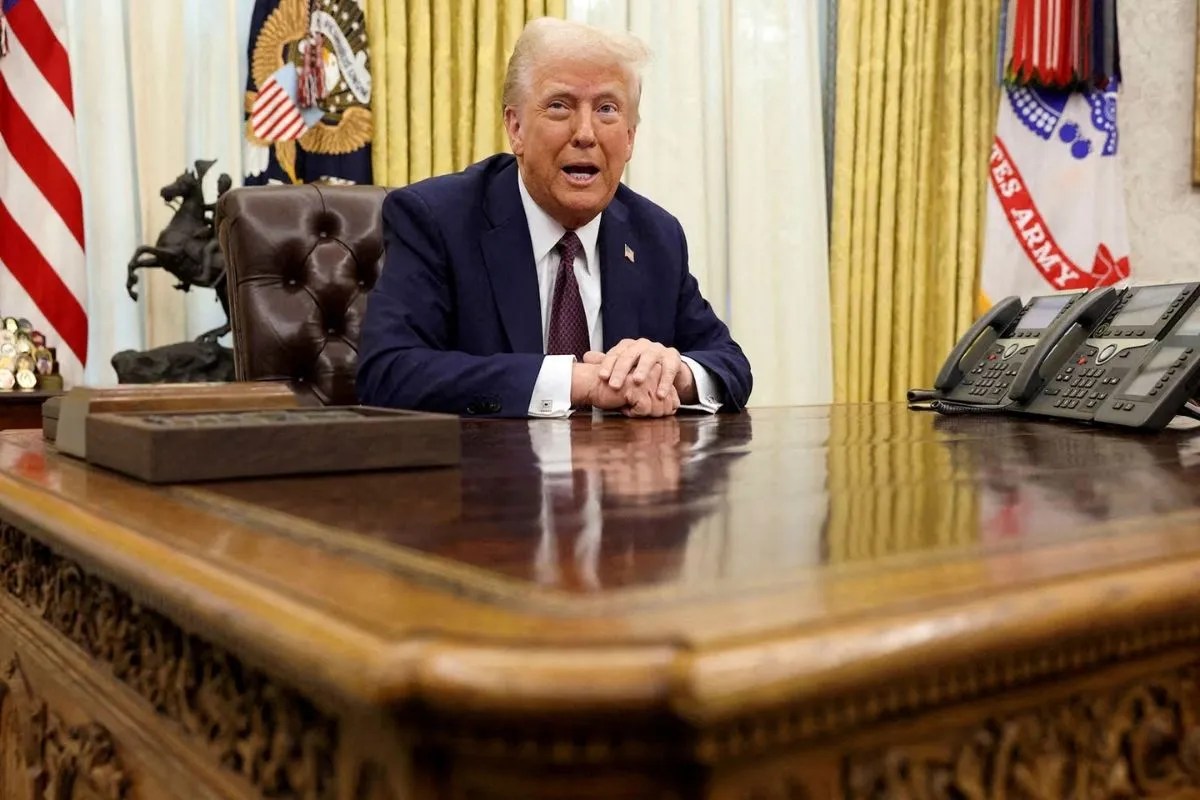
Washington insists the Quadrilateral Security Dialogue is stronger than ever under Donald Trump's administration, dismissing persistent reports that the four-nation grouping has lost its momentum. White House foreign policy aides have repeatedly rejected claims of institutional decay, citing expanded joint initiatives in critical technology, supply chain mapping, and maritime domain awareness across the Indo-Pacific. Yet behind the official displays of unity lies a fundamental transformation: the Quad is shifting from a grand strategic alliance into a transactional security framework driven by pragmatic economic leverage and national self-interest.
Doubts surrounding the Quad's endurance flared throughout 2025 following high-profile delays in top-level summits and heightened trade friction between the United States and India. When Washington imposed aggressive tariff measures and tightened visa regulations, critics warned that bilateral disputes between its two largest members would gut the partnership's diplomatic weight. Foreign policy commentators openly questioned whether a non-treaty coalition could survive predictable domestic policy swings in Washington and New Delhi.
The American counter-narrative arrived via concerted diplomatic signaling. Officials pushed back against allegations of decline by highlighting expanded defense cooperation, such as multi-nation P-8 and P-3C maritime patrol operations, joint cyber initiatives, and critical mineral security frameworks. From the administration's perspective, the absence of frequent ceremonial summits did not represent decay; it reflected a shift toward practical, result-driven execution.
The Limits of NATO-Style Ambitions in Asia
Media coverage frequently misinterprets the Quad by measuring it against Western security standards. Viewing the grouping through the lens of a classic mutual-defense pact misses the operational reality entirely.
Australia and Japan operate as treaty allies of the United States, providing predictable staging grounds and deep structural integration with American military architecture. India follows a fundamentally different strategic doctrine. New Delhi views the Quad not as an Asia-Pacific NATO, but as one tool among many within a broader portfolio of multi-alignment. India guards its strategic autonomy carefully, resisting any formal framework that could drag its forces into peripheral geopolitical disputes or turn its border management into an external dictate.
This distinction creates an ongoing friction point. When Washington measures alliance health by rhetorical unity against regional adversaries, it collides with New Delhi's operational requirement for flexibility. When the United States approaches Indo-Pacific strategy with a transactional lens—demanding immediate trade concessions in exchange for diplomatic backing—it tests the limits of India's willingness to commit to joint frameworks.
Critical Minerals and Data Links Over Diplomatic Statements
Rather than forcing an unworkable military consensus, the partnership has pivoted toward industrial resilience. Joint statements now center on concrete economic infrastructure rather than theoretical security pledges.
Securing Critical Material Chains
China currently processes the vast majority of rare earth elements required for modern defense systems, renewable power, and advanced electronics. Quad partners are attempting to break this near-monopoly by funding processing facilities in Australia, expanding recycling networks, and standardizing supply tracking across member states. This focus addresses immediate vulnerabilities without requiring member nations to sign mutual defense pledges.
Subsea Communications Infrastructure
Nearly all transoceanic data relies on undersea fiber-optic networks. The four capitals have prioritized funding trusted cable routes across the Pacific and Indian Oceans to prevent commercial data channels from coming under adversary control or surveillance.
Maritime Intelligence Coordination
Through space-based radio frequency monitoring and commercial satellite data sharing, the alliance supplies smaller Indo-Pacific nations with real-time tracking of illegal, unreported, and unregulated fishing fleets alongside dark-target vessel tracking. Delivering actionable surveillance data to regional partners builds influence more effectively than high-profile defense pacts.
Managing Strategic Friction
The ongoing debate over the Quad's future reflects a broader strategic reality across the Indo-Pacific. The alliance does not require absolute ideological consensus to remain effective. It operates as an engine of convenience, drawing four major powers together where their vital interests overlap while allowing them space to pursue separate priorities elsewhere.
Washington's insistence on strength is not entirely posturing, nor is the skepticism from outside observers entirely groundless. The grouping remains vulnerable to internal economic friction, shifting domestic politics, and competing regional priorities. Yet as long as sea lines of communication and high-technology supply chains remain contested, these four nations will find themselves drawn back to the same table—not out of sentiment, but out of necessity.