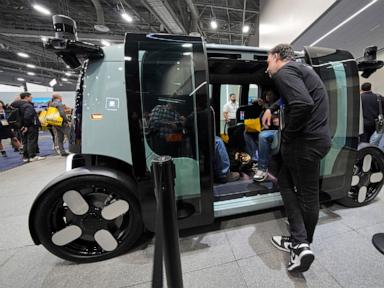
You step into a car, reach for the wheel, and find nothing. Just empty space, four inward-facing seats, and a cabin designed entirely around passengers rather than a driver.
This isn't science fiction anymore. Federal regulators just handed Amazon-owned Zoox the green light to deploy up to 2,500 purpose-built robotaxis without steering wheels or manual pedals over the next two years.
For years, autonomous vehicle companies tried a lazy shortcut. They took conventional cars—vehicles built with human drivers in mind—and strapped expensive sensor towers, lidars, and computer brains onto the roof. It worked, sort of. But it also kept safety rules tethered to a century-old design philosophy. If a car doesn't have a human driver, keeping a steering wheel around is like keeping a whip socket on the dashboard of a modern electric SUV. It is a historical artifact that outlived its purpose.
The Regulatory Shift Changing Everything
The National Highway Traffic Safety Administration granted Zoox an exemption from federal motor vehicle safety standards that normally mandate human driving controls. Jonathan Morrison, the head of the agency, pointed out the obvious logic. If a vehicle is engineered from scratch never to be operated by a human, requiring manual controls makes zero sense.
This federal pivot opens doors far beyond Amazon's subsidiary. Tesla has already built prototypes like the Cybercab without steering wheels or foot pedals. Alphabet's Waymo currently dominates the market by retrofitting traditional fleets, but purpose-built pods change the economics entirely. When you remove the steering wheel, the entire interior layout transforms.
Think about how you use a taxi or rideshare. You want to talk to friends, look at your phone, or check email. In a carriage-style robotaxi with seats facing each other, you talk face-to-face. You don't stare at the back of a plastic seat or worry about blind spots over a driver's shoulder.
What the Zoox Approval Actually Means
Let's look at the hard constraints. This isn't a free-for-all wild west rollout.
- Cap on Fleet Size: Zoox can deploy up to 2,500 vehicles annually over a two-year window.
- Commercial Charging: They can finally charge real money for rides in cities like Las Vegas and San Francisco, moving past the testing phase into actual business operations.
- Strict Oversight: The company must submit detailed incident reports covering any unexpected road stops or crashes. Remote operators must be based inside the United States, and operational maps must remain public.
Regulators hold a massive kill switch. If safety metrics slip, the exemption gets pulled. That keeps accountability high while letting innovation breathe.
Why Retrofitted Cars Are Dead Ends
If you talk to traditional automotive engineers, they will tell you that modifying an existing chassis is safer because the baseline crash structure is proven. That argument holds weight for consumer vehicles. But for commercial fleets operating in geofenced urban cores at moderate speeds, retrofitting is a compromise.
A vehicle built without driver controls eliminates entire categories of mechanical failure. There's no steering column to jam. There's no pedal box taking up floor space. Zoox vehicles move symmetrically forward and backward, eliminating traditional parallel parking friction. They slide right into tight spots because they don't need to turn around the way a standard sedan does.
Brake pedals could be next on the regulatory chopping block. Once lawmakers accept that software handles stopping duties better and faster than human reaction times, mechanical redundancies designed for panic-stricken drivers become dead weight.
The Competitive Landscape Ahead
Waymo still leads in raw operational footprint, running commercial rides across multiple major metros. They rely heavily on modified Jaguar I-Pace EVs. Alphabet's approach proved the software works.
Amazon spent roughly $1.2 billion acquiring Zoox to build a custom hardware ecosystem. They want to scale production up to 10,000 units a year at a facility near Silicon Valley. Meanwhile, Tesla approaches the market with manufacturing muscle and heavy reliance on vision-only artificial intelligence, aiming to undercut traditional transit costs entirely.
The race isn't about who can write the best mapping code anymore. It's about who can manufacture purpose-built passenger pods efficiently enough to kill urban car ownership economics. When a clean, driverless pod costs less than a subway fare per mile, urban mobility changes permanently. Watch how local transit authorities adapt over the next twenty-four months, because the hardware is finally escaping the drawing board.