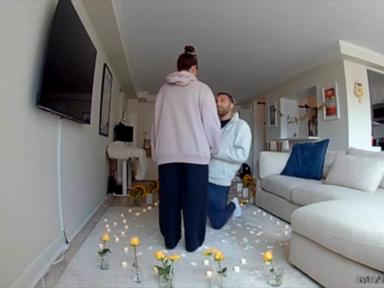
The viral internet loves a spectacle. A couple stands in a crowded public square, flash mobs materialize out of thin air, a ring appears, and the internet swoons over a three-minute video captioned "What is wrong with you?" because one partner looked mildly inconvenienced before saying yes.
Mainstream lifestyle commentators look at these viral moments and see the pinnacle of romance. They dissect the logistics, praise the execution, and treat public validation as the ultimate metric of a healthy commitment. For a more detailed analysis into this area, we suggest: this related article.
They are entirely wrong.
As a relationship counselor who has spent fifteen years watching couples dismantle their marriages in private offices, I can tell you that the high-production public proposal is rarely a sign of a bulletproof bond. More often, it is a high-stakes manifestation of insecurity, social compliance, and systemic leverage. For further details on the matter, comprehensive analysis is available at Cosmopolitan.
We need to stop celebrating the viral proposal engine. It is not romance. It is a trap.
The Illusion of Consent Under Spotlights
The standard narrative insists that a public proposal is a beautiful expression of vulnerability. The proposer is putting their heart on the line in front of strangers. It sounds brave.
It isn't brave. It is an ambush.
When you propose to someone in front of a crowd—whether it is a baseball stadium or a crowded restaurant—you are not just asking a question. You are introducing a massive panel of unappointed jurors into a private transaction. The social pressure to say "yes" in that moment is astronomical.
Psychologists refer to this as social compliance. The human brain is hardwired to avoid public shaming and collective discomfort. If a partner has doubts, expressing them in front of fifty staring strangers or a live camera feed is a social nightmare.
I have sat across from clients who admitted they only said yes during their viral proposal because they felt they had no choice without destroying the proposer's dignity on camera. They spent the next six months trying to figure out how to break off an engagement that should have never happened in the first place.
The Economy of External Validation
Why do people do it? Because we live in an era where an experience is apparently worthless unless it can be packaged, distributed, and monetized via social validation.
When a proposal is engineered for maximum algorithmic reach, the focus shifts entirely. The event ceases to be about the unique connection between two distinct human beings. Instead, it becomes a production designed to satisfy an audience.
- The True Audience: The onlookers, the followers, the commenters.
- The Collateral: The actual partner, whose genuine, complicated emotional reaction must be flattened into a marketable expression of pure joy.
If your commitment requires the applause of total strangers to feel real, your foundation is built on sand. The healthiest partnerships thrive in the dark, quiet spaces where nobody is watching. When you turn a private milestone into public entertainment, you trade intimacy for metrics.
Dismantling the Performance Premise
Let us tackle the obvious pushback. Defenders of the viral spectacle always say, "But they already talked about it! They knew the answer was yes!"
Even if explicit conversations happened beforehand, the performance changes the nature of the choice. A marriage proposal is supposed to be an authentic invitation to build a life together. When it becomes a choreographed performance, it shifts from an invitation to an execution of a script.
Imagine a scenario where a corporation announces a merger live on television before the final contracts are signed, forcing the secondary board to smile for the cameras while still reviewing the terms. We would call that corporate bullying. In romance, we call it a fairytale.
The downside to my perspective is clear: quiet, private proposals do not get millions of views. They do not get shared by media outlets. They do not give you a temporary hit of dopamine from strangers typing heart emojis in the comment section. If you forgo the spectacle, you miss out on the collective cheer.
But you gain reality.
Stop asking how to make a proposal more memorable for the internet. Start asking how to make it more honest for your partner. The most romantic thing you can do for someone is to give them a safe, private space to tell you the absolute truth about how they see their future.
Buy the ring. Skip the crowd. Put the camera away.
Ask the question in an empty room where a "no" is safe, and a "yes" actually means something.