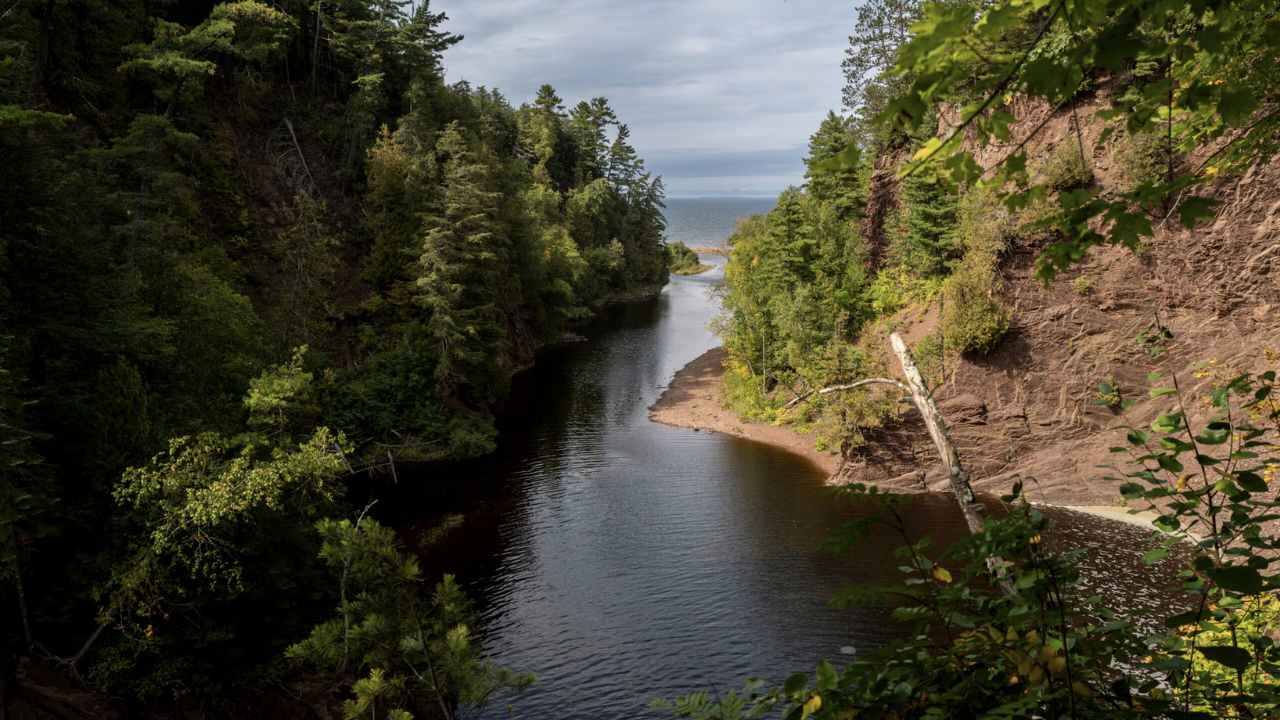
Announcing 1,700 protected acres on Lake Superior feels great. It makes for a tidy press release. It gives politicians a photo op near the water and lets conservation groups count another win on a spreadsheet.
Here is the problem. Acres do not hold back runoff.
Whenever a headline celebrates Wisconsin protecting over 1,700 Lake Superior acres and restoring wetlands and habitat, the lazy consensus follows right behind it. People assume that drawing a line on a map and planting native sedges equals ecological salvation. That assumption is cheap, comforting, and largely incomplete.
You cannot fence off a shoreline and pretend the rest of the drainage basin does not exist. Lake Superior is the largest freshwater lake by surface area in the world, holding roughly 10 percent of the planet's surface fresh water. Its cold, oligotrophic waters are uniquely sensitive to sediment, nutrient shifts, warming temperatures, and altered hydrology. Protecting a parcel along the coast or restoring a pocket wetland matters, yet coastal parcels sit at the receiving end of everything happening upstream.
If we treat acreage totals as the primary metric of success, we miss the real fight. The real fight is over water movement, soil stability, upstream land use, long-term maintenance, and ecological function.
The Lazy Consensus Around Acreage and Restoration
Most coverage of land conservation relies on a predictable formula. A state agency, land trust, or partner coalition secures a parcel. A headline touts the acreage. A few quotes praise wildlife habitat and clean water. Everyone claps and moves on.
I have watched conservation initiatives pour millions of dollars into land acquisition and physical site work only to watch adjacent land use undermine the gains within a decade. Buying land is often the easiest part of the equation. Keeping it functioning as intended—especially along dynamic Great Lakes shorelines—is where the real work starts.
What "Restored" Actually Means on the Ground
In public announcements, "restored" often gets treated like flipping a switch. You regrade a ditch, remove invasive reed canary grass, plant native species, and check the box.
Ecology does not move on a press-release calendar. Wetland restoration is a multi-year biological negotiation. Soil seed banks contain decades of invasive propagules. Beavers move in and redraw water tables overnight. Severe storms rip out newly planted vegetation before roots can anchor into clay or sand. Calling a site "restored" the moment contractors pack up their excavators confuses initial intervention with self-sustaining function.
Why Shoreline Protection Alone Leaves Gaps
Lake Superior's south shore features steep bluffs, red clay soils prone to slumping, sandy spits, and dynamic river mouths. When intense rainfall hits unprotected upslope areas, water gathers speed and carries fine sediment straight toward the lake.
A protected coastal tract or restored wetland can slow water and trap some sediment, acting like a sponge or a filter. Yet every sponge has a limit. When upstream development, poorly maintained logging roads, failing culverts, or agricultural runoff overload a system, a single protected parcel cannot absorb the entire burden of the watershed.
Precision Matters: Protection, Restoration, and Habitat
People use conservation terms loosely, and sloppy language leads to sloppy expectations. Let us separate three concepts that headlines routinely blur together.
Land protection means securing legal or fee-simple control over a parcel—such as state ownership, public access designation, or a conservation easement—to restrict destructive development or fragmentation. Protection stops certain bad outcomes from happening on that specific piece of ground. It does not automatically heal past damage.
Wetland restoration means actively returning hydrology, soil structure, and native plant communities to a degraded wetland so it can perform ecological functions again—such as storing floodwater, filtering nutrients, and supporting aquatic life. Restoration fixes broken mechanics. It requires ongoing monitoring and adaptive management.
Habitat is not just a pretty view of trees and water. Habitat is the specific combination of food, cover, water temperature, connectivity, and breeding conditions that a given species needs to survive across its life cycle. For Lake Superior fish and wildlife—from brook trout and coaster brook trout to migratory waterfowl and shorebirds—connected wetlands, cold tributary inflows, and undisturbed coastal corridors do far more than isolated patches.
Asking the Wrong Question About Conservation Wins
When readers search for news about Wisconsin protecting Lake Superior land and restoring wetlands, they usually ask two questions: How much land was saved? and Is that enough to protect the lake?
The first question is easy to answer with a number. The second question exposes why the first one is incomplete.
Acreage measures boundary lines. Lake health depends on processes. A 200-acre intact coastal wetland connected to a healthy stream corridor and buffered by forested upland can outperform a larger, fragmented parcel hemmed in by erosion or altered drainage. Conversely, a large block of land with failing drainage crossings or chronic upstream sediment loading still faces steep ecological headwinds.
Imagine a scenario where a conservation group protects 1,700 acres along a Great Lakes shoreline, but two miles inland a series of undersized road culverts blows out during a major rainstorm. Tons of sediment surge down the ravine, bury spawning gravel, and choke newly planted wetland vegetation. The map still shows 1,700 protected acres. The ecology on the ground just took a serious hit.
"People Also Ask" — Dismantled and Answered Honestly
Why are wetlands so important to Lake Superior?
Coastal and riparian wetlands act as buffers. They slow floodwaters, trap sediment before it reaches open water, cycle nutrients, and provide nursery and foraging habitat for fish, amphibians, and birds. At the same time, they are not magic erasers. If you dump relentless pollution or extreme runoff into a small wetland, you can overwhelm and degrade the wetland itself.
Does protecting more land automatically improve water quality?
Not automatically. Protecting land prevents future conversion or fragmentation, which is vital. Water quality improves when land protection pairs with erosion control, proper road and culvert engineering, wetland hydrology recovery, and upstream land management. Without those pieces, protected land can still receive dirty water from above.
How long does wetland restoration take to work?
Basic hydrologic changes can happen right away once ditches are plugged or contours are reshaped. Full ecological recovery—where native plant communities stabilize, invasive species are kept in check, and wildlife communities mature—often takes years of follow-up work, not a single growing season.
What the Heavy Hitters in Great Lakes Science Emphasize
Researchers and agencies focused on the Great Lakes—including the U.S. Geological Survey, the U.S. Environmental Protection Agency, university limnologists and fisheries biologists, and state natural resource teams—consistently point to connectivity and watershed scale as decisive factors.
Decades of Great Lakes ecological research show that nearshore zones and coastal wetlands link terrestrial landscapes with open-water food webs. Nutrient dynamics, shoreline erosion, invasive species, and climate-driven extreme precipitation events interact across entire basins rather than staying neatly inside property lines.
When scientists evaluate coastal health, they look closely at watershed land cover, stream-wetland connectivity, sediment transport, and temperature regimes—not just total acres under public or conservation ownership.
The Honest Downside of Focusing on Watershed Mechanics First
If you push for watershed-scale thinking, connectivity, and long-term stewardship instead of celebrating headline acreage numbers, you run into real trade-offs. I will not pretend this approach is convenient.
First, it is slower and messier. Buying a willing seller's parcel can be straightforward once funding lines up. Fixing upstream culverts, coordinating across multiple property owners, securing multi-year maintenance budgets, and tracking ecological recovery over a decade takes patience and political stamina.
Second, it is harder to market. "1,700 acres protected" fits on a bumper sticker and a news ticker. "Improved hydrologic connectivity and reduced fine-sediment transport across three sub-watersheds over ten years" does not fit on a sign. Yet the second one tells you far more about whether fish and wetlands are actually thriving.
Third, waiting for perfection can mean losing irreplaceable land. Coastal real estate and ecologically valuable parcels do not always wait around while planners study every upstream variable. Strategic land acquisition matters precisely because once key coastal land is subdivided or hardened, getting it back becomes vastly more expensive or impossible.
The mistake is not buying land. The mistake is stopping at the property line.
Actionable Steps That Actually Move the Needle
If you care about Lake Superior's wetlands, fisheries, and shorelines—whether you are a landowner, local official, angler, paddler, or advocate—skip the surface-level applause and focus on what makes conservation stick.
- Audit water flow, not just borders. Look at where rainwater goes after heavy storms. Check ditches, driveways, logging trails, and culverts near streams and wetlands. Small drainage bottlenecks often cause big erosion problems.
- Fund stewardship alongside acquisition. Every land deal or restoration project needs money for year three, year five, and year ten. Invasive plant control, fence or trail maintenance, and monitoring keep initial investments alive.
- Prioritize connections over isolated patches. Favor projects that link coastal wetlands to intact river corridors and forested uplands. Wildlife and water both depend on pathways, not islands.
- Support infrastructure upgrades upstream. Replacing undersized culverts and stabilizing eroding road crossings protects downstream wetlands and cold-water streams far better than shoreline signage ever could.
- Measure ecological outcomes over time. Ask how native vegetation is establishing, whether erosion is slowing, and how aquatic habitat is responding—not just how many acres changed hands.
Protect the acres. Then do the harder work that keeps the water clean.