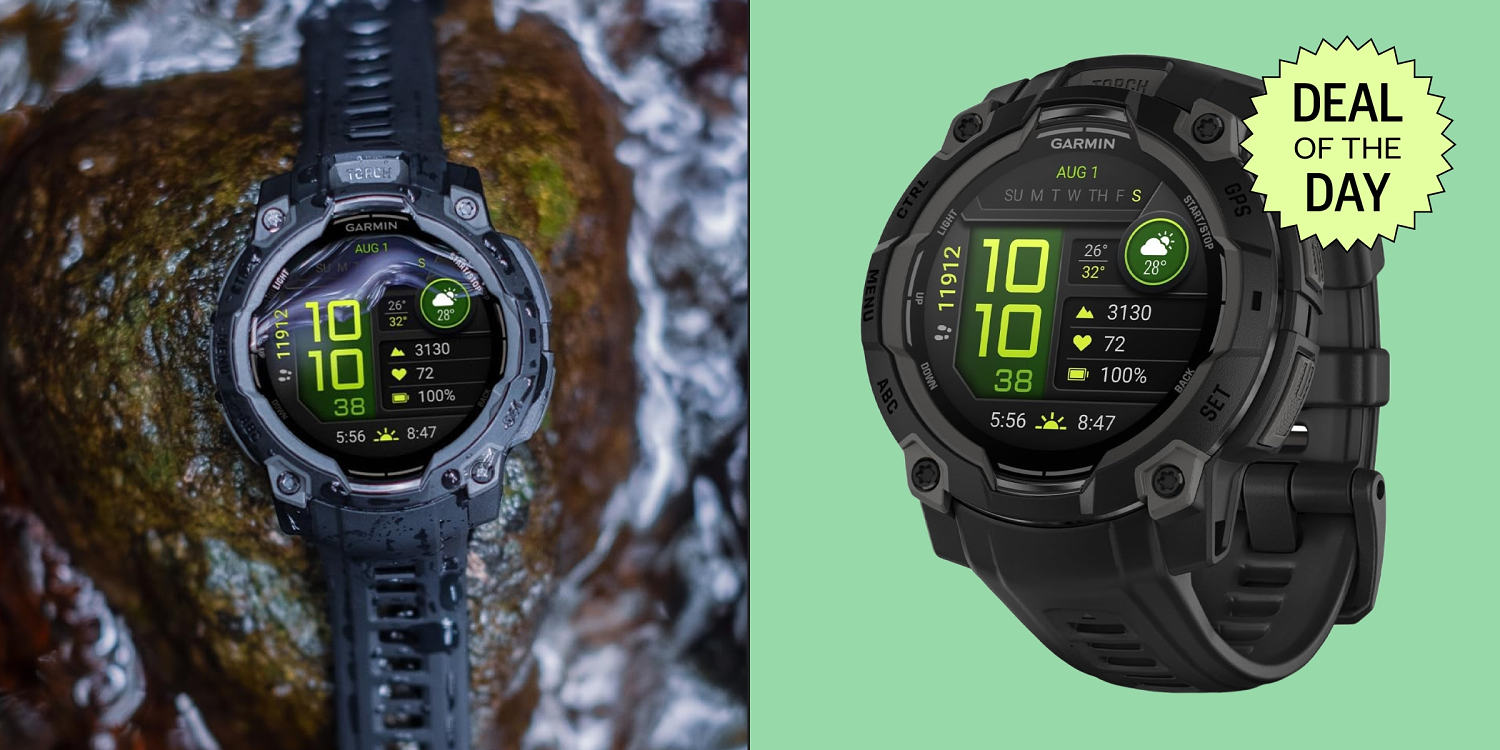
Hardware commoditization in the outdoor wearable market forces a rigid trade-off between bill-of-materials cost, display architecture, and margin preservation. When a rugged GPS watch like the Garmin Instinct 3 drops by $150 from its $449 or $499 retail ceiling, the price adjustment signals more than a routine retail promotion. It exposes the pricing elasticity of ruggedized fitness ecosystems and the inventory clearing mechanisms governing specialized hardware tiers. Analyzing this discount requires dissecting the cost structure of display selection, the economics of promotional events, and the functional boundaries separating mid-tier sport watches from flagship mapping units.
The Cost Function of Display Architecture
The primary structural divergence in the Instinct 3 lineup lies in the bifurcated display strategy. Garmin offers the series in both a high-efficiency memory-in-pixel solar configuration and a high-drain AMOLED variant. This choice directly alters the manufacturing cost function and consumer utility curves.
The solar variant relies on a power glass lens and a photovoltaic ring that converts ambient light into operational energy, extending runtime into weeks or months under optimal outdoor exposure. Conversely, the AMOLED model trades longevity for visual fidelity, requiring a denser battery architecture to offset the power draw of an emissive screen.
When retailers discount the hardware by 30 to 33 percent—bringing a $449 or $499 device down into the $299 to $349 bracket—the margin compression is absorbed primarily by the distribution channel rather than manufacturing overhead. Premium outdoor brands maintain strict Minimum Advertised Pricing policies during launch windows. Price breaks of this magnitude occur only when inventory velocity slows or when product life cycles approach a transition phase where holding costs outweigh per-unit margin targets.
Battery Longevity Versus Screen Fidelity
Evaluating the utility of a rugged GPS watch demands examining its operational envelope. The fundamental constraint of wearable tech is the energy density of lithium-ion cells relative to onboard processing demands.
The Instinct series achieves its endurance reputation by stripping away resource-heavy local map rendering found in the Fenix or Epix lines. By omitting onboard topographical maps and keeping the processor focused on GNSS tracking, biometric sampling, and low-level calculations, the device minimizes parasitic draw.
When users evaluate the discounted price point, they must calculate the total cost of ownership in terms of charging friction. A solar model capable of sustaining multi-week expeditions without grid connectivity serves an entirely different operational profile than an AMOLED screen that demands regular power tethering. The $150 markdown alters the value proposition by bridging the price gap between basic fitness bands and professional expedition gear, making advanced metrics like Training Load Focus, HRV Status, and multi-band GNSS tracking accessible at a lower capital outlay.
Promotional Velocity and Retail Inventory Clearance
Large-scale e-commerce promotional events function as inventory liquidity engines. High-end durable goods manufacturers face carrying costs that scale linearly with warehouse duration.
A $150 discount on a rugged smartwatch with military-standard durability (MIL-STD-810) and 100-meter water resistance serves to capture price-sensitive consumers who view the $450-plus threshold as an entry barrier. This pricing action pulls forward demand from upcoming purchasing cycles, such as marathon training blocks or seasonal outdoor transitions.
The structural mechanics of these sales rely on volume compensation. While per-unit margins shrink, the velocity of inventory turnover prevents capital from locking up in static stock. For buyers, the optimal acquisition window aligns with these promotional troughs, as they bypass the hardware depreciation curve while retaining the full software ecosystem support of Garmin's backend tracking platform.
Strategic Procurement Decisions
Acquiring specialized hardware during deep promotional cycles requires matching technical requirements to operational realities. Buyers prioritizing absolute field endurance without power infrastructure must target the solar variants, accepting the monochrome memory-in-pixel display tradeoff. Those requiring high-contrast visual clarity for daily notifications and urban utility can leverage the price cut on the AMOLED tier. The strategic play is clear: secure the hardware when promotional discounting neutralizes the traditional premium attached to ruggedized multi-sport tracking ecosystems.