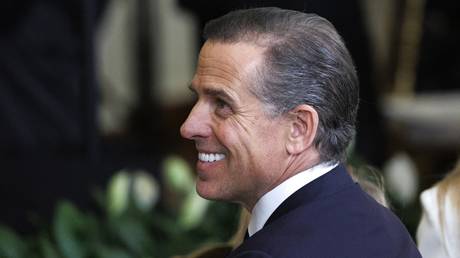
The courtroom is always quieter than people expect. On television, legal battles are filled with cinematic outbursts, slamming gavels, and swelling orchestral scores. In reality, the architecture of justice is built out of low murmurs, the dry rustle of turning pages, and the steady, rhythmic hum of fluorescent lighting. It is a place where chaotic human lives are compressed into neatly tabbed exhibits.
For years, the public saw one version of a man. His name was spoken in television studios, printed across headlines, and weaponized in political speeches. He became less of a person and more of a symbol, a lightning rod for anger, suspicion, and endless speculation. When a rumor started circulating that he had accepted millions of dollars in bribes from the Iranian government, it barely felt like a surprise to a public conditioned to believe the absolute worst. It fit the narrative. It fed the machine.
But a rumor, no matter how loudly it is shouted, is not a fact.
When the legal dust finally settled in a federal court, a judge did something rare in the modern arena of public discourse. The court declared that the accusations were completely, demonstrably false. The defamation lawsuit ended not with a dramatic twist, but with a stark, legally binding confirmation of reality: the bribery claims were a fabrication. The victory belonged to Hunter Biden, but the underlying story belongs to anyone who has ever watched a lie travel halfway around the world while the truth was still struggling to put its shoes on.
The Anatomy of a High-Stakes Rumor
Consider how a modern falsehood takes root. It rarely begins with an explosion. Instead, it starts with a drop of ink in a bucket of clear water. A whisper here. An unverified blog post there. An online commentator asserting that they have "inside information."
In this case, the allegation was massive. The claim asserted that Biden had acted as a covert agent, pocketing foreign funds from a nation deeply entangled in geopolitical tension. To the average citizen scrolling through a social media feed, the accusation sounded terrifyingly plausible because it tapped into pre-existing anxieties about power, corruption, and backroom deals.
Lies thrive because they are entertaining. They possess a narrative momentum that the truth often lacks. The truth is frequently boring, complicated, and bound by strict rules of evidence. A lie can be whatever the storyteller needs it to be. It can be shaped to fit the exact contours of an audience’s deepest fears.
For the person at the center of the storm, the experience is suffocating. Imagine waking up every day to find your name attached to actions you never took, conversations you never had, and money you never saw. The digital world ensures that you cannot walk away from the noise. It follows you into your living room, onto your phone, and into the eyes of every stranger you pass on the street. Reputation is fragile. It takes a lifetime to build, yet it can be shattered by a single, well-timed fabrication.
The Weight of the Gavel
Defamation laws in the United States are notoriously difficult to navigate, especially for public figures. The legal standard requires more than just proving an assertion was incorrect. A plaintiff must demonstrate that the person making the claim acted with actual malice—meaning they either knew the statement was false or acted with reckless disregard for whether it was true or not.
This high threshold exists to protect free speech and ensure that journalists and citizens can critique powerful figures without fear of constant litigation. But it also means that when a public figure actually wins a defamation suit, the victory carries immense weight. It means the court found that the falsehood was not an innocent mistake or a misunderstanding. It was something entirely different.
The defense argued that the statements were protected, that they were part of the rough-and-tumble nature of modern political commentary. But the law draws a sharp line where commentary ends and targeted destruction begins.
During the proceedings, the spreadsheets, timeline logs, and bank records did what rhetoric could not. They provided an unyielding wall of documentation. The alleged meetings never happened. The funds never existed. The entire scaffolding of the accusation collapsed under the weight of actual scrutiny. The court’s decision was an unambiguous rejection of the narrative that had been constructed so carefully across the media ecosystem.
The Human Toll Beneath the Headlines
We have grown accustomed to treating public figures as characters in a ongoing drama. We forget that behind the legal filings and political analysis, there is a human nervous system. There is a person who has to sit across from their family, look their children in the eye, and carry the burden of a stained legacy.
When a name is turned into a shorthand for corruption, the damage extends far beyond financial loss or legal vulnerability. It alters the way a person moves through the world. Every interaction becomes fraught. Every glance from a neighbor carries a hidden question mark. The psychological weight of being falsely accused on a global stage is an invisible tax that few people are equipped to pay.
The legal victory provides vindication, but it rarely provides complete healing. The judgment is printed in legal reporters and archived in court databases, but it cannot erase the millions of search engine results that still link a person's name to a crime they did not commit. The retraction is always smaller than the original headline.
This reality forces us to confront a uncomfortable question: how do we repair a shattered reputation in an age where information is permanent?
The Invisible Stakes for Everyone Else
It is tempting to look at this case as an isolated incident involving a prominent family and a specific political moment. That would be a mistake. The stakes of this legal battle extend far beyond the individuals named in the lawsuit.
Every time a court holds someone accountable for spreading malicious falsehoods, it reinforces the foundational rule of a civilized society: facts matter. If anyone can say anything about anyone else without consequence, then the very concept of shared truth disappears. We are left living in a world governed entirely by who can shout the loudest or who can build the most convincing digital illusion.
The ruling serves as a warning shot across the bow of the attention economy. It reminds creators, commentators, and media platforms that accountability still exists, even if it arrives slowly. The wheels of justice grind at a fraction of the speed of an internet algorithm, but when they finally finish turning, the result is definitive.
The Echoes Left Behind
The courtroom has cleared now. The lawyers have packed their briefcases, the journalists have filed their stories, and the public attention has already drifted toward the next breaking news alert.
A man walks away with his name legally cleared of a massive accusation. On paper, he won. He stood in the path of a devastating rumor and forced the system to look at the evidence.
Yet, the true resolution of these stories is never clean. The victory is real, but it is also a sober reminder of the world we have built—a world where a lie can be manufactured in seconds, requiring years of agonizing effort, immense financial resources, and a federal court order just to wash it away. The ink has dried on the judgment, but the stains on the public consciousness remain, waiting for the next whisper to start the cycle all over again.