The shipping crate arrived quietly. That is how things usually happen in government procurement. No fanfare. No marching bands. Just a line item buried in a federal ledger, waiting for someone to care enough to read the fine print.
Six thousand.
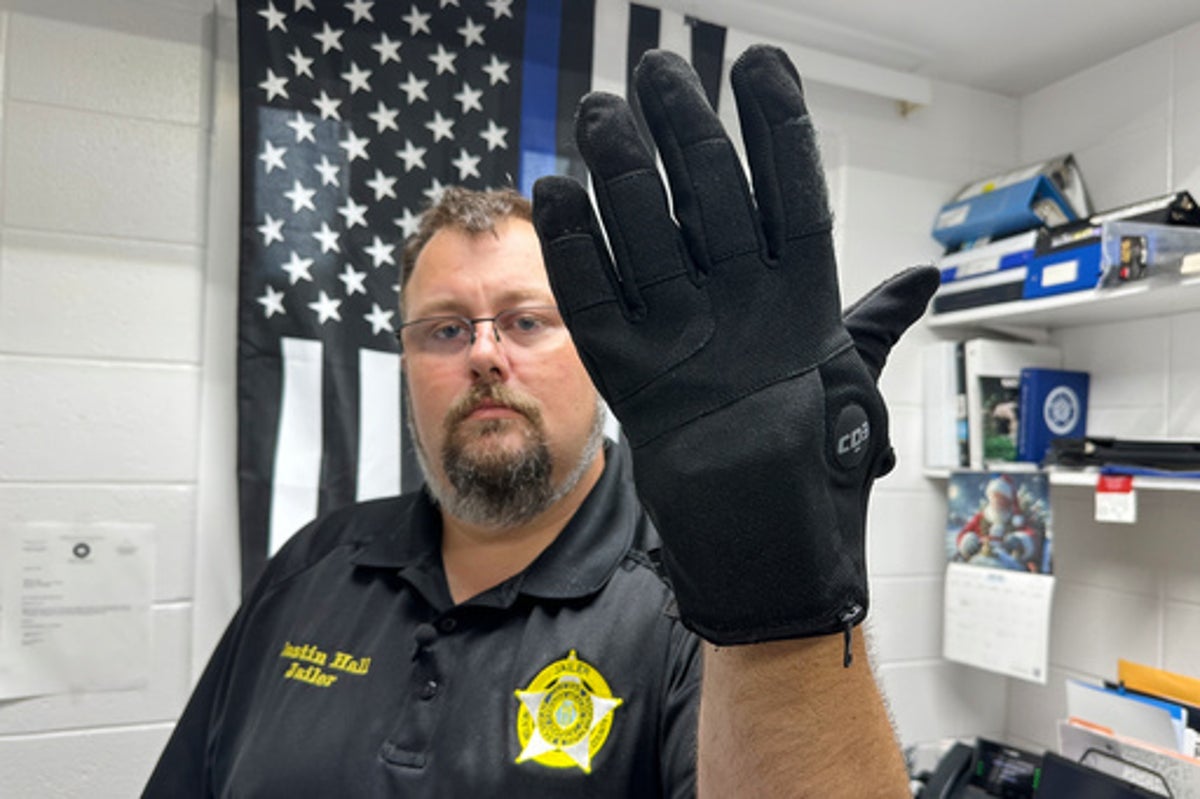
Say the number out loud. Six thousand pairs of hands. Six thousand human beings wearing high-voltage compliance equipment designed to deliver a jolt straight through the skin. U.S. Immigration and Customs Enforcement signed off on a sixteen-point-seven-million-dollar deal for electric shock gloves.
Backlash followed, naturally. Human rights advocates shouted into the void. Op-eds flickered across screens for twenty-four hours before the news cycle swallowed them whole. But the paperwork did not care about outrage. The contract cleared. The gear was ordered. And somewhere in a quiet warehouse, crates stacked neatly against the drywall hold an instrument of physical pain, ready to be deployed in the name of administrative order.
We have grown numb to numbers. Millions of dollars. Thousands of units. They roll off the tongue like weather forecasts or stock tickers, abstract and weightless. But numbers are just human stories stripped of their blood.
To understand what sixteen point seven million dollars actually buys, you have to look past the cold arithmetic of the federal budget. You have to strip away the acronyms. ICE. DHS. Compliance. Restraint.
Imagine a room. It is windowless, smelling faintly of industrial floor wax and stale coffee. Inside stands a man who has traveled a thousand miles with nothing in his pockets except the memory of a home he will never see again. Across from him stands an officer whose shift started eight hours ago and will last another four. Both of them are tired. Both of them are afraid, though neither will admit it.
Now slip a pair of shock-delivery gloves onto the officer's hands.
The mechanism is simple. A button. A current. A sudden, blinding arc of agony designed to bypass reason and seize control of the nervous system. Proponents call it a tool for safety. A non-lethal alternative. A way to maintain control when the situation threatens to fracture.
Safety.
That is the word they use. It wraps around the throat of the debate like a silk scarf, choking off any real inquiry. If something keeps an officer safe, how can you argue against it? Who wants the people wearing the uniform to go home with bruises?
Yet safety, when distributed unevenly, becomes a weapon of absolute compliance.
History is littered with the ghosts of tools designed for order that curdled into instruments of terror. We invent things to make difficult tasks easier. We build better locks, sharper fences, faster mechanisms of control. Eventually, the tool begins to dictate the policy. When you put a high-voltage compliance device on an officer's hands, you do not just change how they handle resistance. You change how they perceive it. Every hesitation looks like a threat. Every tremor looks like defiance. Every plea for mercy sounds like an invitation to press the button.
Consider what happens next.
The backlash was swift, but it was predictable. Activists pointed to international treaties against torture. Legal scholars questioned the constitutionality of deploying pain compliance technology inside civil detention facilities where people are held without criminal charges. Civil immigration enforcement is, after all, an administrative matter, not a criminal one. People awaiting deportation hearings are not convicts serving time. They are litigants in a bureaucratic backlog.
At least, that is what the theory says.
The reality on the ground smells of panic and sweat. It is a system built on administrative violence—slow, grinding, and legal. Adding thousands of shock gloves to that ecosystem does not fix the friction. It electrifies it.
There is an old, bitter truth about power: it always seeks to make itself effortless. Physical restraint is exhausting. Pinning someone to the floor takes muscle, sweat, and time. It leaves bruises on both bodies. It requires looking your fellow human being in the eye while you overpower them.
A button does not require eye contact.
A button removes the friction of empathy. You do not have to feel the resistance of a human ribcage or hear the ragged breath in a throat when you can simply press a thumb against a contact pad and watch the nervous system short-circuit itself into submission. Technology promises distance. It promises a clean separation between the hand that inflicts the pain and the body that absorbs it.
That distance is dangerous. It is where accountability goes to die.
When the news broke about the six-thousand-unit purchase, the agency offered the standard defense. Operational necessity. Officer protection. Standard protocol. They spoke in the dead, flat language of bureaucracy, where human skin is just an interface and pain is just a variable to be managed.
They did not talk about the sound of a body hitting a concrete floor after the current cuts out. They did not talk about the smell of ozone and fear in a holding cell at three in the morning. They did not talk about the erosion of institutional soul that happens every time a government decides that subduing its charges with electricity is easier than talking to them.
We have seen this script before. We watch it play out in prisons, in border zones, in the dark corners of state power where oversight is weak and the public is distracted. A contract is signed. A new technology is adopted. A line is crossed. And once that line is crossed, it is almost never uncrossed. The gloves will arrive. They will be unboxed. They will be worn on belts, clipped to duty gear, resting quietly against hips during routine processing.
They will wait.
Tools have a way of demanding to be used. Once you buy six thousand pairs of electric shock gloves, you have to justify the expense. You have to train people how to use them. You have to write policies for when they are permissible. And once those policies exist, the threshold for deployment invariably shrinks. What starts as an emergency measure becomes a standard operating procedure. What starts as a last resort becomes a convenient first option.
The sixteen point seven million dollars could have gone toward better training, mental health resources, translation services, or reducing the labyrinthine delays of the immigration courts themselves. Those solutions are messy. They require patience. They require a willingness to look at human beings as something other than logistical problems to be managed.
Electricity is faster.
The crates will sit in their warehouses. The paperwork will be filed in triplicate. The officers will pull their shifts, hands encased in reinforced fabric, wired for instantaneous dominion.
Outside, the world moves on, distracted by the next crisis, the next headline, the next manufactured outrage that burns bright and burns out before dawn. But in the quiet spaces between the administrative machinery and the human lives caught in its gears, the current is always live.
All it takes is the pressure of a thumb.