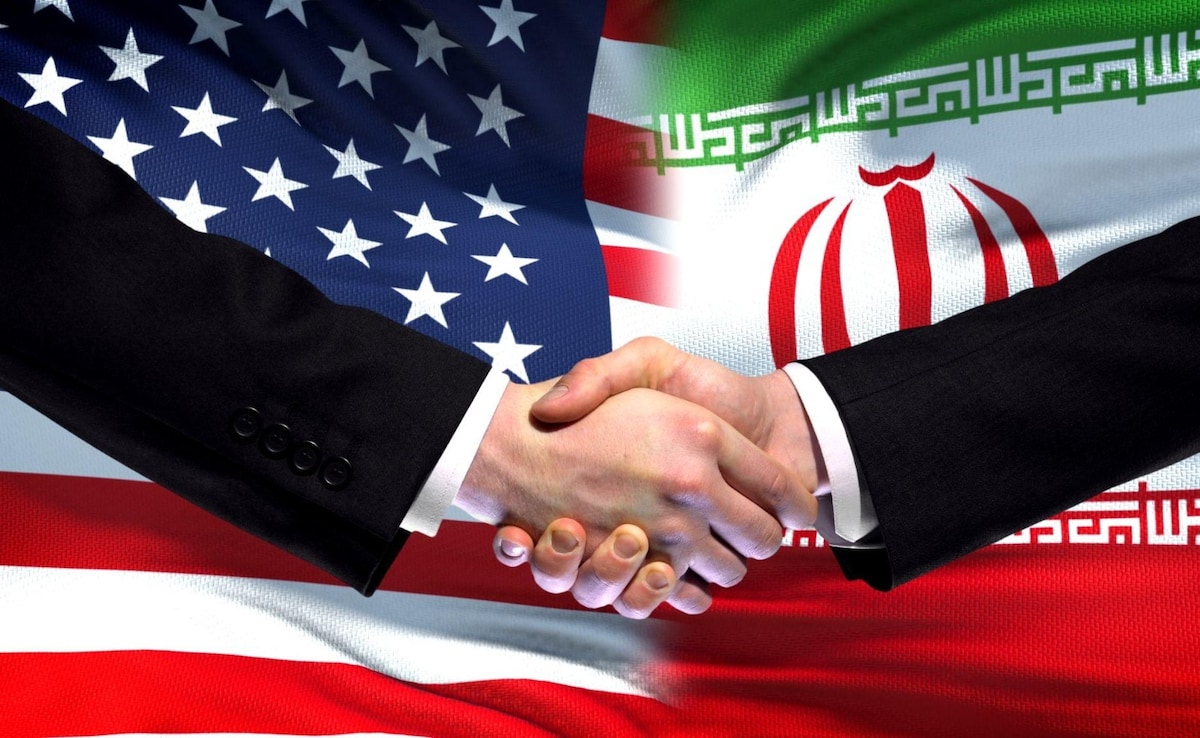
The ink on a peace treaty weighs nothing. Yet, its gravity can hold back the kinetic fury of a continent.
In the climate-controlled briefing rooms of Geneva and New York, diplomats trade text in a language stripped of all human blood. They speak of enrichments, centrifuges, regional proxies, and maritime corridors. But five thousand miles away, in a cramped living room in Bandar Abbas, the reality of those words transforms. A mother watches the horizon from her window, listening not to the television news, but to the specific, terrifying pitch of the wind. To her, a breakdown in talks is not a diplomatic setback. It is the sound of an air-raid siren. It is the sudden, catastrophic absence of insulin at the local pharmacy.
We often view geopolitical conflict as a grand chess game played by giants. It is a comforting illusion. Chess implies rules, logic, and a clean board. War is a shattered room where everyone is bleeding and the floor is on fire. To end a conflict of this magnitude requires more than a ceasefire; it demands a meticulous undoing of a decades-old knot.
To understand what it actually takes to silence the guns, we have to look past the political theater and examine the raw, uncomfortable friction of compromise.
The Arithmetic of Trust
Imagine a negotiation where both sides are holding a live grenade, and each insists the other must drop their pin first. That is the fundamental deadlock of the nuclear question.
For decades, the central pillar of tension has been the centrifuges spinning deep beneath the Iranian mountains. One side sees them as a sovereign right, a source of national pride, and a guarantee of energy independence. The other side sees them as a ticking clock counting down to a regional arms race.
Peace cannot breathe until both sides agree on a number.
This is not a theoretical debate. It comes down to verifiable math. A sustainable agreement requires Iran to cap its uranium enrichment at a strict civilian threshold—typically around 3.67 percent. It requires the dismantling of advanced IR-6 centrifuges and the pouring of concrete into the core of heavy-water reactors.
But a restriction on paper is useless without eyes on the ground.
This introduces the heaviest lift of any peace process: intrusive, unannounced inspections. Inspectors from the International Atomic Energy Agency (IAEA) must have total, unrestricted access to every facility, from the sprawling complexes of Natanz to the shadow sites hidden in the desert. For a nation fiercely protective of its sovereignty, allowing foreign inspectors to scan their most classified facilities feels like an act of submission. For the opposing coalition, anything less feels like a betrayal of their own security.
Consider the psychological weight of this demand. It requires a nation to unlock its doors to its adversaries while those adversaries keep their own arsenals hidden behind closed doors. It is an asymmetric sacrifice, and it is the first major hurdle that must be cleared.
The Economy of a Lifeline
War is expensive, but peace is a complex financial restructuring.
Sanctions do not just target governments. They target the ordinary clerk trying to buy bread. They target the small business owner whose supply chain vanished overnight. Decades of economic isolation have choked the Iranian economy, turning daily survival into an exercise in resilience. Inflation is not a statistic here; it is the shrinking size of a family’s dinner table.
Therefore, the second non-negotiable pillar of an end to the conflict is the immediate, structured roll-back of economic sanctions.
This cannot be a vague promise of future relief. It requires the unlocking of frozen assets in foreign banks—billions of dollars tied up in international escrow accounts. It means restoring access to the SWIFT banking network, allowing the country to rejoin the global financial nervous system. Most critically, it means the lifting of secondary sanctions on oil exports, allowing tankers to move freely through the Strait of Hormuz without the threat of seizure or financial penalties.
But the machinery of global finance moves slowly. A bank in Frankfurt or Tokyo will not resume business with Tehran just because a document was signed in Europe. They require legal certainty. They need guarantees that the sanctions will not snap back into place if a political faction shifts power in Washington or London.
The transaction must be reciprocal. Oil must flow out, and capital must flow in, but it must happen in lockstep with the dismantling of military infrastructure. If one side blinks, the entire apparatus collapses.
The Ghost Soldiers
The hardest part of ending a war is dealing with the fights happening in someone else’s backyard.
Even if the nuclear centrifuges stop spinning and the oil begins to flow, the silence will remain fragile as long as shadow wars continue across the region. This is the issue of regional influence, often referred to in diplomatic circles as "strategic depth" or "proxy networks."
For years, influence has been maintained through a complex web of allied militias and political factions stretching across Lebanon, Yemen, Syria, and Iraq. To the architects of Iranian foreign policy, these networks are a vital defensive shield, a way to ensure that any future war is fought far from their own borders. To their neighbors, these same networks are an existential threat, an ongoing campaign of destabilization.
A true peace requires a fundamental rewriting of these relationships. It demands an agreement on regional non-interference.
This means the halting of advanced weaponry transfers—missiles, drones, and precision-guided munitions—to non-state actors. It means allowing fractured nations like Yemen and Syria to rebuild without external manipulation.
But how do you ask a nation to voluntarily dismantle its external defense perimeter? You cannot do it through threats alone. It requires a regional security architecture that guarantees everyone’s safety. It requires rivals who have not spoken in generations to sit across a table and recognize that their mutual survival depends on shared stability.
The Internal Verdict
The final, and perhaps most volatile, obstacle to peace does not exist at the negotiating table. It exists within the domestic politics of the nations involved.
No government operates in a vacuum. Every diplomat in a sharp suit answers to an audience back home that is angry, scarred, and deeply suspicious of compromise.
Within Iran, there is a powerful hardline establishment that views any negotiation with the West as a trap. They point to past agreements that were signed and subsequently torn up by changing administrations abroad. They argue that giving up strategic leverage is a form of slow suicide. For them, resistance is not just a strategy; it is an identity.
Conversely, in the capitals of the opposing coalition, any deal that leaves even a fraction of Iran's regional influence intact is labeled as appeasement. Politicians face fierce pressure from constituencies that demand total capitulation, nothing less.
The negotiators are caught in a vise. To win a concession at the international table is to risk being branded a traitor at home.
This is where the human element of statesmanship is tested most severely. A leader must have the political courage to tell their people that a imperfect peace is better than a perfect war. They must convince a skeptical public that security is not a zero-sum game—that for one side to feel safe, the other side must feel safe too.
The Cost of the Alternative
We look at these conditions—nuclear compliance, verifiable inspections, systemic sanctions relief, regional non-aggression, and domestic political survival—and the mountain seems too high to climb. It is easy to succumb to cynicism. It is easy to assume that some conflicts are simply permanent.
But permanence is a luxury of the uninvolved.
Step away from the geopolitical calculations and return to the coast of the Persian Gulf. Think of the fishermen whose boats are restricted by naval blockades. Think of the students whose futures are paused by a currency in freefall. Think of the soldiers on both sides of the line, young men and women staring through night-vision optics, waiting for a command that will alter their lives forever.
The alternative to a difficult, frustrating, politically dangerous agreement is not a status quo. It is an escalation that eventually breaks bounds. It is a wider war that consumes infrastructure, devastates economies, and leaves a generation buried beneath the rubble.
When the statesmen finally sit down to draft the terms that will end this confrontation, they will not just be signing a contract between governments. They will be deciding whether the people of the region are allowed to build a life that outlasts the morning news cycle.
The signatures on that paper may be small, but the space they create is wide enough for an entire region to finally draw a breath.