The water in the canals does not lie. It laps against the crumbling Istrian stone of foundations laid centuries ago, leaving a dark, wet mark that tracks the rising tide. But these days, the residents of Venice measure the drowning of their city not just in inches of water, but in the crushing weight of footsteps.
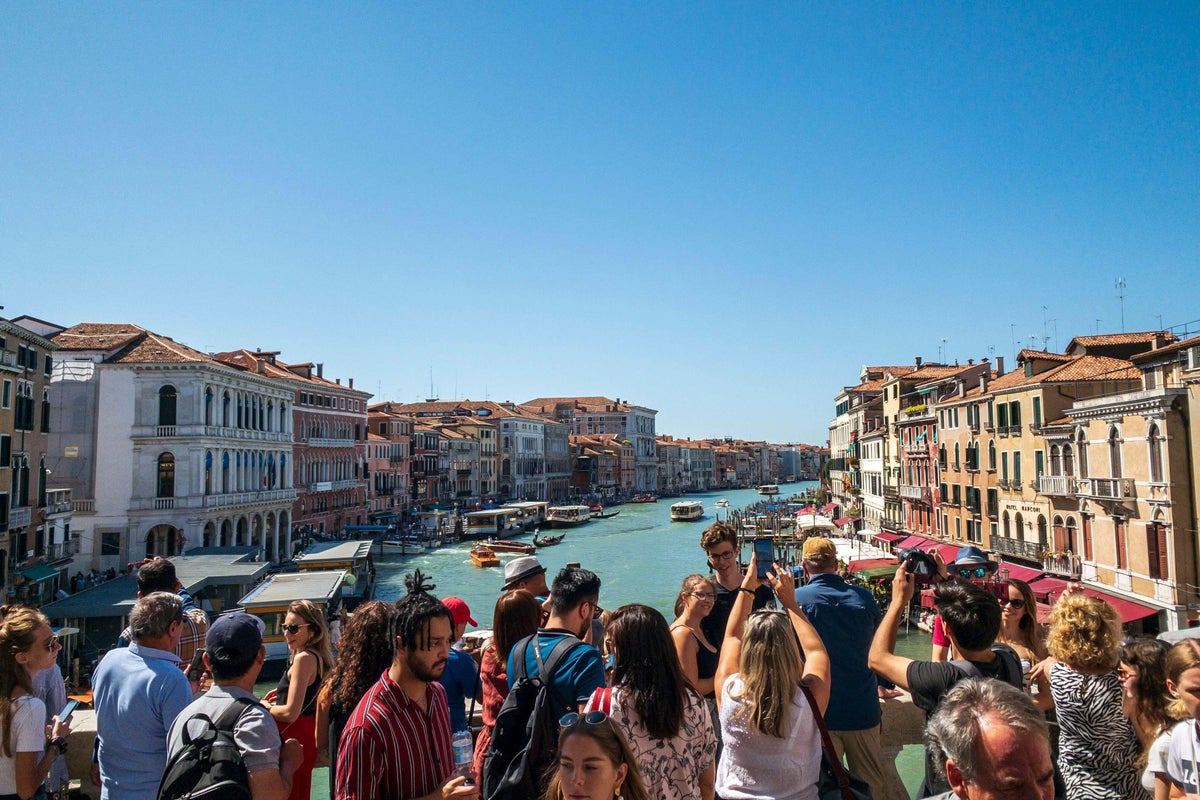
Imagine standing on the Rialto Bridge at mid-morning. The air smells of espresso, damp wood, and saltwater. Then, the train arrives at Santa Lucia station. Within minutes, a human wave crests. It flows down the narrow calli, spilling into the campos, packing the walkways until the ancient stones disappear entirely beneath a sea of selfie sticks, matching tour hats, and rolling suitcases. Building on this idea, you can find more in: How to avoid fees when spending abroad without losing your mind.
For decades, this city was a living, breathing community. Today, it feels more like an endangered theme park where the locals are merely background actors.
Now, the city council is preparing to turn the dial on a radical experiment to claw back control. Under new dynamic pricing proposals, the cost for a day tripper to enter Venice could skyrocket to €50. It is a desperate attempt to regulate human flow using the cold, hard logic of the market. Observers at The Points Guy have shared their thoughts on this matter.
But can a price tag save a soul?
The Two Venices
To understand why a city would charge you just to walk its streets, you have to understand the invisible war being fought on its bridges.
There are two distinct groups of people here. First, there are the residents—the shopkeepers, the gondoliers, the elderly women pulling market carts up and down endless flights of stairs. Their numbers are cratering. In 1950, Venice boasted over 174,000 residents. Today, that number has plummeted to under 50,000.
Then, there are the day trippers.
These are the visitors who sleep in hotels on the mainland, pack a sandwich, arrive by train in the morning, snap a hundred photos of St. Mark’s Basilica, and leave before the sun sets. They do not buy dinner in the local trattorias. They do not rent apartments. They generate mountains of trash and paralyze the public water buses, but they contribute almost nothing to the local economy.
Let us look at a hypothetical traveler. We will call him Marco. He is staying in Treviso, an hour away. He wants to see Venice because it is Venice. He arrives at 10:00 AM, buys a slice of cheap, industrially made pizza from a tourist trap, crowds the bridges, and leaves by 4:00 PM. Marco has had a lovely day. Venice, however, is left with the cleanup bill.
When a city becomes a postcard, it ceases to be a home. The butcher shops turn into Murano glass trinket stalls. The bakeries start selling mass-produced souvenirs. The rent prices soar so high that young Venetian couples are forced to move to the mainland, leaving the city to the ghosts of its past and the crush of its present.
The €5 Experiment Goes Extreme
Venice did not just jump to a €50 fee out of nowhere. The city has been testing the waters.
They initiated a pilot program: a €5 entry fee targeted at day trippers on specific high-congestion days. It was a global first. No other major city had ever charged admission just to cross its borders. The system relied on QR codes, checkpoints, and the threat of hefty fines.
The results of that initial pilot were mixed, to say the least. The €5 fee did not deter the crowds. People paid it willingly. It was viewed merely as a minor tax on a bucket-list experience. The money poured in, but the streets remained just as choked. The city realized that a token fee was not a barrier; it was an invitation.
So, the council decided to change the rules of the game.
The new proposal introduces a dynamic pricing structure. If you want to visit on a quiet Tuesday in November, the fee might remain minimal or non-existent. But if you want to walk the Riva degli Schiavoni on a holiday weekend in May, or during the height of Carnival, the algorithm kicks in. The price climbs. It hits €10, then €20, then €35, topping out at a staggering €50 per person.
The logic is simple supply-and-demand economics applied to cultural heritage. By making peak days prohibitively expensive, the city hopes to flatten the curve of tourism. They want to scare away the Marcos of the world on high-volume days and encourage them to visit when the city can actually breathe.
The Invisible Tollbooths
Implementing this is a logistical nightmare. Venice is an open city, not a museum with a turnstile.
Consider how this works in practice. Visitors must log onto an online platform before their arrival to reserve their entry. They receive a QR code on their smartphones. When they step off the train or out of the parking garages at Piazzale Roma, they face random checkpoints. Inspectors in high-visibility vests scan codes. If you are caught without one, the fine can reach up to €300.
There are exemptions, of course. Commuters, students, hotel guests who are already paying the city's overnight tourist tax, and residents of the Veneto region do not have to pay the peak fee. But the friction remains. The city begins to feel guarded.
The real problem lies elsewhere. It is not the technology; it is the precedent.
When you charge people to enter a city, you alter the very nature of public space. It shifts the relationship between the traveler and the destination. You are no longer a guest entering a community; you are a consumer who has purchased a ticket to an attraction. And when consumers pay a premium price, their expectations change. They expect short lines. They expect pristine streets. They expect a show.
The €50 fee risks turning Venice into the exact thing it is trying to avoid: an open-air Disneyland.
A Crisis of Authenticity
It is easy to criticize the Venetian authorities for this move. It feels exclusionary. It feels like tourism for the wealthy, where the rich can enjoy the beauty of the Renaissance undisturbed while the budget traveler is priced out of history.
But doing nothing is no longer an option.
Anyone who has walked through the Cannaregio district at dusk knows the fragile magic that still exists in Venice. Away from the main tourist arteries, you can hear the echo of your own footsteps on the pavement. You can hear a mother calling out of a third-story window to her child playing in the campo below. You can see the laundry hanging between apartments, flapping gently in the lagoon breeze.
This is the Venice that is dying. It is being suffocated by its own popularity.
The city is trapped in a paradox. It needs tourism to survive, yet tourism is the very thing destroying it. The dynamic pricing model is a blunt instrument, an economic hammer used to solve a deeply human problem. It is uncertain whether it will work. Perhaps people will simply pay the €50, view Venice as an even more exclusive luxury commodity, and arrive in the same catastrophic numbers.
But the status quo is a slow death.
The true cost of Venice is not measured in Euros. It is measured in the loss of a living culture. If the €50 fee fails, the city will have to consider even more drastic measures—hard caps on visitor numbers, mandatory pre-booking for every single soul, or physical barriers at the lagoons edge.
The sun begins to drop below the horizon, casting long, golden shadows across the Giudecca Canal. The day trippers are heading back to the station, their bags packed with plastic gondola magnets and carnival masks made in factories thousands of miles away. The city takes a collective, exhausted breath. The tide is coming in again, splashing against the ancient stone, washing away the footprints of the day, waiting for the tomorrow that always costs a little bit more.