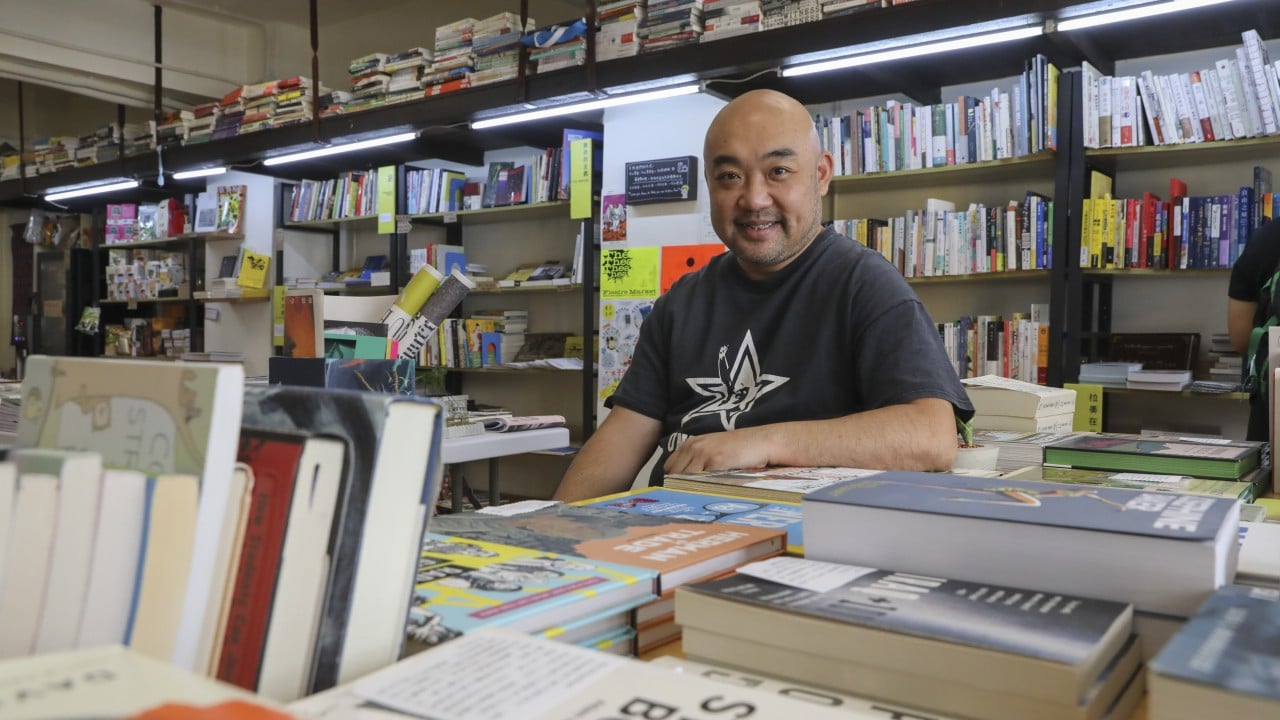
The air in a small bookstore usually smells of vanilla and decay. It is the scent of lignin breaking down in old pages, a sweet, chemical goodbye from books that have sat too long on the shelf. In Hong Kong, that smell used to be the scent of freedom. You would walk into a narrow shop in Mong Kok or Causeway Bay, the floorboards groaning under the weight of history, and feel, for a moment, that the world was still wide open.
Then the lights go out. Not all at once, but bulb by bulb, until the only thing left is the glare of a flashlight in the hands of a man in a uniform.
Last Thursday, the silence of a quiet bookshop was replaced by the heavy rhythmic thud of boots and the sharp, clinical sound of plastic zip-ties being tightened. A local bookstore owner and three of his staff members were led away. Their crime was not a heist or a violent act. They were trading in ink and glue. Specifically, they were selling a biography of Jimmy Lai.
To understand why a book is now considered a weapon in one of the world’s great financial hubs, you have to look past the legal jargon of the National Security Law. You have to look at the paper itself.
The Man on the Cover
Jimmy Lai is not a ghost, though the authorities might prefer him to be. He is a billionaire who started with nothing, a textile tycoon who decided that his legacy shouldn't be sweaters, but a newspaper called Apple Daily. He is currently behind bars, facing charges that could keep him there for the rest of his life.
When a bookstore stocks a biography of a man like Lai, they aren't just selling a product. They are hosting a guest that the state has officially uninvited. Imagine inviting a friend over for dinner, only to have the police kick down your door because that friend’s name is no longer allowed to be spoken in polite company. That is the reality for small business owners in the city.
The raid wasn't a fluke. It was a message. The arrests of these four individuals serve as a localized tremor, meant to remind every other shopkeeper that the shelves are being watched. When the state begins to fear the printed word, it is an admission that ideas are more durable than tear gas.
The Invisible Perimeter
There is a psychological concept known as "learned helplessness." If you put a glass ceiling over a flea, it will jump and hit its head. Eventually, you can remove the glass, and the flea will never jump that high again. It has learned where the limit is, even when the limit is gone.
In Hong Kong, the glass ceiling is the National Security Law, enacted in 2020. It is deliberately vague. It doesn't provide a list of "Banned Books." That would be too easy. Instead, it creates an atmosphere of "sedition" and "collusion." It asks the bookseller to become their own censor.
"Is this book too risky?"
"Will this chapter get me ten years?"
"Is my staff safe if I put this on the front table?"
The bookstore owner who was arrested likely asked these questions. He probably looked at the biography of Jimmy Lai—a book that chronicles the life of a man who once sat at the pinnacle of Hong Kong society—and decided that the history of his own city was worth the shelf space. He chose to jump. He hit the glass.
Consider a hypothetical shopkeeper named Mr. Chen. He has run a stall for thirty years. He survived the 1997 handover, the SARS outbreak, and the financial crashes. To him, books are objects of weight and truth. One morning, he receives a shipment of biographies. He knows the subject is controversial. He feels a tightening in his chest—a physical manifestation of the law. He looks at his two young employees, university students who need the shifts to pay for their tuition.
If he puts the book out, he risks their lives. If he hides it, he loses his soul.
This is the "invisible stake" that the dry news reports never mention. They list the number of people held—four—but they don't list the number of hours spent in agonizing indecision before the first copy was sold. They don't count the beads of sweat on a staff member's forehead when a "customer" lingers too long near the politics section without buying anything.
The Anatomy of a Raid
When the police entered the shop, they didn't just take the people. They took the inventory. Boxes of books were carried out like contraband, as if they were bricks of heroin or unlicensed firearms.
There is a profound irony in seeing a biography—a record of a human life—being treated as a biohazard. The state’s logic is that these pages contain "seditious intentions." They argue that reading about Jimmy Lai might incite "hatred" toward the government.
But hatred is a loud, hot emotion. What these books offer is something much cooler and more dangerous: memory.
Totalitarianism requires the present to be the only reality. If you can control what people remember about ten years ago, or even two years ago, you can control what they think is possible tomorrow. By arresting a shopkeeper for selling a biography, the authorities are attempting to perform a lobotomy on the city's collective consciousness. They are trying to excise the part of the brain that remembers a billionaire who stood his ground.
The Weight of a Small Act
We often think of heroism as a grand gesture. We think of the man standing in front of the tank. But in a tightening society, heroism is often found in the mundane. It is found in the person who refuses to take a book off a shelf. It is found in the staff member who continues to show up for work even after their boss has been taken away.
The three staff members arrested alongside the owner were likely just workers. They weren't the ones who signed the lease or chose the inventory. They were the ones who organized the displays and rang up the sales. Their arrest sends a specific, chilling signal: No one is too small to be punished.
This is the democratization of fear. It ensures that the "human element" is always calculated against the "legal risk."
The biography of Jimmy Lai is just paper. It is wood pulp and ink. You could burn it, and it would turn to ash in seconds. But the act of selling it—the exchange of money for a story—is a contract of trust between the seller and the reader. It says, "I believe you have the right to know this, and you believe I have the right to tell it."
When that contract is broken by the state, the city changes. The streets look the same. The neon signs still flicker in the humidity. The MTR trains still run on time. But the interior world of the citizens shrinks. People start to speak in whispers. They look over their shoulders in bookstores. They stop buying biographies and start buying cookbooks, because recipes for steamed fish are rarely considered seditious.
The Empty Shelf
What happens to a city when its storytellers are silenced?
It becomes a ghost of itself. It becomes a place where the facts are "dry" because the juice of human experience has been squeezed out by the grip of the law. The competitor’s article told you the who, the where, and the when. It told you that four people were held.
What it didn't tell you is the sound of the shop's door being locked from the outside for the last time. It didn't tell you about the families of those three staff members, waiting by the phone, wondering how a job at a bookstore turned into a national security incident. It didn't tell you about the customers who will walk past that darkened window tomorrow and feel a little more alone.
The real story isn't about the law. It’s about the courage of ordinary people to keep a small light burning in a room that is slowly being filled with shadows. It’s about the fact that even now, in a city under pressure, there are still people who believe that a book is worth a prison cell.
The biography of Jimmy Lai is still out there. It exists in digital files, in private libraries, and in the minds of those who read it before the raid. You can arrest the bookseller, but you cannot arrest the memory of the book.
The lights may be out in that one shop in Hong Kong, but the smell of vanilla and decay remains—the scent of something old and stubborn that refuses to be forgotten.
The next time you hold a book in your hands, feel the weight of it. Notice the spine. It is a fragile thing, made of cardboard and glue. But sometimes, it is the only thing standing between a person and the silence of a disappearing history.
Would you like me to research the current legal status of the individuals involved in this specific case to see if there have been any updates on their sentencing or release?