Soil does not shout when it dies. It whispers.
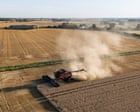
Walk through an East Anglian wheat field in the grip of a prolonged dry spell, and you will hear a faint, papery crunch beneath your boots—the sound of earth surrendering its moisture, turning to dust before the seed has even had a chance to anchor. I stood at the edge of one such field last month beside a grower whose family has worked these exact acres for four generations. He did not look at the sky. Farmers stop looking at the sky when the blue becomes a threat. He looked down at his calloused palms, rubbed a pinch of powdery dirt between his fingers, and said simply, "The rain owes us a debt it cannot pay back." Meanwhile, you can explore related events here: Why the Cross Border Violence in Afghanistan Is Creating a Hidden Humanitarian Disaster.
We take our plates for granted. That is the luxury of modern civilization. You walk into a brightly lit supermarket, reach out your hand, and pluck a carton of fresh strawberries, a bag of crisp potatoes, or a loaf of golden bread from a shelf as if they had materialized out of thin air. Behind that illusion of infinite abundance lies a fragile, invisible web of soil, timing, and water. When one strand of that web snaps, the whole system shudders.
Right now, that web is fraying. To see the full picture, check out the detailed article by Al Jazeera.
The Anatomy of an Unseen Crisis
The headlines call it a drought. That word sounds clinical, clean, almost temporary—something you read about over morning coffee before turning the page to the sports section. But on the ground, a drought is a slow-motion emergency. It is a series of quiet, compounding compromises.
Consider the mathematics of thirst. A single stalk of wheat requires gallons of water just to reach maturity. Multiply that by millions of acres across the British countryside, and you begin to grasp the sheer volume of liquid life required to keep a nation fed. When the winter aquifers fail to recharge and the spring rains vanish into a cracked, unyielding crust, the math breaks down.
(Note: To understand how agricultural hydrology works without getting lost in bureaucratic jargon, think of a farm as a checking account. Every winter rain is a deposit. Every sunny, dry day is a withdrawal. Right now, the account is severely overdrawn, and the bank is calling in the loan.)
Agricultural unions and independent crop scientists across the UK have issued stark warnings. Reservoirs are dipping below critical thresholds. Irrigation bans loom like storm clouds over the horizon. If the current dry conditions persist through the peak growing months, domestic yields for staple crops—wheat, barley, potatoes, and field vegetables—are projected to plummet.
And when domestic supply drops, the grocery bills follow.
What Happens When the Local Basket Empty
Most people assume that if British farms produce less, we can simply buy our food from somewhere else. It is a comforting thought, born of a globalized economy that has long made distance irrelevant.
It is also dangerously naive.
Spain is drying out. Parts of Italy are rationing water for agriculture. California is locked in its own generational battles over hydrological survival. The breadbaskets of Europe and the Mediterranean are facing the exact same meteorological squeeze. When everyone is looking outward for imports, the global pantry grows bare, and prices skyrocket for whatever remains.
Imagine walking down that supermarket aisle six months from now. The shelves are not entirely empty—that only happens in disaster movies. Instead, something more insidious occurs. The price tag on a bag of potatoes ticks upward by twenty percent. Then thirty. Then fifty. Fresh salad greens, heavily reliant on localized greenhouse irrigation and transport, become a luxury item reserved for special occasions.
This is how food insecurity manifests in a wealthy nation. It does not look like sudden famine. It looks like quiet deprivation. It looks like families making harder choices at checkout counters, trading nutritional quality for caloric volume, while local farmers quietly liquidate livestock they can no longer afford to water or feed.
The Human Face of the Furrow
Let me introduce you to Arthur, a hypothetical composite of the dozens of independent vegetable growers I have spoken with over the past year. Arthur is fifty-eight years old. He has skin the color of aged oak from decades under the open sun and eyes that crinkle at the corners from squinting against the glare of dry horizons.
Arthur’s grandfather cleared these fields. Arthur drained them, fertilized them, and modernized them. He knows the temperament of every hectare. He knows which plot holds moisture an extra week into a dry spell and which one turns to dust at the first hint of a breeze.
Right now, Arthur is staring at an irrigation meter that reads like a ticking time bomb. The local water authority has placed limits on abstraction licenses—the legal permission farmers have to pump water from nearby rivers and underground aquifers to save their crops. The logic is sound: if farmers empty the rivers today, the towns will have nothing to drink tomorrow, and aquatic ecosystems will collapse.
So Arthur faces an impossible choice. Does he turn on the pumps, risk heavy fines, and try to save his winter brassicas? Or does he turn them off, watch his livelihood wither into yellow ash, and accept bankruptcy?
"You feel like a thief either way," Arthur told me, his voice rough with exhaustion. "Take the water, and you are stealing from the future. Leave the water, and you are starving the present."
This is the human core of the agricultural crisis. It is not just about macroeconomic indicators or supply chain logistics. It is about human beings standing in the middle of dead fields, watching their life's work turn to dust while consumers miles away complain about the cost of a bag of carrots.
Breaking the Cycle of Complacency
We have built our society on the assumption that nature will always provide an endless subsidy of cheap food and abundant water. We paved over floodplains, drained wetlands, and pushed industrial agriculture to its absolute physical limits without building adequate buffers for climate volatility.
The warning signs have been flashing for years. Scorching summers are no longer historical anomalies; they are the baseline. Yet our infrastructure remains rooted in nineteenth-century thinking. We treat water as an infinite resource to be drained rapidly rather than a precious capital asset to be conserved, captured, and recycled.
Fixing this will not be easy, and it certainly will not be cheap. It requires a fundamental reimagining of how we manage our land and our water.
We need massive investment in modern reservoirs and regional water-sharing grids, moving surplus water from the wetter west of the country to the parched agricultural engine rooms of the east. We need to support farmers transitioning to drought-resistant crop varieties and regenerative agriculture techniques—practices that build organic matter in the soil, allowing it to act like a sponge that holds moisture through the dry weeks.
Most importantly, we need a cultural shift in how we value what we eat. Cheap food has come at a hidden, deferred cost to our environment and our rural communities. If we want a secure food supply, we have to pay the true price of stewardship—supporting the people who care for the land before the drought takes everything they have left.
The soil in East Anglia is dry today. Tomorrow, it might rain. But a single afternoon downpour will not wash away the deeper truth of our vulnerability. The climate is shifting, the margins are shrinking, and the quiet whisper of the dying earth is growing louder by the day.
Listen closely.
Before the silence becomes permanent.