Bangladesh President Mohammed Shahabuddin officially stepped down from office, ending months of political tension in Dhaka. While the official reason points to severe medical issues, the broader political picture in Bangladesh tells a much larger story.
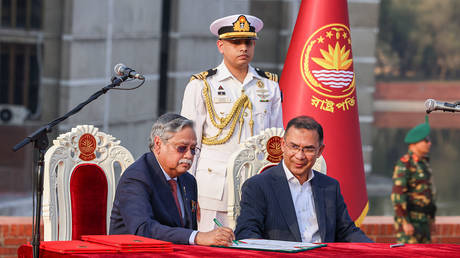
Shahabuddin submitted his official resignation letter directly to Parliament Speaker Hafiz Uddin Ahmed on July 24, 2026. The 76-year-old leader cited serious physical conditions, including autonomic neuropathy, heart disease, high blood pressure, diabetes, and kidney complications. Under Article 50(3) and Article 54 of the Bangladesh Constitution, Speaker Hafiz Uddin Ahmed has taken over as Acting President for up to 90 days while parliament prepares to elect a successor.
To understand why this resignation matters, you have to look past the medical diagnosis and examine the intense political pressure surrounding Bangabhaban.
A Solitary Figure from a Bygone Regime
Shahabuddin took office back in April 2023 after being nominated by the Awami League, which was led by ousted Prime Minister Sheikh Hasina. When student-led street protests forced Hasina to flee Bangladesh in August 2024, Shahabuddin suddenly found himself isolated. Every other high-ranking political figure associated with the previous government left office, fled, or faced prosecution.
He was literally the last high official from that era still sitting in a top constitutional seat.
That positioning created an uneasy atmosphere in Dhaka. Even though the presidency in Bangladesh is largely a titular role with executive power residing in the prime minister's office, the head of state serves as commander-in-chief of the armed forces and plays a key role during government transitions.
Rumors had been swirling for weeks across media outlets that Prime Minister Tarique Rahman's administration felt uncomfortable with Shahabuddin in office. Tensions boiled over recently following reports that Shahabuddin had spoken with Sheikh Hasina over the phone while undergoing medical treatment in London. Shahabuddin publicly dismissed those claims as baseless, but the political rift between his office and the ruling leadership was already too deep to repair.
Medical Facts and Constitutional Rules
Shahabuddin's health problems are real and documented. In his resignation letter, he explicitly described how autonomic neuropathy caused him to experience sudden, brief losses of consciousness. Coupled with a previous heart bypass surgery and chronic conditions, he stated that he no longer had the physical or mental capacity to perform his duties.
Here is how the constitutional transition works when a sitting Bangladeshi president resigns before completing a five-year term:
- The President submits a written resignation letter under his hand to the Speaker of Parliament.
- The Speaker immediately steps into the role of Acting President under Article 54.
- Speaker Hafiz Uddin Ahmed cut short a trip to Bangkok for his own medical treatment to accept the letter and assume duties in Dhaka.
- Parliament must vote and elect a new President within a 90-day window to serve out the remaining term.
Because the new head of state will be elected by the sitting parliament, the choice will reflect the current political alignment in Dhaka.
Behind the Political Friction
It wasn't just health that made Shahabuddin's position untenable. His relationship with the post-uprising political structure had been fragile for a long time.
During the 18-month caretaker period led by Nobel laureate Muhammad Yunus prior to the February elections, Shahabuddin openly expressed frustration over how he was treated. He told local media that he felt humiliated when his official portraits were removed from Bangladeshi embassies around the world. At the same time, he pointed out that he performed his constitutional duty to oversee free elections, ensuring that power was handed back to an elected government.
When Speaker Ahmed accepted the resignation, he acknowledged that delicate history. Ahmed noted that even though Shahabuddin was elected during the tenure of a fallen regime, he respected the authority of the newly elected government.
Essential Takeaways for Following the Transition
If you're following news out of South Asia, keep an eye on these specific developments over the coming weeks:
- Watch the parliamentary debates as political parties put forward nominees for the presidential election.
- Track how Acting President Hafiz Uddin Ahmed manages interim duties during this 90-day transition window.
- Monitor security and political stability in Dhaka as the government works to complete the post-Hasina institutional realignment.